/nav-logo-desktop.webp "Marketing Architects")
Episode 161
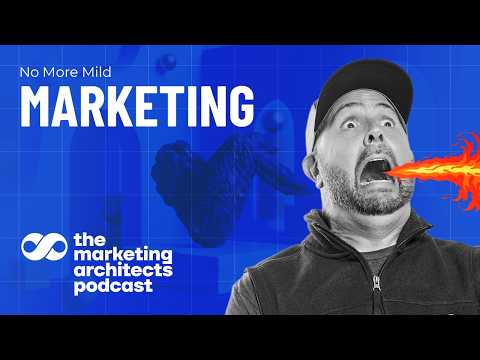
No More Mild Marketing
94% of pricing power comes from how meaningfully different a brand is perceived to be. So why are so many marketers playing it safe?
This week, Elena, Angela, and Rob ditch the safe answers and eat progressively spicier hot wings while doing it. Inspired by the format of Hot Ones, each round brings hotter wings and bolder takes on the marketing strategies most people are afraid to question. From the real cost of over-targeting to why your first-party data obsession may be holding you back, these are the opinions your marketing team needs to hear, even if they sting a little.
Topics Covered
• [01:00] Research on why playing it safe is the riskiest bet in marketing
• [04:00] Low CPMs on TV aren't a red flag
• [06:00] Retargeting is overrated and doesn't grow your business
• [08:00] Most marketers are over-targeting and overpaying for the illusion of precision
• [14:00] Digital attribution set marketers back a decade
• [19:00] First-party data obsession is preventing real growth
• [22:00] Brands should stop producing TV spots like it's 2006
Resources:
2025 Ad Age Article
2025 WARC and Kantar Report
Today's Hosts

Elena Jasper
CMO

Rob DeMars
Chief Product Architect

Angela Voss
Chief Executive Officer
Transcript
Angela: Stop being obsessed with low CPMs being bad for your brand. That's the hot take. Digital taught you that low CPM is a red flag, and that lesson doesn't travel to TV. So when you think about digital, cheap inventory is cheap for a reason.
So the skepticism — I would say it's valid. But I think marketers took that lesson and just applied it everywhere.
Elena: I'm Elena Jasper. I run the marketing team here at Marketing Architects, and I'm joined by my co-hosts, Angela Voss, the CEO of Marketing Architects.
And Rob DeMars, the Chief Product Architect of Misfits and Machines.
Rob: Hello.
Elena: Today we are testing two things. It's a little bit of a special episode — we're gonna test our spice tolerance and our tolerance for controversial marketing takes. So this is inspired by Hot Ones, and what we're gonna do is share our boldest marketing opinions while eating progressively spicier hot wings.
So it's just like that Hot Ones show inspired us. We're not replicating the show — it's inspired. Every round, the wings are gonna get hotter. So do the takes. The rule is simple: no safe answers. No "it depends" unless we can defend it. But before we start sweating, I want to ground us in a little research as we always do.
Rob: First, an Ad Age piece arguing that playing it safe is actually the riskiest bet in marketing right now. In uncertain economic times, brands retreat into caution. They produce safe creative, and they optimize for the short term. When they do that, they're eroding the brand equity that protects them.
Elena: Second, from WARC and Kantar, Adele Jolliffe made a similar argument. She said marketers need to tell a bigger story internally about why being bold matters. So three major themes stood out. First, marketers need to think differently about value. It's not just about volume and share — it's about pricing power, and whether your brand equity actually justifies your price.
Second, according to Brand Z, over 94% of pricing power is driven by how meaningfully different a brand is perceived to be. And three, especially during downturns when private labels grow — marketers should be actively setting expectations about how you're different. If consumers perceive no meaningful difference, they don't come back.
So the big message is this: when pressure builds, the instinct is to get cautious. But caution may be the very thing that weakens brands long term — which feels like a good setup for this episode, because today we are throwing caution to the wind. We have four rounds and four types of wings that we've all gotten, and each flavor is gonna be hotter than the last.
Rob: So each of us has come prepared with ascending controversial marketing takes. We'll take turns first, eating a wing, sharing a take, defending it, and then pushing each other to go deeper. I was already pre-gaming. Is that okay? I was just a little hungry. I got the 20 pack, so I got 13 down, but I only used the mildest sauce on one of 'em. So I'm ready.
Your lips look flushed.
Angela: They look like they're hot already.
Elena: No, no, no. It was just a little bit — just a little one. The mild. The mild is a little — well, we'll get into that. That already tastes spicy to you — that's not a good sign.
Rob: What are we doing here?
Angela: What's next — Hunger Games on this podcast?
Elena: We're all Minnesotans and we did not think of this. Our employees thought of this. So I think that might say something.
All right. Let's move into round one. This is our mild round. So, Ange, do you wanna kick us off with your mild wing and then your first hot take?
Angela: I do. All right. Here we go. First, mild wing.
Elena: It's the honey barbecue. All right. Here we go.
Rob: Delicious.
Angela: Easy, right?
Rob: Oh, you went for drumstick right off the bat.
Angela: I did all drums.
Elena: Okay. This one's easy.
Angela: Stop being obsessed with low CPMs being bad for your brand. That's the hot take. Digital taught you that low CPM is a red flag, and that lesson doesn't travel to TV. So when you think about digital, cheap inventory is cheap for a reason.
So the skepticism — I would say it's valid. But I think marketers took that lesson and just applied it everywhere, and that's where the thinking breaks down. If you think about digital inventory, it's infinite. You buy impressions that are technically served and maybe did absolutely nothing. TV is the opposite.
Inventory is scarce. Environments are curated and viewers choose to be there. And so a lower CPM in that context doesn't necessarily need to be a warning sign. It could be a really smart media advantage if you're buying well. So just be thinking about it a little differently depending upon the channel that you're in.
In television, our goal is reach — it's efficient reach. It's finding new customers, people maybe that don't know about your brand. And in some cases that can be found in low-attention areas and in some cases they're in high-attention areas. Just don't translate that digital learning into the TV space.
Elena: I think that might be more of a medium spicy take, but...
Angela: Do you think so? Oh, you don't know what I got next. No, I'm kidding. I probably don't have 'em ranked. Maybe.
Rob: Fantastic. Am I up? Okay, so I have the Buffalo Wild Wings mild. I don't know, it just said mild, so I just went with that — and it's a little bit more like yellow versus the other ones, a little more orangey than the red.
So here you go. I went with the full-on wing versus the drummy, but the drummy was a good call, Ange.
Elena: Gonna keep eating it. You only have to take like a bite, Rob.
Rob: Well, it's delicious. Okay. All right. So pretty mild, not too worried. So my hot take is about retargeting.
Elena: Maybe finish chewing before you go into your hot take.
Rob: Geez, I didn't pick this format. Okay, so retargeting is completely overrated. That's my hot take. We talk a lot about the empirical laws of how brands grow on this podcast, and retargeting pretty much directly violates it, right? In order to scale a business, you gotta reach those light buyers and those non-buyers — and retargeting basically does the exact opposite. It just creates these claustrophobic echo chambers and just hunts down people that are already buying your product, 'cause they were looking at you anyways. And it just helps boost those vanity metrics on your dashboards, but it doesn't really make your business grow.
Elena: That's a pretty spicy one.
Rob: Should I save that one? I should maybe save that one for a little later — a little more caliente, but...
Elena: I think a lot of people would disagree 'cause their retargeting probably looks really good — you know that performance is gonna be high.
Rob: It definitely feeds the metrics that we love to bring back to our CFOs. But at the end of the day, are you really growing or are you just stalking your loyal buyers?
Elena: Yeah. Would you be better off putting that money elsewhere? That's a good question.
I'm starting to get the meat sweats.
Rob: Already?
Elena: I'll eat my mild one. I also picked the same flavor as Angela, which is honey barbecue.
Angela: It's great. You're gonna love it. It's an easy way in.
Elena: Yeah. Not bad.
Okay. My first hot take is my favorite take, as people probably know, which is targeting — and the fact that most marketers — I believe almost every marketer — is over-targeting their audience. Everybody's obsessed with targeting. When you log into any digital ad platform, it is so easy to target.
They give you all these fancy options. You can really narrow down to exactly who you want, which seems like it makes a lot of sense. But practically, third-party data is super expensive, it can be inaccurate, and the more narrowly you target, the more you're gonna pay per impression. Your CPMs are gonna go through the roof.
And we're all pretending — when we target this way — that these audiences are perfectly defined. But half the time, the targeting's totally wrong. You're reaching the wrong people anyway. You're just paying a premium, and you might just be better off going broader, paying less, and reaching more potential buyers.
I think it's just a natural instinct for marketers — even me — when you're presented with these options, to go narrower and narrower. But you're really just overpaying for the illusion of reaching your exact customer.
Rob: Absolutely.
How's that mouth feeling?
Elena: It actually was a little spicier than I thought it would be for the first one.
Angela: I thought the mild had a little kick going. All right. Am I up?
Rob: Yep. You're up.
Angela: Okay. I've never had this style before.
It's the sweet chili.
Rob: Ooh.
Angela: But it's level medium. Here we go.
Rob: Sweet chili. Sounds deceptive. Sounds like I'm gonna come in real nice — and then I'm gonna karate chop your tonsils. I'm gonna come in nice, and then just wait — there's gonna be a kick coming.
Angela: It's very sweet. I would say it's more sweet than it is chili. I'm okay with it.
Elena: Wow. Lucky.
Rob: I think that was a really good choice for me.
Okay. My second hot take, I think is more hot than the wing that I just ate. If you haven't tested radio for your brand and you're a marketer, you should be fired.
Elena: Ooh! A lot of marketers are about to get fired.
Angela: I know, and that's a problem. Radio is — and we don't sell radio, this is not self-serving, we used to be in radio — but radio is one of the most underleveraged mass-reach mediums in America. And the marketers who dismiss it — I think it's not a question of sophistication, I think it's just laziness.
Looking at the medium thinking, "That's where my parents got their traffic updates" — and they're spending tons of money in digital. But radio reaches over 90% of Americans every week. And because so many have abandoned it, there's very little competitive noise.
So share of voice becomes a really strong opportunity. Also, Rob has talked about this before — sound is processed emotionally before it's processed rationally. And so the brain doesn't fast-forward through audio. It doesn't scroll past it — it just listens. So it's a very different environment than something like social media. So run the test.
Okay, it's hotter after.
Rob: I told you — forecast calls for caliente.
Angela: I know. If it doesn't work for your brand, fine.
Elena: You flat out called most marketers lazy.
Angela: It's lazy.
Rob: That's a hot one. It's hard to argue you don't have audience there — 'cause there's lots of audience there.
For sure. So I'm up with the medium. This is medium. Yeah.
Angela: No cheating, Rob. He's confused about the buffalo levels.
Rob: I am.
Elena: He literally bought just the labels though, so he should be fine.
He's taking multiple bites.
Angela: I know.
Elena: I gotta get the full flavor. I had to self-baste these — I got my little baster here. All right.
Angela: I am just not tasting it. I don't think I did a good job. Hold on.
Elena: Are you gonna just eat the sauce straight? That's so disgusting.
Angela: I just sauced my tongue. Are you drinking from the cup?
Elena: It's so gross.
Rob: I'm basting from it.
Elena: Okay. B2B campaigns should operate like B2C campaigns. That's my hot take. B2B marketers — they use the excuse, right? Like, "Oh, it's such a complex sales cycle, we need to produce really boring work." Yeah, that's what they say. We need to produce boring work.
Rob: That's the result, right? And they forget — like, that same edge and that nice spicy flavor that people so generously dip their B2C campaigns in.
See the analogy I'm working here on the fly — they just dip it in the spicy sauce. But all these B2B campaigns, they're just going for the mild.
They don't think that the B2B target audience is just a human who's coming into work every day and has a pulse and reacts. They like humor, they like things that have an edge to it. So treat your B2B campaign like you would a B2C campaign.
Angela: Way less storytelling in B2B for sure. Huge opportunity.
Elena: Yeah, but I feel like the biggest B2B brands do a really good job with it. You know — they're on TV and...
Angela: Yep.
Elena: Okay. I got, for my medium wing, a spicy garlic wing.
Angela: I've actually never ventured beyond mild ever.
I didn't wanna choose anything that had the word "spicy" in it. I just felt like that was... but we had to go to the Blazin' for the really hot one.
Elena: Hmm.
Angela: How is it?
Elena: It's a little spicy.
I'm not super comfortable. No, but it's not horrible.
Angela: I got a feeling it's gonna come on. Forecast calls for some heat for Elena there in a little bit. So get through your answer before it starts to hurt.
Elena: Alright, my second hot take: most brands would grow faster if they cut their paid search spend in half and doubled their TV budget. And I think I might say the same for any bottom-of-funnel digital spend. I think most people listening to this podcast have probably heard of the eBay study where they turned off paid search completely and found that their organic traffic pretty much picked up the slack.
Most people that were clicking those paid ads would've found their way to eBay anyways. When you're spending all this money on paid search, you're often paying to capture demand that you already had. And I know paid search has its place — I'm not saying you shouldn't spend any money on it. Don't kill me, Google. But it is not nearly as effective as people think it is.
It captures existing demand. It doesn't create new demand. And if you're measuring by last click, you're gonna think it's a hero channel. You should take half that money, put it into TV for a couple of months, and watch your brand change. Watch your business change. I think most brands could benefit by cutting their paid search spend.
Angela: Yep. It's a brilliant business model.
Necessary evil for sure for brands, but just get yourself to a place where you're way less dependent on non-branded paid search.
Sorry — non-branded paid search. I'm still feeling the chili effect.
Elena: Deteriorating. Okay. Now this should start to get interesting. Round three.
This is the hot category.
Angela: I have hot buffalo, so it's just called Hot. I have the same one as Rob, I think.
Rob: Alright. Hot. Yes. Hot.
Angela: I'm a buffalo fan. I do love buffalo, but I don't like heat.
Elena: I think I have the same one.
Rob: I can tell she's processing right now. You always go into it a little cocky — you think, ah, no big deal.
Oh, she's already going for the milk. Come on.
Angela: It's a very flavorful wing, but it has some heat to it. I can definitely feel it on my lips. I am like as Norwegian as they come, and this is out of my palate, like for me.
Rob: Out of the palate. All right.
Angela: Hot take three is: digital attribution, I think, set us back a decade. I don't even know if that's a hot take.
Is that just known at this point? I feel like everyone should know that attribution was supposed to give us accountability. But what it actually gave us was a very convincing story about the wrong things. I think we just spoke to some of these. The moment we could draw a line from ad click to conversion, we stopped asking whether or not we were actually growing.
We optimized for what the model could see. And the model could only see the bottom of the funnel. So that's where the money went. Brand, TV, radio, out-of-home — the channels that do that slow, invisible work of making people want something — got starved, 'cause they couldn't prove causation in a dashboard by Thursday. And this was beyond ignorance, because Binet and Field published the evidence in 2013. So we didn't come across it until — what was that — like 2016 or '17 maybe? That we read it.
Rob: This is out-of-your-comfort-zone spicy, Angela, though. I mean, you're talking lazy before. Now you're talking beyond ignorant. Jeepers. You're throwing around some big shade there.
Angela: Well, it's what we're trying to fix on the podcast here, right?
Elena: That's a great one.
Okay, Rob, let's see if this one impresses you.
I'm ready to do the hot. Yeah, I would say the medium wasn't doing it for me.
Rob: Yeah, I...
Angela: Rob's really close to the mic.
Elena: I know.
Angela: Just back up a little, Rob.
Rob: I don't know — it's pretty hot. It's getting there.
If I didn't bring the milk... Alright, my take. Your loyal customers — they would've bought you anyways.
So all this stuff we're doing to keep our lovely loyal people going — and I'm a huge loyalty fan of Delta — but it's all wasted on us, 'cause I'd have been buying Delta anyways. It's basically margin masquerading as strategy. You're losing margin on all of that stuff trying to keep your loyal customers. And you should be investing that in new markets — new customers. A little bit akin to my last one, but: your loyal customers would've bought you anyways. That's my take, and I'm gonna drink some water now.
Angela: That's gonna make it worse — but that's a nice Ehrenberg-Bass classic take. The loyalty trap.
Rob: All right. Let's see the hot.
Elena: Okay. It didn't seem like it was that bad for everybody, but...
Rob: I don't feel like the hot has the staying power.
I would agree.
Like it was kind of spicy at the beginning, but...
Oh, I think that's so spicy. It gets better.
Elena: Okay.
Angela: We should also sound as Minnesotan as we can when we're doing this.
Oh, it's so spicy.
Don'tcha know.
Oh my goodness.
Rob: Here's my hot take number three. Most rebrands destroy more value than they create. So a rebrand — it's a move a lot of new CMOs make. I think it's one of the riskiest things you could actually do. Distinctive brand assets take years to build. Jenni Romaniuk has research that shows it can take something like three to five years of consistent use of an asset before it becomes strongly linked to your brand in your customer's mind.
Elena: So then if you walk in as a new CMO and you throw it all away for a fresh look — that is so risky. You just burned up years of built-up recognition overnight. Also, consumers aren't that excited about your rebrand — they just maybe can't find you anymore. Unless your brand is genuinely damaged, leave it alone.
The best rebrands — we've talked about this before on the podcast — I'm convinced the most successful rebrands are ones no one really says anything about. That's when you know it was a successful rebrand. So if you're only doing it to gain attention, that's just the wrong reason. There should be a clear strategic gap you're trying to fill, and it should be considered a business risk to rebrand.
Rob: My lips are burning a little bit.
Angela: Guys, I'm actually really nervous because when I was trying to figure out which wing was which, I grabbed the Blazin' thinking that it was the honey barbecue. What Blazin' sauce did you guys get?
Elena: I just got the Wild.
Angela: Okay. Mine must be like a barbecue sauce.
Elena: My mouth still hurts from that last one.
Would you like a photo of the 15 bones that are in a little bowl right here for the cover?
Sure.
Send it over.
Okay, here we go. Blazin'. Gosh.
Oh my God.
Now you have to share your take as soon as possible.
Oh, no, I'm scared.
Rob: You gonna barf?
Angela: You guys.
Elena: Is it like that much worse?
Angela: It's so much worse.
Elena: Oh no.
Angela: Okay.
Elena: All right. What's your take?
Angela: There's no barbecue — it's just hot. It's just hot. Everything's burning. My eyes are watering, my lips are burning. It's terrible. Okay. My super hot take is: this doesn't sound like a hot take, but your first-party data obsession is actively preventing you from growing. And the reason that's my final one is because everyone is thinking about their first-party data.
Everyone's in this mad scramble to own your customer data — focus on CRM, loyalty programs, data clean rooms, CDP. The whole infrastructure is built around knowing more and more about the people who already buy from you. And that's exactly backwards. Ehrenberg-Bass has shown this repeatedly. Your heaviest buyers are already buying.
The growth is in the people who have barely heard of you. So who's going to be willing to target the anti-target? Those are the people you should be focused on — the people outside of the file, outside the lookalike, outside the comfort zone. That's how you'll really get incremental, really strong growth.
I can't talk anymore.
I'm done.
Rob: I'm going in. I'm going in.
Elena: And Rob double-basted this one, I think.
Rob: I did. I double-basted it. It's extra juicy.
Here we go. It's got a lot of tang.
Angela: Oh, my lips hurt so bad.
Elena: Rob, do you feel anything?
Rob: It's more of a gradual build here, but my eyeballs are starting to sweat.
Elena: Okay. Alright, share your hot take.
Rob: Most agencies are still building TV commercials like it's 2006. That's my hot take. All right. In case you didn't know, it's 2026 — so what's the difference? Everyone's still treating it like this gorgeous cinematography experience that's a feast for the eyes. But the reality is everybody's looking at other places in the room now, with their secondary screens, and they're not looking at the TV screen like they should be.
So we have to be — treating back to Angela's point about the renaissance of radio — oh, dear God, starting to kick into the back of my throat.
Elena: Angela has like her head in her hands right now.
Rob: It's starting to really hurt. Okay. Lost my train of thought.
Angela: No, I was gonna say a lot more about first party but I just couldn't.
Rob: Not treating it like it's a feast for the eyes — and think of it as a feast for the ears — that's the real opportunity, right?
It is still on. People can move their eyeballs, but they can't move their ears. So bring their eyeballs back with audio. But we just don't do that. People are treating 'em still like it's 2006 and trying to win awards with gorgeous little mantra spots that are all visual and maybe some music, and just stop that.
Stop the spicy! The spicy is — ah!
Elena: Oh my gosh, I'm so scared.
I thought you were gonna go more down the AI route — like, agencies should be using AI more. So that was a surprise.
Angela: He doesn't even know what he's saying.
Rob: Uh — oh, for sure. No, I mean — I think that's a given, but I just think that us trying to continue to build spots the way that we used to is just wrong. We gotta — it's — I'm sorry, I can't even think. Go ahead, Elena.
Elena: Okay. I am not feeling good about this.
Rob: Ow!
Angela: I'm looking up what is the actual hottest sauce that...
Rob: Ow! Ow!
Angela: Oh, I picked the worst one, you guys.
Rob: Oh my gosh.
Angela: It's hitting.
Elena: Okay. The final hot take of this episode...
The idea that consumers want brands to take a stand is massively overstated. So Mark Ritson has said this before and I love it.
Open your fridge and ask yourself how many of those brands you bought because of their stance on a political issue. The answer — I'm going to almost guarantee — is zero. People say they want brands to take a stand when you ask them that in a survey, but it's not how we actually shop. And when brands do wade into something divisive — oh my gosh — they usually end up alienating as many people as they attract. Unless that issue is genuinely part of your brand DNA — like it's baked into who you are and always have been — just don't go there. Make great products, be a good company. That's enough. And this one really gets me going because I see brands doing this and I don't know why. Especially with smaller brands where there's a certain target audience — there's just no reason to be doing this right now. You just gotta stay out of it. And that was my final hot take.
Rob: I have no idea what you just said.
I blacked out about five minutes ago.
Yeah, that was a pretty big jump. That was a big jump.
Angela: Massive jump.
Rob: My eyes are watering. It's just...
Angela: These were all hot takes though.
I think this is the news you need to hear.
Rob: Shout out to Buffalo Wild Wings for not sponsoring this episode.
But you know what? We gave you a plug.
All right. We survived. I think next time we make other Marketing Architects employees do this instead of us, 'cause I don't know if I'm doing that again.
Oh...
Angela: Heartburn tonight.
Elena: Yeah.
Angela: Okay.
Rob: I got a few more I gotta finish.
Angela: Oh gosh. All right.
Episode 161
No More Mild Marketing
94% of pricing power comes from how meaningfully different a brand is perceived to be. So why are so many marketers playing it safe?
This week, Elena, Angela, and Rob ditch the safe answers and eat progressively spicier hot wings while doing it. Inspired by the format of Hot Ones, each round brings hotter wings and bolder takes on the marketing strategies most people are afraid to question. From the real cost of over-targeting to why your first-party data obsession may be holding you back, these are the opinions your marketing team needs to hear, even if they sting a little.
Topics Covered
• [01:00] Research on why playing it safe is the riskiest bet in marketing
• [04:00] Low CPMs on TV aren't a red flag
• [06:00] Retargeting is overrated and doesn't grow your business
• [08:00] Most marketers are over-targeting and overpaying for the illusion of precision
• [14:00] Digital attribution set marketers back a decade
• [19:00] First-party data obsession is preventing real growth
• [22:00] Brands should stop producing TV spots like it's 2006
Resources:
2025 Ad Age Article
2025 WARC and Kantar Report
Today's Hosts
Elena Jasper
CMO
Rob DeMars
Chief Product Architect
Angela Voss
Chief Executive Officer
Subscribe on



Enjoy this episode? Leave us a review.
Transcript
Angela: Stop being obsessed with low CPMs being bad for your brand. That's the hot take. Digital taught you that low CPM is a red flag, and that lesson doesn't travel to TV. So when you think about digital, cheap inventory is cheap for a reason.
So the skepticism — I would say it's valid. But I think marketers took that lesson and just applied it everywhere.
Elena: I'm Elena Jasper. I run the marketing team here at Marketing Architects, and I'm joined by my co-hosts, Angela Voss, the CEO of Marketing Architects.
And Rob DeMars, the Chief Product Architect of Misfits and Machines.
Rob: Hello.
Elena: Today we are testing two things. It's a little bit of a special episode — we're gonna test our spice tolerance and our tolerance for controversial marketing takes. So this is inspired by Hot Ones, and what we're gonna do is share our boldest marketing opinions while eating progressively spicier hot wings.
So it's just like that Hot Ones show inspired us. We're not replicating the show — it's inspired. Every round, the wings are gonna get hotter. So do the takes. The rule is simple: no safe answers. No "it depends" unless we can defend it. But before we start sweating, I want to ground us in a little research as we always do.
Rob: First, an Ad Age piece arguing that playing it safe is actually the riskiest bet in marketing right now. In uncertain economic times, brands retreat into caution. They produce safe creative, and they optimize for the short term. When they do that, they're eroding the brand equity that protects them.
Elena: Second, from WARC and Kantar, Adele Jolliffe made a similar argument. She said marketers need to tell a bigger story internally about why being bold matters. So three major themes stood out. First, marketers need to think differently about value. It's not just about volume and share — it's about pricing power, and whether your brand equity actually justifies your price.
Second, according to Brand Z, over 94% of pricing power is driven by how meaningfully different a brand is perceived to be. And three, especially during downturns when private labels grow — marketers should be actively setting expectations about how you're different. If consumers perceive no meaningful difference, they don't come back.
So the big message is this: when pressure builds, the instinct is to get cautious. But caution may be the very thing that weakens brands long term — which feels like a good setup for this episode, because today we are throwing caution to the wind. We have four rounds and four types of wings that we've all gotten, and each flavor is gonna be hotter than the last.
Rob: So each of us has come prepared with ascending controversial marketing takes. We'll take turns first, eating a wing, sharing a take, defending it, and then pushing each other to go deeper. I was already pre-gaming. Is that okay? I was just a little hungry. I got the 20 pack, so I got 13 down, but I only used the mildest sauce on one of 'em. So I'm ready.
Your lips look flushed.
Angela: They look like they're hot already.
Elena: No, no, no. It was just a little bit — just a little one. The mild. The mild is a little — well, we'll get into that. That already tastes spicy to you — that's not a good sign.
Rob: What are we doing here?
Angela: What's next — Hunger Games on this podcast?
Elena: We're all Minnesotans and we did not think of this. Our employees thought of this. So I think that might say something.
All right. Let's move into round one. This is our mild round. So, Ange, do you wanna kick us off with your mild wing and then your first hot take?
Angela: I do. All right. Here we go. First, mild wing.
Elena: It's the honey barbecue. All right. Here we go.
Rob: Delicious.
Angela: Easy, right?
Rob: Oh, you went for drumstick right off the bat.
Angela: I did all drums.
Elena: Okay. This one's easy.
Angela: Stop being obsessed with low CPMs being bad for your brand. That's the hot take. Digital taught you that low CPM is a red flag, and that lesson doesn't travel to TV. So when you think about digital, cheap inventory is cheap for a reason.
So the skepticism — I would say it's valid. But I think marketers took that lesson and just applied it everywhere, and that's where the thinking breaks down. If you think about digital inventory, it's infinite. You buy impressions that are technically served and maybe did absolutely nothing. TV is the opposite.
Inventory is scarce. Environments are curated and viewers choose to be there. And so a lower CPM in that context doesn't necessarily need to be a warning sign. It could be a really smart media advantage if you're buying well. So just be thinking about it a little differently depending upon the channel that you're in.
In television, our goal is reach — it's efficient reach. It's finding new customers, people maybe that don't know about your brand. And in some cases that can be found in low-attention areas and in some cases they're in high-attention areas. Just don't translate that digital learning into the TV space.
Elena: I think that might be more of a medium spicy take, but...
Angela: Do you think so? Oh, you don't know what I got next. No, I'm kidding. I probably don't have 'em ranked. Maybe.
Rob: Fantastic. Am I up? Okay, so I have the Buffalo Wild Wings mild. I don't know, it just said mild, so I just went with that — and it's a little bit more like yellow versus the other ones, a little more orangey than the red.
So here you go. I went with the full-on wing versus the drummy, but the drummy was a good call, Ange.
Elena: Gonna keep eating it. You only have to take like a bite, Rob.
Rob: Well, it's delicious. Okay. All right. So pretty mild, not too worried. So my hot take is about retargeting.
Elena: Maybe finish chewing before you go into your hot take.
Rob: Geez, I didn't pick this format. Okay, so retargeting is completely overrated. That's my hot take. We talk a lot about the empirical laws of how brands grow on this podcast, and retargeting pretty much directly violates it, right? In order to scale a business, you gotta reach those light buyers and those non-buyers — and retargeting basically does the exact opposite. It just creates these claustrophobic echo chambers and just hunts down people that are already buying your product, 'cause they were looking at you anyways. And it just helps boost those vanity metrics on your dashboards, but it doesn't really make your business grow.
Elena: That's a pretty spicy one.
Rob: Should I save that one? I should maybe save that one for a little later — a little more caliente, but...
Elena: I think a lot of people would disagree 'cause their retargeting probably looks really good — you know that performance is gonna be high.
Rob: It definitely feeds the metrics that we love to bring back to our CFOs. But at the end of the day, are you really growing or are you just stalking your loyal buyers?
Elena: Yeah. Would you be better off putting that money elsewhere? That's a good question.
I'm starting to get the meat sweats.
Rob: Already?
Elena: I'll eat my mild one. I also picked the same flavor as Angela, which is honey barbecue.
Angela: It's great. You're gonna love it. It's an easy way in.
Elena: Yeah. Not bad.
Okay. My first hot take is my favorite take, as people probably know, which is targeting — and the fact that most marketers — I believe almost every marketer — is over-targeting their audience. Everybody's obsessed with targeting. When you log into any digital ad platform, it is so easy to target.
They give you all these fancy options. You can really narrow down to exactly who you want, which seems like it makes a lot of sense. But practically, third-party data is super expensive, it can be inaccurate, and the more narrowly you target, the more you're gonna pay per impression. Your CPMs are gonna go through the roof.
And we're all pretending — when we target this way — that these audiences are perfectly defined. But half the time, the targeting's totally wrong. You're reaching the wrong people anyway. You're just paying a premium, and you might just be better off going broader, paying less, and reaching more potential buyers.
I think it's just a natural instinct for marketers — even me — when you're presented with these options, to go narrower and narrower. But you're really just overpaying for the illusion of reaching your exact customer.
Rob: Absolutely.
How's that mouth feeling?
Elena: It actually was a little spicier than I thought it would be for the first one.
Angela: I thought the mild had a little kick going. All right. Am I up?
Rob: Yep. You're up.
Angela: Okay. I've never had this style before.
It's the sweet chili.
Rob: Ooh.
Angela: But it's level medium. Here we go.
Rob: Sweet chili. Sounds deceptive. Sounds like I'm gonna come in real nice — and then I'm gonna karate chop your tonsils. I'm gonna come in nice, and then just wait — there's gonna be a kick coming.
Angela: It's very sweet. I would say it's more sweet than it is chili. I'm okay with it.
Elena: Wow. Lucky.
Rob: I think that was a really good choice for me.
Okay. My second hot take, I think is more hot than the wing that I just ate. If you haven't tested radio for your brand and you're a marketer, you should be fired.
Elena: Ooh! A lot of marketers are about to get fired.
Angela: I know, and that's a problem. Radio is — and we don't sell radio, this is not self-serving, we used to be in radio — but radio is one of the most underleveraged mass-reach mediums in America. And the marketers who dismiss it — I think it's not a question of sophistication, I think it's just laziness.
Looking at the medium thinking, "That's where my parents got their traffic updates" — and they're spending tons of money in digital. But radio reaches over 90% of Americans every week. And because so many have abandoned it, there's very little competitive noise.
So share of voice becomes a really strong opportunity. Also, Rob has talked about this before — sound is processed emotionally before it's processed rationally. And so the brain doesn't fast-forward through audio. It doesn't scroll past it — it just listens. So it's a very different environment than something like social media. So run the test.
Okay, it's hotter after.
Rob: I told you — forecast calls for caliente.
Angela: I know. If it doesn't work for your brand, fine.
Elena: You flat out called most marketers lazy.
Angela: It's lazy.
Rob: That's a hot one. It's hard to argue you don't have audience there — 'cause there's lots of audience there.
For sure. So I'm up with the medium. This is medium. Yeah.
Angela: No cheating, Rob. He's confused about the buffalo levels.
Rob: I am.
Elena: He literally bought just the labels though, so he should be fine.
He's taking multiple bites.
Angela: I know.
Elena: I gotta get the full flavor. I had to self-baste these — I got my little baster here. All right.
Angela: I am just not tasting it. I don't think I did a good job. Hold on.
Elena: Are you gonna just eat the sauce straight? That's so disgusting.
Angela: I just sauced my tongue. Are you drinking from the cup?
Elena: It's so gross.
Rob: I'm basting from it.
Elena: Okay. B2B campaigns should operate like B2C campaigns. That's my hot take. B2B marketers — they use the excuse, right? Like, "Oh, it's such a complex sales cycle, we need to produce really boring work." Yeah, that's what they say. We need to produce boring work.
Rob: That's the result, right? And they forget — like, that same edge and that nice spicy flavor that people so generously dip their B2C campaigns in.
See the analogy I'm working here on the fly — they just dip it in the spicy sauce. But all these B2B campaigns, they're just going for the mild.
They don't think that the B2B target audience is just a human who's coming into work every day and has a pulse and reacts. They like humor, they like things that have an edge to it. So treat your B2B campaign like you would a B2C campaign.
Angela: Way less storytelling in B2B for sure. Huge opportunity.
Elena: Yeah, but I feel like the biggest B2B brands do a really good job with it. You know — they're on TV and...
Angela: Yep.
Elena: Okay. I got, for my medium wing, a spicy garlic wing.
Angela: I've actually never ventured beyond mild ever.
I didn't wanna choose anything that had the word "spicy" in it. I just felt like that was... but we had to go to the Blazin' for the really hot one.
Elena: Hmm.
Angela: How is it?
Elena: It's a little spicy.
I'm not super comfortable. No, but it's not horrible.
Angela: I got a feeling it's gonna come on. Forecast calls for some heat for Elena there in a little bit. So get through your answer before it starts to hurt.
Elena: Alright, my second hot take: most brands would grow faster if they cut their paid search spend in half and doubled their TV budget. And I think I might say the same for any bottom-of-funnel digital spend. I think most people listening to this podcast have probably heard of the eBay study where they turned off paid search completely and found that their organic traffic pretty much picked up the slack.
Most people that were clicking those paid ads would've found their way to eBay anyways. When you're spending all this money on paid search, you're often paying to capture demand that you already had. And I know paid search has its place — I'm not saying you shouldn't spend any money on it. Don't kill me, Google. But it is not nearly as effective as people think it is.
It captures existing demand. It doesn't create new demand. And if you're measuring by last click, you're gonna think it's a hero channel. You should take half that money, put it into TV for a couple of months, and watch your brand change. Watch your business change. I think most brands could benefit by cutting their paid search spend.
Angela: Yep. It's a brilliant business model.
Necessary evil for sure for brands, but just get yourself to a place where you're way less dependent on non-branded paid search.
Sorry — non-branded paid search. I'm still feeling the chili effect.
Elena: Deteriorating. Okay. Now this should start to get interesting. Round three.
This is the hot category.
Angela: I have hot buffalo, so it's just called Hot. I have the same one as Rob, I think.
Rob: Alright. Hot. Yes. Hot.
Angela: I'm a buffalo fan. I do love buffalo, but I don't like heat.
Elena: I think I have the same one.
Rob: I can tell she's processing right now. You always go into it a little cocky — you think, ah, no big deal.
Oh, she's already going for the milk. Come on.
Angela: It's a very flavorful wing, but it has some heat to it. I can definitely feel it on my lips. I am like as Norwegian as they come, and this is out of my palate, like for me.
Rob: Out of the palate. All right.
Angela: Hot take three is: digital attribution, I think, set us back a decade. I don't even know if that's a hot take.
Is that just known at this point? I feel like everyone should know that attribution was supposed to give us accountability. But what it actually gave us was a very convincing story about the wrong things. I think we just spoke to some of these. The moment we could draw a line from ad click to conversion, we stopped asking whether or not we were actually growing.
We optimized for what the model could see. And the model could only see the bottom of the funnel. So that's where the money went. Brand, TV, radio, out-of-home — the channels that do that slow, invisible work of making people want something — got starved, 'cause they couldn't prove causation in a dashboard by Thursday. And this was beyond ignorance, because Binet and Field published the evidence in 2013. So we didn't come across it until — what was that — like 2016 or '17 maybe? That we read it.
Rob: This is out-of-your-comfort-zone spicy, Angela, though. I mean, you're talking lazy before. Now you're talking beyond ignorant. Jeepers. You're throwing around some big shade there.
Angela: Well, it's what we're trying to fix on the podcast here, right?
Elena: That's a great one.
Okay, Rob, let's see if this one impresses you.
I'm ready to do the hot. Yeah, I would say the medium wasn't doing it for me.
Rob: Yeah, I...
Angela: Rob's really close to the mic.
Elena: I know.
Angela: Just back up a little, Rob.
Rob: I don't know — it's pretty hot. It's getting there.
If I didn't bring the milk... Alright, my take. Your loyal customers — they would've bought you anyways.
So all this stuff we're doing to keep our lovely loyal people going — and I'm a huge loyalty fan of Delta — but it's all wasted on us, 'cause I'd have been buying Delta anyways. It's basically margin masquerading as strategy. You're losing margin on all of that stuff trying to keep your loyal customers. And you should be investing that in new markets — new customers. A little bit akin to my last one, but: your loyal customers would've bought you anyways. That's my take, and I'm gonna drink some water now.
Angela: That's gonna make it worse — but that's a nice Ehrenberg-Bass classic take. The loyalty trap.
Rob: All right. Let's see the hot.
Elena: Okay. It didn't seem like it was that bad for everybody, but...
Rob: I don't feel like the hot has the staying power.
I would agree.
Like it was kind of spicy at the beginning, but...
Oh, I think that's so spicy. It gets better.
Elena: Okay.
Angela: We should also sound as Minnesotan as we can when we're doing this.
Oh, it's so spicy.
Don'tcha know.
Oh my goodness.
Rob: Here's my hot take number three. Most rebrands destroy more value than they create. So a rebrand — it's a move a lot of new CMOs make. I think it's one of the riskiest things you could actually do. Distinctive brand assets take years to build. Jenni Romaniuk has research that shows it can take something like three to five years of consistent use of an asset before it becomes strongly linked to your brand in your customer's mind.
Elena: So then if you walk in as a new CMO and you throw it all away for a fresh look — that is so risky. You just burned up years of built-up recognition overnight. Also, consumers aren't that excited about your rebrand — they just maybe can't find you anymore. Unless your brand is genuinely damaged, leave it alone.
The best rebrands — we've talked about this before on the podcast — I'm convinced the most successful rebrands are ones no one really says anything about. That's when you know it was a successful rebrand. So if you're only doing it to gain attention, that's just the wrong reason. There should be a clear strategic gap you're trying to fill, and it should be considered a business risk to rebrand.
Rob: My lips are burning a little bit.
Angela: Guys, I'm actually really nervous because when I was trying to figure out which wing was which, I grabbed the Blazin' thinking that it was the honey barbecue. What Blazin' sauce did you guys get?
Elena: I just got the Wild.
Angela: Okay. Mine must be like a barbecue sauce.
Elena: My mouth still hurts from that last one.
Would you like a photo of the 15 bones that are in a little bowl right here for the cover?
Sure.
Send it over.
Okay, here we go. Blazin'. Gosh.
Oh my God.
Now you have to share your take as soon as possible.
Oh, no, I'm scared.
Rob: You gonna barf?
Angela: You guys.
Elena: Is it like that much worse?
Angela: It's so much worse.
Elena: Oh no.
Angela: Okay.
Elena: All right. What's your take?
Angela: There's no barbecue — it's just hot. It's just hot. Everything's burning. My eyes are watering, my lips are burning. It's terrible. Okay. My super hot take is: this doesn't sound like a hot take, but your first-party data obsession is actively preventing you from growing. And the reason that's my final one is because everyone is thinking about their first-party data.
Everyone's in this mad scramble to own your customer data — focus on CRM, loyalty programs, data clean rooms, CDP. The whole infrastructure is built around knowing more and more about the people who already buy from you. And that's exactly backwards. Ehrenberg-Bass has shown this repeatedly. Your heaviest buyers are already buying.
The growth is in the people who have barely heard of you. So who's going to be willing to target the anti-target? Those are the people you should be focused on — the people outside of the file, outside the lookalike, outside the comfort zone. That's how you'll really get incremental, really strong growth.
I can't talk anymore.
I'm done.
Rob: I'm going in. I'm going in.
Elena: And Rob double-basted this one, I think.
Rob: I did. I double-basted it. It's extra juicy.
Here we go. It's got a lot of tang.
Angela: Oh, my lips hurt so bad.
Elena: Rob, do you feel anything?
Rob: It's more of a gradual build here, but my eyeballs are starting to sweat.
Elena: Okay. Alright, share your hot take.
Rob: Most agencies are still building TV commercials like it's 2006. That's my hot take. All right. In case you didn't know, it's 2026 — so what's the difference? Everyone's still treating it like this gorgeous cinematography experience that's a feast for the eyes. But the reality is everybody's looking at other places in the room now, with their secondary screens, and they're not looking at the TV screen like they should be.
So we have to be — treating back to Angela's point about the renaissance of radio — oh, dear God, starting to kick into the back of my throat.
Elena: Angela has like her head in her hands right now.
Rob: It's starting to really hurt. Okay. Lost my train of thought.
Angela: No, I was gonna say a lot more about first party but I just couldn't.
Rob: Not treating it like it's a feast for the eyes — and think of it as a feast for the ears — that's the real opportunity, right?
It is still on. People can move their eyeballs, but they can't move their ears. So bring their eyeballs back with audio. But we just don't do that. People are treating 'em still like it's 2006 and trying to win awards with gorgeous little mantra spots that are all visual and maybe some music, and just stop that.
Stop the spicy! The spicy is — ah!
Elena: Oh my gosh, I'm so scared.
I thought you were gonna go more down the AI route — like, agencies should be using AI more. So that was a surprise.
Angela: He doesn't even know what he's saying.
Rob: Uh — oh, for sure. No, I mean — I think that's a given, but I just think that us trying to continue to build spots the way that we used to is just wrong. We gotta — it's — I'm sorry, I can't even think. Go ahead, Elena.
Elena: Okay. I am not feeling good about this.
Rob: Ow!
Angela: I'm looking up what is the actual hottest sauce that...
Rob: Ow! Ow!
Angela: Oh, I picked the worst one, you guys.
Rob: Oh my gosh.
Angela: It's hitting.
Elena: Okay. The final hot take of this episode...
The idea that consumers want brands to take a stand is massively overstated. So Mark Ritson has said this before and I love it.
Open your fridge and ask yourself how many of those brands you bought because of their stance on a political issue. The answer — I'm going to almost guarantee — is zero. People say they want brands to take a stand when you ask them that in a survey, but it's not how we actually shop. And when brands do wade into something divisive — oh my gosh — they usually end up alienating as many people as they attract. Unless that issue is genuinely part of your brand DNA — like it's baked into who you are and always have been — just don't go there. Make great products, be a good company. That's enough. And this one really gets me going because I see brands doing this and I don't know why. Especially with smaller brands where there's a certain target audience — there's just no reason to be doing this right now. You just gotta stay out of it. And that was my final hot take.
Rob: I have no idea what you just said.
I blacked out about five minutes ago.
Yeah, that was a pretty big jump. That was a big jump.
Angela: Massive jump.
Rob: My eyes are watering. It's just...
Angela: These were all hot takes though.
I think this is the news you need to hear.
Rob: Shout out to Buffalo Wild Wings for not sponsoring this episode.
But you know what? We gave you a plug.
All right. We survived. I think next time we make other Marketing Architects employees do this instead of us, 'cause I don't know if I'm doing that again.
Oh...
Angela: Heartburn tonight.
Elena: Yeah.
Angela: Okay.
Rob: I got a few more I gotta finish.
Angela: Oh gosh. All right.