/nav-logo-desktop.webp "Marketing Architects")
Episode 147
Creative Effectiveness in 2026 with Steve Babcock
Only 21% of creatively awarded campaigns actually drive business results. But when ideas reach the very top of creative excellence, effectiveness doubles to 44%. So what separates the winners from the rest?
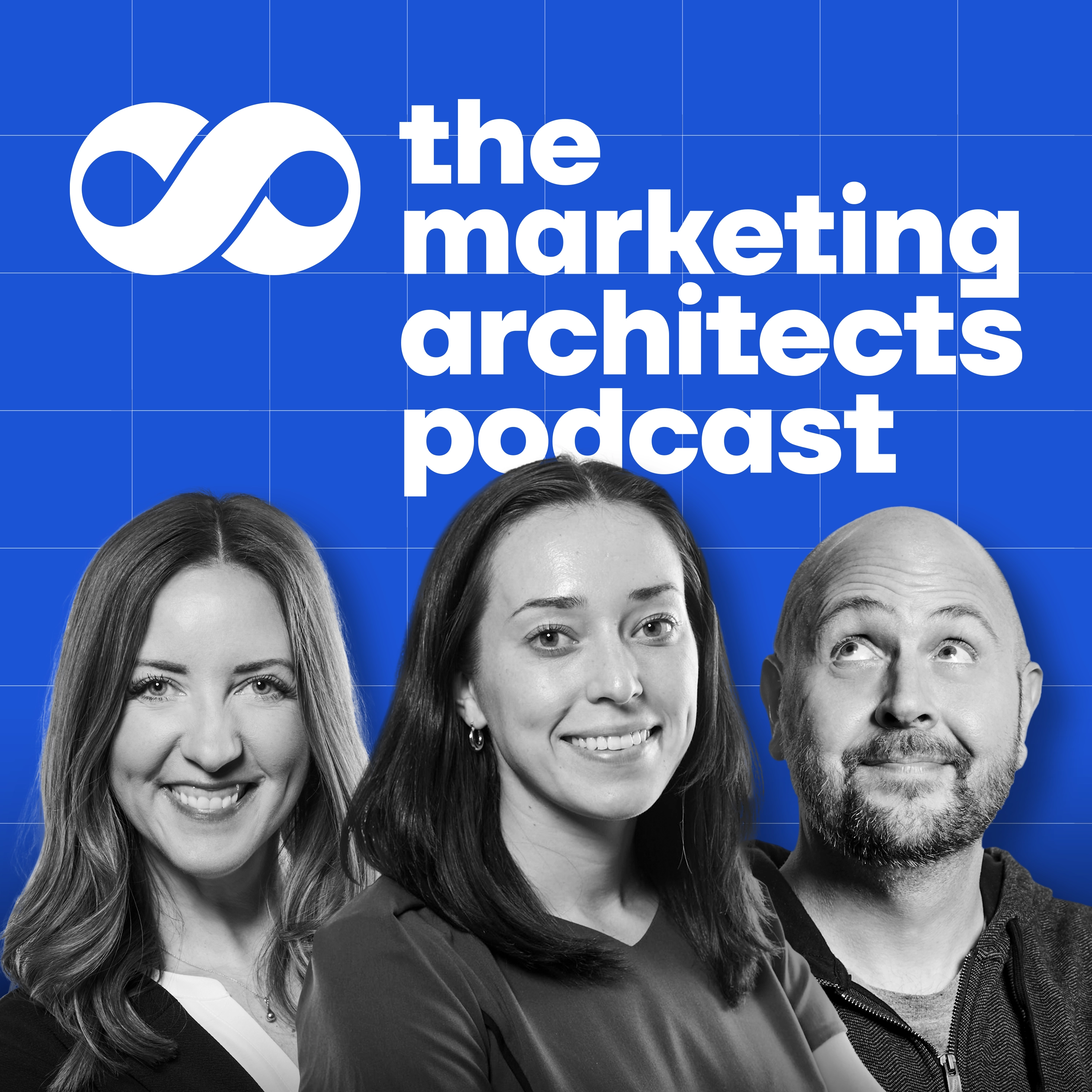
This week, Elena and Rob are joined by Chief Creative Officer Steve Babcock to discuss what makes creative truly effective in 2026. They explore why most award-winning work fails to drive growth, the danger of over-personalization, and why fewer ideas executed longer beats constant reinvention. Plus, hear Steve's contrarian take on creative awards, the role of AI in advertising, and why durability matters more than novelty.

Topics Covered
• [01:00] Why only 21% of award-winning creative is effective
• [09:00] Durability beats novelty in creative effectiveness
• [15:00] Over-personalization is hurting creative campaigns
• [21:00] Balancing emotional and rational messaging
• [24:00] AI's role in creative work and the "human leap"
• [32:00] Steve's advice: commit to fewer ideas for longer
Resources:
2025 WARC Article
Today's Hosts

Elena Jasper
Chief Marketing Officer

Rob DeMars
Chief Product Architect

Steve Babcock
Chief Creative Officer
Transcript
Steve: Real creativity isn't about just serving up exactly what you think someone wants, but it's being able to understand and serve them up something they didn't know they wanted or something that they maybe will want in a year from now or whatever, right?
Elena: Hello and welcome to the Marketing Architects, a research-first podcast dedicated to answering your toughest marketing questions. I'm Elena Jasper. I run the marketing team here at Marketing Architects, and I'm joined by my co-host Rob DeMar, the Chief Product Architect of Misfits and Machines.
Rob: Hello!
Elena: And we're joined by Steve Babcock, our Chief Creative Officer at Marketing Architects.
Steve: Hello. Glad to be back. This is my sophomore episode.
Elena: Thanks for joining.
Steve: Exciting. I mean, I didn't think you would invite me back after the last one, so I'm very grateful.
Rob: I mean, the freshman year is the toughest. Now it's just easy.
Steve: No, I'm excited to be here.
Elena: Happy to have you back. We are back with our thoughts on some recent marketing news, always trying to root our opinions and data research and what drives business results. And today, Steve is here because we are talking about creativity, but I'll kick us off as I always do with some research. And today I chose an article by Stuart Mitchell. It's titled "Highly Awarded Creative Ideas Are Significantly More Effective, New Work Research Reveals." Work recently analyzed more than 5,600 campaigns from the past decade to understand the relationship between creativity and effectiveness.
What they found is that creativity does matter, but it's not a guarantee. About 21% of the creatively awarded ideas also went on to win effectiveness awards. However, when ideas reached the very top—AKA the Work Creative 100—the likelihood of effectiveness doubles to 44%. The difference isn't just the idea itself. The most creative and effective campaigns tend to run longer, use more channels, and show higher levels of what Work calls creative commitment.
They balance emotion with information, build brand equity, and in most cases deliver measurable sales impact. The takeaway is pretty clear: creative effectiveness isn't just isolated brilliance. It's about sustained, well-supported creative work. So there's a lot within that research that we're gonna talk about today. I wanted to start with the study. This one I thought was interesting because it's positive that a lot of the top, top creative is very effective. But that stat stood out to me—like only 21% of award-winning creative was then found to be effective. Steve, does that number surprise you at all?
Steve: No, it doesn't and I think it's because I have sort of my specific opinions around a lot of the creative awards. There are a lot of award shows. If I could go back in time, I would've invented an award show because they are a money maker, you know? Like they play off of the emotions of everybody in our industry. Yeah, the Stevie—just, hey, send them in. It's $500 in entry. There are a lot.
If I'm talking specifically around some of those that are more notorious for creativity—we're talking Cannes Lions, et cetera—I'm not surprised because I feel like for the most part, what they celebrate, which I also think is worth celebrating in a different avenue, is the art, is the surprise, is the uniqueness, but kind of of the moment, right? Whereas in effectiveness, and especially as the article that you just referred to is something that—well, you don't really know if it's effective until you've spent some time with it, right? It's like a different lens I would say. I never want to discredit them and be like, oh, creative award shows are not valuable—it's like they have their place. But I don't think they're a great barometer. Apparently science agrees to what we're really supposed to do, which is effectiveness and impact for our brand partners. And that's the other thing too—effectiveness has to live in the real world for an amount of time, right? Like it's easy for anybody to sit in isolation and go, I'm coming up with something that's cool. And a lot of times I'm trying to come up with it to appease these award show judges, to appease the industry insiders, right?
Versus the average person out there and what really makes creative and effective work. So I'm not really surprised. I just have a hard time being a downer on it. It's still very inspiring, but it's art, typically—it's the art side. It's not really the responsible side of advertising. I don't even think it's advertising half the time, you know? If you identify advertising as having a job to do, it's more like, okay, it's art that you used a client's money to make. So I'm not super surprised. I mean, maybe that number seems a little lower than I would've thought, but that checks.
Rob: Yeah. I think the other stat that really stood out to me was the 44% headline going, wow, okay. That says it's not just about creativity, it's also about commitment and scale. And yeah, those were the campaigns that ended up not just recognizing the creative idea, but believing in it enough that you're willing to stick with it. I think the other thing—just to go down a quick rabbit hole to your point—award shows are tricky, right? What are they awarding? I think the other side of it is even with effectiveness awards, it's like, well, what are you really measuring? When you said "okay, you improved click-through rate by X"—but if your click-through rate was two percent, like that's not that great, you know? Or two clicks. So, you know, it can be funny math.
Elena: Steve, I thought that was a good point that I haven't even thought of, which is: should we even expect award shows to be judging effective creative? Because you see those headlines all the time where they're like, oh, awards aren't aligned with what's effective. It's like, well, are they even set up to suss that out in the first place?
Steve: Totally! Just embrace what it is, you know, and go like, this is the art side. This is what we're doing, and have a good time and everybody fly to France and party it up. I get that. The other thing too is creativity is subjective. Effectiveness isn't. It can be manipulated or you can try to tell the story if you want. I to this day, if I see another award show video entry that's like, "and the campaign garnered 800 billion media impressions," like no one knows what that means, you know, but they throw it in there and everyone's impressed. But effectiveness can be measured, and so it's almost to me like it doesn't need an award show for it.
It just needs a report, you know? The effectiveness report. There's not a subjective judging by any judges here—it is what it is, you know? And I know there's a lot of resources out there that do that. I think unfortunately in our industry—sorry, I'm soap boxing here—in our industry, and I think it's changing, but historically—I'm old now, so historically I think effectiveness hasn't been thought of as sexy. The actual craft of what a real good campaign is supposed to do is a combination of those things.
But at the end of the day, you have to be able to brag about that it worked, it solved the business objective. That's the trick. That's the puzzle. And somewhere along the way, this whole Mad Men idea that a lot of creatives in advertising have—I think we got confused by and started to embrace. And then there became that split, right? Where it's like, well, effective work sucks, you know, it's not good. It's like why?
Elena: No, that's a great point and that leads nicely into this next question I had, which is—we have creative that can win awards and be seen as art, but doesn't necessarily drive growth. What do you think separates those types of creative then?
Steve: Growth-driving creative is designed to be used, like not just admired, if that makes any sense. It made sense in my head as I was saying it.
Rob: I'm tracking.
Steve: Like growth-driving creative is designed to scale, it's designed to be repeatable. It's designed to work across all of the channels. It's utility. It's really hardworking creative that's designed to live in the real world for as long as possible, versus just be this flash in the pan art that's designed to get everyone to go, oh! The other thing that's interesting about that mindset versus talking about durability—like growth-centered campaigns have durability.
They have longevity, and I think one of the reasons why that turns into effectiveness, especially today is because I would argue maybe even 10 years ago, you know, I've worked at many agencies where that was it. The goal was like, get on the news tonight with whatever we're gonna do. And back then that did work. I think that really did, you know? We would call it the "earned" or the second media buy, right? It's like there's the media buy that you pay for, but because the idea was so crazy and outrageous or whatever, it got free press and all that.
Nowadays the news cycle—like right now while we've recorded this, culture's already gone through three big things probably that we'll find out when we go to Twitter after this, right? So now if brands are trying to play in that, you don't last four seconds. You got the headline, and it's like no one cares because we're already onto four other headlines, whether it's what's going on in the world or all these things. So I think that discipline of going like, hey, I don't need to play in that game because it's a losing battle to just try to get the headline versus build something that is incredibly creative emotionally, but effective rationally that can live forever. And that takes a lot of discipline because sometimes as a creative that doesn't feel sexy and you can get bored with it as a creator, right? And you're like, but they're not bored with it, you know? It's working for them. So it's that discipline I think of being an artist in advertising for a lot of creatives.
Rob: Okay, you're inspiring me, Steve. So let's create an award show. We're gonna call it the Stevie's because that's just cool, right? And you can't enter your campaign unless it's run for two years.
Steve: I love that. It's interesting too, because I've thought a lot about just the cycle of advertising award shows. They're every year, so they're just designed to do the novelty, you know? And it feels like a frown to be like, oh, hey, it's Limu Emu, which has been going on for 10 years. You can't enter that. That's not new, you know, and it's like, well, but it's been really effective and—yeah. Yeah. I love it.
Rob: The Stevie's coming soon.
Steve: Stevie's. See you in two years.
Elena: Let's say we create the Stevie's, all right? And—Steve, if you're judging it, Rob, too, you can be a judge. What would you reward that doesn't normally get recognized?
Steve: Durability. I'll never say it's easy. That's a cop out. It's hard. It's hard to come up with something memorable period. But to come up with something that's memorable that can last, you know—I come from also the music world too, and just like, that's what they say when somebody creates a record that's timeless, you know? We've all heard 'em. It's like, man, that was awesome when that record came out. But it's been a classic for many years, and I think that's the same with advertising. You also have a lot of one-hit wonders, I guess to continue the analogy to music, right?
It was like, man, that was the summer hit of 2006, but where are they now? Meanwhile then there's the bands that put out records that are durable, timeless. So I think that would be the thing I would look for, which I guess would only exist in the Stevie's because it doesn't really exist in today's ad award shows because you're looking for what was that one-hit wonder.
Rob: Creating the criteria for the Stevie's here. You know that commitment, right? That commitment is both courageous—but hold on to that idea and not give up too early, which every CMO obviously loves to do when they come in—let's change it when it's working. Great. I love the word durability. Yeah, it's a great word, Steve, because I think that's really what you're looking to accomplish.
Elena: We're sharing some opinions that people will probably push back on a little bit. So I know, Rob, you're not afraid of doing that. Steve, you also appear to not be afraid of doing that either. So in that spirit, what is a creative take that you've had or have—hopefully have—that people have pushed back on, but you still believe is right?
Steve: Oh, gosh. I'm not much of a contrarian, I don't think so, but I feel like I've probably got a lot of those. I would continue along what Rob was just saying is like, you know, you don't need to reinvent yourself all the time, right? We have this conversation with clients all the time where we're like, man, we're on a roll. It's like year three and we're continuing to build, we can continue to make this idea fresh, yet consistent—well, you know, we should maybe do this or that because—no, you don't need more ideas. You just need fewer ideas that are really great and can be durable, thus executed for a longer period of time.
Rob: That's a good one. Elena, you know mine, I've said it enough times on this podcast, but my contrarian view is that television is now an audio-first medium.
Elena: Mm-hmm.
Rob: And the research has really showed that people's eyeballs are retreating to their second screens. So to get attention, you've gotta think about what's your audio strategy in that commercial.
Elena: Always a good reminder. So one part of the report I know we've been talking about how only 21% of these creatives that won awards were truly effective, but they did share that those top, top-end ads that won the highest creative awards, they were much more likely to be effective. But Steve, why do you think such a few number of brands ever get there where they're having things that are both effective and creatively awarded?
Steve: It's hard to do. It really is a challenge. That's really the craft, that's the goal, that is the benchmark. And nothing that wants to honor truly what advertising is designed to do that doesn't fall into that space, that very small space of being able to accomplish that—I don't think should really be recognized or talked about or celebrated that much because that's where the celebration is—because we know that humans—speaking for myself, like we don't just buy rationally.
Still very much until AI takes us all over, we're very emotional, right? And emotional messaging and engaging messaging and creativity that inspires, that makes us feel something—that's always gonna register, right? It has a lot to do with memorability and effectiveness, right, as well. But we're gonna speak to the heart. We're gonna use insights that really speak to people emotionally, not just the speeds and feeds—this product has X, Y, and Z. But when you can combine those things—that's the goal.
That is the goal. It's not one or the other. It never should be or can be. That is the mix that works. We're always striving. We have the line "Remarkable Work That Works Remarkably." Rob, you probably came up with that. It was before my time. I've always really, really loved it. And it's so easy to say, but when you know you're sitting down pen to paper, it's like, man, it's a challenge. But it's definitely the one that our entire industry should never stop pursuing.
Elena: So we should be pursuing it, but like you said, most don't make it there. Which makes me think that there has to be some best practices or some things that most people in the industry are pursuing that aren't helping effectiveness. Do you have one in mind, a creative best practice that you think is actively hurting effective campaigns?
Steve: Maybe over-personalization, right? Everything has to be so incredibly hyper-targeted. I still think mass reach with a clear idea will always outperform fragmented cleverness, right? If that makes sense. I think we have a responsibility. I think real creativity isn't about just serving up exactly what you think someone wants, but it's being able to understand and serve them up something they didn't know they wanted or something that they maybe will want in a year from now or whatever, right?
So I guess that maybe would be a best practice that I don't think is helping—if you just assume that's it, that's the best practice—always hyper-targeted. Man, studies show that our audience likes dogs. Send 'em a picture of a dog. And it's like, well, they also might like meerkats, you know, like, and we think that there's something really interesting and clever there and so on. So everyone loves meerkats. Maybe that.
Elena: No, we're definitely aligned with that. We're set up for—
Rob: I hate cats.
Steve: Meerkats though are not cats.
Rob: What the hell's a meercat?
Elena: You don't know what a meerkat—like the little, they're like in Africa or something, probably. They stand up and they're like—they're Timon.
Rob: Oh, right, I'll look them up.
Elena: Timon from The Lion King. He's a meerkat.
Steve: I think. You're, I think they're.
Rob: All cats.
Steve: That's fair.
Elena: Rob, okay. To get back on track, Steve, I think we definitely would agree with that for a lot of reasons—with even the practicality of, like you said, knowing what somebody really wants down to the individual level. And I'm also interested in doing an episode on this soon about fragmentation because it is a big issue and I think that's what drives brands towards this hyper-personalization—these platforms demand it and they want all these different versions. But I think there's that path where you just become so fragmented and personalized and you lose those big ideas. Or how do you start with a big idea? Share it everywhere you can, because there still are a lot of opportunities for mass reach and then take that and distribute it in different ways. I like what you're saying there because you're right that these platforms drive you towards that. How do you not get caught in that loop?
Steve: Yeah. And I think, you know, there's a great advantage to personalization as it relates to funnel mapping, right? Okay, so and so saw this ad, I know it, I've tracked 'em. Now I'm gonna serve 'em up another ad that acknowledges they've seen the first ad—that kind of thing. But when it's like from a creative standpoint of super, super hyper-targeting—I think that's a word: "targeting-ation." It is—it's a category in the Stevie's—best use of "ation."
Rob: I love it.
Steve: It's coming up in two years, folks. But targeting like that, I definitely agree. I just think, man, when you're so narrowly focused on your effort, you miss out on all of the fringe. And that's—you don't grow otherwise.
Elena: So I think a lot of us, when we get into marketing, we wanna do the big creative things, you know? That's the fun part of marketing is getting to be creative. But where do you think CMOs might unintentionally be harming their creative effectiveness?
Steve: You gotta redact this whole part. No, I'm kidding. I'm kidding. And I do today, we work with some really great CMOs and, you know, acknowledge the fact that there's usually a level of bureaucracy. There's a lot going on, right?
Elena: Yeah. Out of their control.
Rob: We got the disclaimer out of the way now.
Steve: There you go. I would say, for me, a lot of it is I feel like a debate or a challenge that I'm often in with CMO partners or someone of their level is the value of distinctive assets—just looking and sounding super unique and different, right? Just that, you know? I feel like there's a lot of times where I'll go in and typically I'll present work based off of just that criteria, you know? Here are three very distinct asset approaches, you know—one uses, hey, here's a character we've developed, or here's this thing we've developed, or here's this. And again, because they're designed for durability, they're designed for longevity, and we've looked across the competitive set as well as just the rest of the market, and this is distinct and here's some things that aren't, right? And sometimes you can get subjective, but really doing the work there. I have found, you know, more often than not where it would get frustrating is as you go along with the work, the distinctiveness will get knocked out because being distinct can also be really uncomfortable. It's very easy to be like, I'm gonna just do this because this feels safe. It feels good. The other thing, unfortunately, I believe the life cycle of a CMO at a company is super short. The span, right? So that just means, okay, they're getting traded around faster than college sports coaches.
They're not there either. So they're operating from a place—if we're trying to be in their shoes, right? They're operating from a place of like, I don't know if I should be ruffling feathers. I understand it. I'm not critiquing it, but I wish—I promise you that it's easy for me to say, and they're like, well, your job's not on the line. Well, it probably is, but I promise you that if we are distinct, there's so many studies that back it up that distinctiveness is a direct link to longevity and effectiveness. So that would be maybe a little close to—a little sensitive right now because I think I just went through that earlier this week, so.
Elena: Yeah. No, but it's a good point though that it's almost up to the CEO because CMOs, if you come in and you don't have time to think long-term about your brand, they're gonna be pushed into this corner of—I need to play it safe and try to get an instant result. I mean, that's also not on the CMO's shoulder—that's on the company itself that needs to be aligned.
Steve: A million percent. If there's ever a person that I've ever seen stuck between a rock and a hard place more, it will be a CMO at a major company. I feel for 'em because they're just like, I'm trying to—and you're just like, ah, not a place I ever would like to be.
Elena: No. Well, one piece from the report that I wanted to call out is this finding that the best creative ideas balance both emotional and rational messaging, because we talk a lot on the show about emotional advertising outperforming rational. But I thought it was kind of refreshing. Like that's normally the narrative you see—it was refreshing to have Work come out and say, hey, the best ideas balance both of those, which I know, Steve, we have "Remarkable Work That Works Remarkably." We definitely believe that too. How do you think creatives can get that balance right?
Steve: Well, there's a little chicken and the egg, right? Philosophically, the industry needs to change in order to change creatives coming into the industry. Creatives are like, I'm chasing the thing that the industry's telling me to chase. But I think ultimately the landscape will force that. It's like brands have—we've seen that over the years, I think—where brands are like, well, no, my marketing dollars—I have to have something to show for it, you know? So I think effectiveness is gonna be something that creatives are going to be—if they don't embrace it already, which I think that's the route to go—that's where the pride is: you created a thing that solved a problem that actually worked. But if they can't get there, they're gonna be forced to get there. But I think the idea of emotion, right? Emotion will get the attention, but the rational part, the information—that earns the permission, I guess, if that makes sense. So it's like we need to stop treating them as opposites. They're literally two parts of the equation, right? You need both of them. That's the other mistake, right? Where you'll see maybe something that gets highly celebrated. It's very emotional, but you walk away and you're like, I don't actually know what it was for or what it does, or why it's a thing I need to get right now, or participate with. And that's where I'm like, wait, we've missed that. And then you'll also see things that you're like, okay, I just totally saw a little demo of a thing, or I kind of know what that is and why it works. It didn't speak to me in my life in any kind of way that makes me remember it or recall it in 15 minutes. So I think that's the way that creatives need to think about it, is that they're not opposites. They're just two halves to the complete agenda.
Elena: A good way of thinking about it. We can't have a podcast on creative in the year 2026 without talking about AI. So we're gonna have to check in on it. We talked to you about this last time you were on the show. How are you feeling now? Like what role should AI be playing in creative work today and where do you think it's maybe being misused?
Steve: AI is—well, I just wanna be very much on the record—so freaking cool. I know there's a lot of doom and gloom about it. Maybe we're all doomed. I love it. I'm just gonna be excited the whole way until our demise. It's so fun. It is so dang fun. But how it's being misused or how it could potentially be misused—so first of all, it's great in generating mass and helping you explore and obviously just getting rid of, or just a lot of the tasks that take up time. And it's just a really good—I like to actually think in the creative space, I like to think of AI as kind of like a creative partner.
It's really fun to bounce ideas off of and just sit there and help. What you don't wanna do is just use it as the tastemaker. Mindless prompts—just prompting to cut and paste. I've got it. It's like—now that's not—now you're eliminating your role and what it's not going to do is have what I've heard called, and maybe I've made this up and I swear at one point I heard someone refer to this term: "the human leap."
And basically what the human leap is, is the ability to advance or to invent, right? The thing that doesn't exist. And currently AI is really good at grabbing everything that does exist and serving it up however you need it, which is great. But what about the thing that doesn't exist? And that's the human leap. And the thing that's always pushed creativity forward and our culture forward is someone coming up and saying, "What about this?" And you're like, we weren't ready for that. I think that's gonna be the problem—when you misuse it to a point where you don't interject yourself.
And at Marketing Architects we refer to ourselves in the department as creative engineers. And I know a lot of agencies have fun titles just to be wacky, and the hope is that we're not doing that. I genuinely think it was something that I personally thought of for a long time. It was like, why? What would be—in a world of creating with AI, what would be a title? And that was the best I could come up with. But it made sense because an engineer is using their human talents and their intuition and their skillset to use machines to do a job, you know—whatever that is: civil engineer, mechanical, electronic. And to me it feels like that's the same way. It's like, well, now we've got a hyper-powerful machine at our fingertips, but we're engineering it. We are using it, and that's the difference between a human engineer versus just a button pusher. There are so many ways that you can interject your humanity into the AI process, whether it be how you prompt, how you create, how you add reference, all these things. So I guess that's probably my one misuse and my worry with AI—if everybody misuses it, it's just gonna create a beige world because it's just gonna keep pulling back the same kind of thing. Please, we need the human leaps.
Rob: You don't like beige, Steve? Is that what you're saying?
Steve: I actually like beige. It gets a bad rap and I just substantiated that. It's a great color.
Rob: Which—I also say that AI, in many ways isn't conceptually speaking that new.
Steve: Maybe you thought about this too, because, you know, Rob, you are definitely steeped in this. I was thinking—wasn't a calculator AI?
Rob: Right!
Steve: The way, there's—
Rob: Definitely—the actual intelligence of AI. And to go with you on that though, back in the olden days of the nineties, I started at an ad agency and I heard about this title called "The Typesetter." I'm like, what the hell is a typesetter? And they're like, well, it's these people that would put the type in to make the ad.
And then obviously, you know, Quark came out, which was like this software you could use, and people's roles had to adapt. In the agency I was at, there was actually a room where they cut—they literally cut film with, I guess, a razor blade.
Steve: The listeners need to know that Rob is 98 years old.
Rob: I am 98 years old, but next door to it, they had this thing called an Avid, and you're like, whoa, you could drag and drop and move. And that pissed a lot of editors off because you're like, oh, this is a craft that we have, you know? And just as we look at AI, it's radically accelerated change. Those other changes happened slowly over time. So you didn't get the bends when they occurred, where right now we're all going through the bends going, holy crap, what? Where do I go? But in a way, this is just another way of manifesting amazing tool sets—to your point, Steve, just give us super powers if we use our powers for good.
Steve: Well, I think the other—not to tangent us here, another word.
Rob: Another category in the Stevie's: best use of "tangenting."
Steve: Anytime I get excited about AI for a variety of reasons, I just think delusional optimism is the way to live life. If it's all going down, we might as well go down with a smile. It's just like, let's go for it. But the other cool thing about it—we do this thing in our group, which is really fun. Maybe every quarter we do a little film festival and everybody, you know, jumps in. There's usually a prompt. This last one was a film trailer. So you needed to make a trailer for a movie that you were coming up with, and you can use all the tools you want that we have access to. It's fun to do. It's camaraderie, but it's also just like, hey, making sure that we're all leveling up. Now, clearly we have a few folks on the team that are always like, okay—I mean, they're—like Justin, who's just like, okay, he's gonna dominate.
Versus maybe someone over here who's classically trained as a writer. But what's been awesome is as we've done it more and more, it's becoming less obvious who's who in their submissions. And what's really cool about that is the idea that historically there's ideas and then this massive bridge to that idea becoming real. Back in Rob's day, if I had an idea, there's a bridge of people and money and production companies and channels and all of it. And so it's like only the select few ideas made it to the world. AI now has dramatically shortened that bridge to where someone who has an idea can now make that idea real.
I think if you truly love creativity, that gets really exciting, right? It's the same thing with YouTube and stuff, right? At first it's like, what's YouTube? And it's like, well now people who had a great idea were able to get it out there. AI is like that on supercharge, so I think it's really, really exciting and I think the next few years—I think AI is actually gonna—they're like, it's gonna kill creativity. I think it's gonna usher in a creative revolution like we've never seen.
Elena: Steve, you mentioned that one thing you changed about your team when all of this stuff was exploding was you changed people's titles to creative engineers. And I think that—I'm guessing your intention behind that was to change some of the thinking around what we can do and what our roles can be. If you could give CMOs a piece of advice, you know, one thing they could change about how they're approaching creative, their team, their company, what would you tell them? What would actually move the needle?
Steve: I would probably go back to my other thought, just—commit to fewer ideas for longer. Embrace that idea of building momentum through distinctiveness. I think there's a reason why we can look through the annuals of classic amazing marketing and it's that characters are always a thing—that's a good example of a distinctive asset. Like, man, a great character that you've been able to have speak and mean something emotionally, help sell the rational, but they've just created that memorability throughout the years. So I think that would be my thing, is stop feeling like, you know, we gotta freshen it up.
You don't wanna be stale—you can reinvent within the space that you've created. But I just feel like there's a lack of patience. It's a long game. Creative effectiveness is a long game. Commit to it, it's a marathon, which I've never run. Elena's run 800 of them. I've never run any of 'em. So I feel bad using that analogy. And I just wanted to publicly say that.
Elena: Well, Rob's actually ran more marathons than me, but yeah, I haven't done a marathon. I've done triathlons and half marathons. But yeah, Rob has me beat there actually.
Steve: Wow. Rob, I did not know that about you. I feel bad.
Rob: I'm just a marathoner. I'm new.
Steve: Wow. All right, well I've offended both of you.
Elena: No, it's fine. All right. Let me, let's wrap up here with something kind of fun. What is a campaign that you saw recently that you thought was very effective? Maybe it wasn't that flashy? And Steve, you wanna go first?
Steve: Yeah, well, I would argue this one is flashy. There's a lot that I could call out. I love, and I actually should look it up because I don't know how long it's been going, but I know it's been going for at least a few years, which again calls back to the idea of durability and a great idea, but I love Progressive Insurance's "Progressive Can't Save You From Becoming Your Parents."
Rob: Yep.
Steve: Yeah. But it can save you money. It's so good. It's on a great insight of like, hey, this is a time when people are trying to become independent and part of that is getting your own insurance and all that. And you still wanna be independent. And then there's just great insight that we all—you reach a place, I mean, I'm definitely there. It's like, dude, you're your dad, you know? I'm like, oh crap. We all become our parents.
But just so well executed. I've never—I should look it up. I don't know how many they've done. Dozens. I haven't hit one where I'm like, ah, jumped the shark—that's peaked. Nailed it over and over and over, and it's like that. Don't stop. If Progressive people are watching this, just keep going with that. It's so good. And effective and a great example. Now, I don't know if it'll show up in Cannes because, right, it's like, well, this is an old campaign that's been going for a while, but it will definitely win at the Stevie's. So please submit it, please. That'd be one for me.
Rob: That's a good one. I've got—okay. Initially I was thinking about this going, oh, well, you know, I love the new Mountain Dew ad where Seal is like a seal. I'm like, come on—but I'm like, well wait, that's flashy, so that's disqualified. So I—I'm like, okay, well what's a non-flashy one? Now this one's gonna make some people throw up in their mouth, but I really took production value and flashiness into mind. And I'm telling you, the Billy Bob Thornton T-Mobile ads, they are incredibly persuasive and it's just Billy Bob Thornton walking down the road talking to the camera about how T-Mobile used to suck and now they don't.
And I'm telling you, it is—I found myself going, hell yeah, I'm glad we actually have T-Mobile at our house because he's really good at just getting there. And maybe it's just because I love Billy Bob Thornton too, so I thought non-flashy Billy Bob Thornton was my pick.
Steve: Yeah, I think it's interesting—have you noticed—did AT&T do a direct attack back with Luke Wilson? Or did they just make two commercials that are really similar? Because have you seen that one? Luke Wilson's just walking down a country road talking about—
Rob: Oh hell, he's—
Steve: Yeah, and I looked at that and it was like, oh, is this—are we about to have a little brand battle? Or was it just like, wow, a coincidence that you came up with two things that looked a lot alike? I think I love that. I think a lot of people overlook the power of straight talk delivered in a just an emotionally well-created way. And straight talk—I mean, like you said, I mean, being able to acknowledge like, yeah, we weren't great or you didn't think we had a bad reputation or this or that. That's straight talk. And that actually I would argue is very emotional.
Rob: Absolutely. So good. He's like, yeah, we used to suck when, you know, phones used to be the size of a frozen lasagna, you know? And you're like, yes, yeah, Billy Bob, yes.
Steve: Go look up the AT&T one with Luke Wilson because I do think they're starting a battle because it's too similar for it to be a coincidence.
Elena: That would be fun.
Steve: Brand battles—bring them back.
Elena: Yeah, I went down the insurance route. I dunno if you've seen this ad recently, but there's a new Geico ad where it's this family room, three people, and they're talking to the television, kind of yelling at their favorite sports team and then the player starts talking back. Yeah, I like it. It's not a huge production, but it's relatable, timely, and they show their mascot, the Geico gecko, and I went on YouTube to see exactly when—it's in the first two seconds of the ad.
You see this mascot. And if you think about it, you didn't really need the mascot in the ad. You could have just had a narrator, but I think they know how valuable that little gecko is, so he appears right away. And yeah, I just thought not super flashy, but it speaks to kind of a human truth. And I don't know if it'll win any awards, but I thought it seemed effective.
Steve: It'll win a Stevie.
Elena: It'll enter in the Stevie's.
Rob: If that Geico—if that gecko's union or not, because man, the royalties on his use.
Steve: I know, right?
Rob: He's just living it up.
Elena: He's earned it. All right, great. Well, that's fun, Steve. Thank you for joining us today.
Steve: Thank you for having me. I will look forward to a junior effort maybe in a year. I don't know. I'm here, so.
Rob: Until then, we're gonna—we're waiting for the Stevie's.
So we're gonna get on that.
Steve: Awesome. No, thanks for having me, guys. Always a blast.
Episode 147
Creative Effectiveness in 2026 with Steve Babcock
Only 21% of creatively awarded campaigns actually drive business results. But when ideas reach the very top of creative excellence, effectiveness doubles to 44%. So what separates the winners from the rest?
This week, Elena and Rob are joined by Chief Creative Officer Steve Babcock to discuss what makes creative truly effective in 2026. They explore why most award-winning work fails to drive growth, the danger of over-personalization, and why fewer ideas executed longer beats constant reinvention. Plus, hear Steve's contrarian take on creative awards, the role of AI in advertising, and why durability matters more than novelty.
Topics Covered
• [01:00] Why only 21% of award-winning creative is effective
• [09:00] Durability beats novelty in creative effectiveness
• [15:00] Over-personalization is hurting creative campaigns
• [21:00] Balancing emotional and rational messaging
• [24:00] AI's role in creative work and the "human leap"
• [32:00] Steve's advice: commit to fewer ideas for longer
Resources:
2025 WARC Article
Today's Hosts
Elena Jasper
Chief Marketing Officer
Rob DeMars
Chief Product Architect
Steve Babcock
Chief Creative Officer
Subscribe on



Enjoy this episode? Leave us a review.
Transcript
Steve: Real creativity isn't about just serving up exactly what you think someone wants, but it's being able to understand and serve them up something they didn't know they wanted or something that they maybe will want in a year from now or whatever, right?
Elena: Hello and welcome to the Marketing Architects, a research-first podcast dedicated to answering your toughest marketing questions. I'm Elena Jasper. I run the marketing team here at Marketing Architects, and I'm joined by my co-host Rob DeMar, the Chief Product Architect of Misfits and Machines.
Rob: Hello!
Elena: And we're joined by Steve Babcock, our Chief Creative Officer at Marketing Architects.
Steve: Hello. Glad to be back. This is my sophomore episode.
Elena: Thanks for joining.
Steve: Exciting. I mean, I didn't think you would invite me back after the last one, so I'm very grateful.
Rob: I mean, the freshman year is the toughest. Now it's just easy.
Steve: No, I'm excited to be here.
Elena: Happy to have you back. We are back with our thoughts on some recent marketing news, always trying to root our opinions and data research and what drives business results. And today, Steve is here because we are talking about creativity, but I'll kick us off as I always do with some research. And today I chose an article by Stuart Mitchell. It's titled "Highly Awarded Creative Ideas Are Significantly More Effective, New Work Research Reveals." Work recently analyzed more than 5,600 campaigns from the past decade to understand the relationship between creativity and effectiveness.
What they found is that creativity does matter, but it's not a guarantee. About 21% of the creatively awarded ideas also went on to win effectiveness awards. However, when ideas reached the very top—AKA the Work Creative 100—the likelihood of effectiveness doubles to 44%. The difference isn't just the idea itself. The most creative and effective campaigns tend to run longer, use more channels, and show higher levels of what Work calls creative commitment.
They balance emotion with information, build brand equity, and in most cases deliver measurable sales impact. The takeaway is pretty clear: creative effectiveness isn't just isolated brilliance. It's about sustained, well-supported creative work. So there's a lot within that research that we're gonna talk about today. I wanted to start with the study. This one I thought was interesting because it's positive that a lot of the top, top creative is very effective. But that stat stood out to me—like only 21% of award-winning creative was then found to be effective. Steve, does that number surprise you at all?
Steve: No, it doesn't and I think it's because I have sort of my specific opinions around a lot of the creative awards. There are a lot of award shows. If I could go back in time, I would've invented an award show because they are a money maker, you know? Like they play off of the emotions of everybody in our industry. Yeah, the Stevie—just, hey, send them in. It's $500 in entry. There are a lot.
If I'm talking specifically around some of those that are more notorious for creativity—we're talking Cannes Lions, et cetera—I'm not surprised because I feel like for the most part, what they celebrate, which I also think is worth celebrating in a different avenue, is the art, is the surprise, is the uniqueness, but kind of of the moment, right? Whereas in effectiveness, and especially as the article that you just referred to is something that—well, you don't really know if it's effective until you've spent some time with it, right? It's like a different lens I would say. I never want to discredit them and be like, oh, creative award shows are not valuable—it's like they have their place. But I don't think they're a great barometer. Apparently science agrees to what we're really supposed to do, which is effectiveness and impact for our brand partners. And that's the other thing too—effectiveness has to live in the real world for an amount of time, right? Like it's easy for anybody to sit in isolation and go, I'm coming up with something that's cool. And a lot of times I'm trying to come up with it to appease these award show judges, to appease the industry insiders, right?
Versus the average person out there and what really makes creative and effective work. So I'm not really surprised. I just have a hard time being a downer on it. It's still very inspiring, but it's art, typically—it's the art side. It's not really the responsible side of advertising. I don't even think it's advertising half the time, you know? If you identify advertising as having a job to do, it's more like, okay, it's art that you used a client's money to make. So I'm not super surprised. I mean, maybe that number seems a little lower than I would've thought, but that checks.
Rob: Yeah. I think the other stat that really stood out to me was the 44% headline going, wow, okay. That says it's not just about creativity, it's also about commitment and scale. And yeah, those were the campaigns that ended up not just recognizing the creative idea, but believing in it enough that you're willing to stick with it. I think the other thing—just to go down a quick rabbit hole to your point—award shows are tricky, right? What are they awarding? I think the other side of it is even with effectiveness awards, it's like, well, what are you really measuring? When you said "okay, you improved click-through rate by X"—but if your click-through rate was two percent, like that's not that great, you know? Or two clicks. So, you know, it can be funny math.
Elena: Steve, I thought that was a good point that I haven't even thought of, which is: should we even expect award shows to be judging effective creative? Because you see those headlines all the time where they're like, oh, awards aren't aligned with what's effective. It's like, well, are they even set up to suss that out in the first place?
Steve: Totally! Just embrace what it is, you know, and go like, this is the art side. This is what we're doing, and have a good time and everybody fly to France and party it up. I get that. The other thing too is creativity is subjective. Effectiveness isn't. It can be manipulated or you can try to tell the story if you want. I to this day, if I see another award show video entry that's like, "and the campaign garnered 800 billion media impressions," like no one knows what that means, you know, but they throw it in there and everyone's impressed. But effectiveness can be measured, and so it's almost to me like it doesn't need an award show for it.
It just needs a report, you know? The effectiveness report. There's not a subjective judging by any judges here—it is what it is, you know? And I know there's a lot of resources out there that do that. I think unfortunately in our industry—sorry, I'm soap boxing here—in our industry, and I think it's changing, but historically—I'm old now, so historically I think effectiveness hasn't been thought of as sexy. The actual craft of what a real good campaign is supposed to do is a combination of those things.
But at the end of the day, you have to be able to brag about that it worked, it solved the business objective. That's the trick. That's the puzzle. And somewhere along the way, this whole Mad Men idea that a lot of creatives in advertising have—I think we got confused by and started to embrace. And then there became that split, right? Where it's like, well, effective work sucks, you know, it's not good. It's like why?
Elena: No, that's a great point and that leads nicely into this next question I had, which is—we have creative that can win awards and be seen as art, but doesn't necessarily drive growth. What do you think separates those types of creative then?
Steve: Growth-driving creative is designed to be used, like not just admired, if that makes any sense. It made sense in my head as I was saying it.
Rob: I'm tracking.
Steve: Like growth-driving creative is designed to scale, it's designed to be repeatable. It's designed to work across all of the channels. It's utility. It's really hardworking creative that's designed to live in the real world for as long as possible, versus just be this flash in the pan art that's designed to get everyone to go, oh! The other thing that's interesting about that mindset versus talking about durability—like growth-centered campaigns have durability.
They have longevity, and I think one of the reasons why that turns into effectiveness, especially today is because I would argue maybe even 10 years ago, you know, I've worked at many agencies where that was it. The goal was like, get on the news tonight with whatever we're gonna do. And back then that did work. I think that really did, you know? We would call it the "earned" or the second media buy, right? It's like there's the media buy that you pay for, but because the idea was so crazy and outrageous or whatever, it got free press and all that.
Nowadays the news cycle—like right now while we've recorded this, culture's already gone through three big things probably that we'll find out when we go to Twitter after this, right? So now if brands are trying to play in that, you don't last four seconds. You got the headline, and it's like no one cares because we're already onto four other headlines, whether it's what's going on in the world or all these things. So I think that discipline of going like, hey, I don't need to play in that game because it's a losing battle to just try to get the headline versus build something that is incredibly creative emotionally, but effective rationally that can live forever. And that takes a lot of discipline because sometimes as a creative that doesn't feel sexy and you can get bored with it as a creator, right? And you're like, but they're not bored with it, you know? It's working for them. So it's that discipline I think of being an artist in advertising for a lot of creatives.
Rob: Okay, you're inspiring me, Steve. So let's create an award show. We're gonna call it the Stevie's because that's just cool, right? And you can't enter your campaign unless it's run for two years.
Steve: I love that. It's interesting too, because I've thought a lot about just the cycle of advertising award shows. They're every year, so they're just designed to do the novelty, you know? And it feels like a frown to be like, oh, hey, it's Limu Emu, which has been going on for 10 years. You can't enter that. That's not new, you know, and it's like, well, but it's been really effective and—yeah. Yeah. I love it.
Rob: The Stevie's coming soon.
Steve: Stevie's. See you in two years.
Elena: Let's say we create the Stevie's, all right? And—Steve, if you're judging it, Rob, too, you can be a judge. What would you reward that doesn't normally get recognized?
Steve: Durability. I'll never say it's easy. That's a cop out. It's hard. It's hard to come up with something memorable period. But to come up with something that's memorable that can last, you know—I come from also the music world too, and just like, that's what they say when somebody creates a record that's timeless, you know? We've all heard 'em. It's like, man, that was awesome when that record came out. But it's been a classic for many years, and I think that's the same with advertising. You also have a lot of one-hit wonders, I guess to continue the analogy to music, right?
It was like, man, that was the summer hit of 2006, but where are they now? Meanwhile then there's the bands that put out records that are durable, timeless. So I think that would be the thing I would look for, which I guess would only exist in the Stevie's because it doesn't really exist in today's ad award shows because you're looking for what was that one-hit wonder.
Rob: Creating the criteria for the Stevie's here. You know that commitment, right? That commitment is both courageous—but hold on to that idea and not give up too early, which every CMO obviously loves to do when they come in—let's change it when it's working. Great. I love the word durability. Yeah, it's a great word, Steve, because I think that's really what you're looking to accomplish.
Elena: We're sharing some opinions that people will probably push back on a little bit. So I know, Rob, you're not afraid of doing that. Steve, you also appear to not be afraid of doing that either. So in that spirit, what is a creative take that you've had or have—hopefully have—that people have pushed back on, but you still believe is right?
Steve: Oh, gosh. I'm not much of a contrarian, I don't think so, but I feel like I've probably got a lot of those. I would continue along what Rob was just saying is like, you know, you don't need to reinvent yourself all the time, right? We have this conversation with clients all the time where we're like, man, we're on a roll. It's like year three and we're continuing to build, we can continue to make this idea fresh, yet consistent—well, you know, we should maybe do this or that because—no, you don't need more ideas. You just need fewer ideas that are really great and can be durable, thus executed for a longer period of time.
Rob: That's a good one. Elena, you know mine, I've said it enough times on this podcast, but my contrarian view is that television is now an audio-first medium.
Elena: Mm-hmm.
Rob: And the research has really showed that people's eyeballs are retreating to their second screens. So to get attention, you've gotta think about what's your audio strategy in that commercial.
Elena: Always a good reminder. So one part of the report I know we've been talking about how only 21% of these creatives that won awards were truly effective, but they did share that those top, top-end ads that won the highest creative awards, they were much more likely to be effective. But Steve, why do you think such a few number of brands ever get there where they're having things that are both effective and creatively awarded?
Steve: It's hard to do. It really is a challenge. That's really the craft, that's the goal, that is the benchmark. And nothing that wants to honor truly what advertising is designed to do that doesn't fall into that space, that very small space of being able to accomplish that—I don't think should really be recognized or talked about or celebrated that much because that's where the celebration is—because we know that humans—speaking for myself, like we don't just buy rationally.
Still very much until AI takes us all over, we're very emotional, right? And emotional messaging and engaging messaging and creativity that inspires, that makes us feel something—that's always gonna register, right? It has a lot to do with memorability and effectiveness, right, as well. But we're gonna speak to the heart. We're gonna use insights that really speak to people emotionally, not just the speeds and feeds—this product has X, Y, and Z. But when you can combine those things—that's the goal.
That is the goal. It's not one or the other. It never should be or can be. That is the mix that works. We're always striving. We have the line "Remarkable Work That Works Remarkably." Rob, you probably came up with that. It was before my time. I've always really, really loved it. And it's so easy to say, but when you know you're sitting down pen to paper, it's like, man, it's a challenge. But it's definitely the one that our entire industry should never stop pursuing.
Elena: So we should be pursuing it, but like you said, most don't make it there. Which makes me think that there has to be some best practices or some things that most people in the industry are pursuing that aren't helping effectiveness. Do you have one in mind, a creative best practice that you think is actively hurting effective campaigns?
Steve: Maybe over-personalization, right? Everything has to be so incredibly hyper-targeted. I still think mass reach with a clear idea will always outperform fragmented cleverness, right? If that makes sense. I think we have a responsibility. I think real creativity isn't about just serving up exactly what you think someone wants, but it's being able to understand and serve them up something they didn't know they wanted or something that they maybe will want in a year from now or whatever, right?
So I guess that maybe would be a best practice that I don't think is helping—if you just assume that's it, that's the best practice—always hyper-targeted. Man, studies show that our audience likes dogs. Send 'em a picture of a dog. And it's like, well, they also might like meerkats, you know, like, and we think that there's something really interesting and clever there and so on. So everyone loves meerkats. Maybe that.
Elena: No, we're definitely aligned with that. We're set up for—
Rob: I hate cats.
Steve: Meerkats though are not cats.
Rob: What the hell's a meercat?
Elena: You don't know what a meerkat—like the little, they're like in Africa or something, probably. They stand up and they're like—they're Timon.
Rob: Oh, right, I'll look them up.
Elena: Timon from The Lion King. He's a meerkat.
Steve: I think. You're, I think they're.
Rob: All cats.
Steve: That's fair.
Elena: Rob, okay. To get back on track, Steve, I think we definitely would agree with that for a lot of reasons—with even the practicality of, like you said, knowing what somebody really wants down to the individual level. And I'm also interested in doing an episode on this soon about fragmentation because it is a big issue and I think that's what drives brands towards this hyper-personalization—these platforms demand it and they want all these different versions. But I think there's that path where you just become so fragmented and personalized and you lose those big ideas. Or how do you start with a big idea? Share it everywhere you can, because there still are a lot of opportunities for mass reach and then take that and distribute it in different ways. I like what you're saying there because you're right that these platforms drive you towards that. How do you not get caught in that loop?
Steve: Yeah. And I think, you know, there's a great advantage to personalization as it relates to funnel mapping, right? Okay, so and so saw this ad, I know it, I've tracked 'em. Now I'm gonna serve 'em up another ad that acknowledges they've seen the first ad—that kind of thing. But when it's like from a creative standpoint of super, super hyper-targeting—I think that's a word: "targeting-ation." It is—it's a category in the Stevie's—best use of "ation."
Rob: I love it.
Steve: It's coming up in two years, folks. But targeting like that, I definitely agree. I just think, man, when you're so narrowly focused on your effort, you miss out on all of the fringe. And that's—you don't grow otherwise.
Elena: So I think a lot of us, when we get into marketing, we wanna do the big creative things, you know? That's the fun part of marketing is getting to be creative. But where do you think CMOs might unintentionally be harming their creative effectiveness?
Steve: You gotta redact this whole part. No, I'm kidding. I'm kidding. And I do today, we work with some really great CMOs and, you know, acknowledge the fact that there's usually a level of bureaucracy. There's a lot going on, right?
Elena: Yeah. Out of their control.
Rob: We got the disclaimer out of the way now.
Steve: There you go. I would say, for me, a lot of it is I feel like a debate or a challenge that I'm often in with CMO partners or someone of their level is the value of distinctive assets—just looking and sounding super unique and different, right? Just that, you know? I feel like there's a lot of times where I'll go in and typically I'll present work based off of just that criteria, you know? Here are three very distinct asset approaches, you know—one uses, hey, here's a character we've developed, or here's this thing we've developed, or here's this. And again, because they're designed for durability, they're designed for longevity, and we've looked across the competitive set as well as just the rest of the market, and this is distinct and here's some things that aren't, right? And sometimes you can get subjective, but really doing the work there. I have found, you know, more often than not where it would get frustrating is as you go along with the work, the distinctiveness will get knocked out because being distinct can also be really uncomfortable. It's very easy to be like, I'm gonna just do this because this feels safe. It feels good. The other thing, unfortunately, I believe the life cycle of a CMO at a company is super short. The span, right? So that just means, okay, they're getting traded around faster than college sports coaches.
They're not there either. So they're operating from a place—if we're trying to be in their shoes, right? They're operating from a place of like, I don't know if I should be ruffling feathers. I understand it. I'm not critiquing it, but I wish—I promise you that it's easy for me to say, and they're like, well, your job's not on the line. Well, it probably is, but I promise you that if we are distinct, there's so many studies that back it up that distinctiveness is a direct link to longevity and effectiveness. So that would be maybe a little close to—a little sensitive right now because I think I just went through that earlier this week, so.
Elena: Yeah. No, but it's a good point though that it's almost up to the CEO because CMOs, if you come in and you don't have time to think long-term about your brand, they're gonna be pushed into this corner of—I need to play it safe and try to get an instant result. I mean, that's also not on the CMO's shoulder—that's on the company itself that needs to be aligned.
Steve: A million percent. If there's ever a person that I've ever seen stuck between a rock and a hard place more, it will be a CMO at a major company. I feel for 'em because they're just like, I'm trying to—and you're just like, ah, not a place I ever would like to be.
Elena: No. Well, one piece from the report that I wanted to call out is this finding that the best creative ideas balance both emotional and rational messaging, because we talk a lot on the show about emotional advertising outperforming rational. But I thought it was kind of refreshing. Like that's normally the narrative you see—it was refreshing to have Work come out and say, hey, the best ideas balance both of those, which I know, Steve, we have "Remarkable Work That Works Remarkably." We definitely believe that too. How do you think creatives can get that balance right?
Steve: Well, there's a little chicken and the egg, right? Philosophically, the industry needs to change in order to change creatives coming into the industry. Creatives are like, I'm chasing the thing that the industry's telling me to chase. But I think ultimately the landscape will force that. It's like brands have—we've seen that over the years, I think—where brands are like, well, no, my marketing dollars—I have to have something to show for it, you know? So I think effectiveness is gonna be something that creatives are going to be—if they don't embrace it already, which I think that's the route to go—that's where the pride is: you created a thing that solved a problem that actually worked. But if they can't get there, they're gonna be forced to get there. But I think the idea of emotion, right? Emotion will get the attention, but the rational part, the information—that earns the permission, I guess, if that makes sense. So it's like we need to stop treating them as opposites. They're literally two parts of the equation, right? You need both of them. That's the other mistake, right? Where you'll see maybe something that gets highly celebrated. It's very emotional, but you walk away and you're like, I don't actually know what it was for or what it does, or why it's a thing I need to get right now, or participate with. And that's where I'm like, wait, we've missed that. And then you'll also see things that you're like, okay, I just totally saw a little demo of a thing, or I kind of know what that is and why it works. It didn't speak to me in my life in any kind of way that makes me remember it or recall it in 15 minutes. So I think that's the way that creatives need to think about it, is that they're not opposites. They're just two halves to the complete agenda.
Elena: A good way of thinking about it. We can't have a podcast on creative in the year 2026 without talking about AI. So we're gonna have to check in on it. We talked to you about this last time you were on the show. How are you feeling now? Like what role should AI be playing in creative work today and where do you think it's maybe being misused?
Steve: AI is—well, I just wanna be very much on the record—so freaking cool. I know there's a lot of doom and gloom about it. Maybe we're all doomed. I love it. I'm just gonna be excited the whole way until our demise. It's so fun. It is so dang fun. But how it's being misused or how it could potentially be misused—so first of all, it's great in generating mass and helping you explore and obviously just getting rid of, or just a lot of the tasks that take up time. And it's just a really good—I like to actually think in the creative space, I like to think of AI as kind of like a creative partner.
It's really fun to bounce ideas off of and just sit there and help. What you don't wanna do is just use it as the tastemaker. Mindless prompts—just prompting to cut and paste. I've got it. It's like—now that's not—now you're eliminating your role and what it's not going to do is have what I've heard called, and maybe I've made this up and I swear at one point I heard someone refer to this term: "the human leap."
And basically what the human leap is, is the ability to advance or to invent, right? The thing that doesn't exist. And currently AI is really good at grabbing everything that does exist and serving it up however you need it, which is great. But what about the thing that doesn't exist? And that's the human leap. And the thing that's always pushed creativity forward and our culture forward is someone coming up and saying, "What about this?" And you're like, we weren't ready for that. I think that's gonna be the problem—when you misuse it to a point where you don't interject yourself.
And at Marketing Architects we refer to ourselves in the department as creative engineers. And I know a lot of agencies have fun titles just to be wacky, and the hope is that we're not doing that. I genuinely think it was something that I personally thought of for a long time. It was like, why? What would be—in a world of creating with AI, what would be a title? And that was the best I could come up with. But it made sense because an engineer is using their human talents and their intuition and their skillset to use machines to do a job, you know—whatever that is: civil engineer, mechanical, electronic. And to me it feels like that's the same way. It's like, well, now we've got a hyper-powerful machine at our fingertips, but we're engineering it. We are using it, and that's the difference between a human engineer versus just a button pusher. There are so many ways that you can interject your humanity into the AI process, whether it be how you prompt, how you create, how you add reference, all these things. So I guess that's probably my one misuse and my worry with AI—if everybody misuses it, it's just gonna create a beige world because it's just gonna keep pulling back the same kind of thing. Please, we need the human leaps.
Rob: You don't like beige, Steve? Is that what you're saying?
Steve: I actually like beige. It gets a bad rap and I just substantiated that. It's a great color.
Rob: Which—I also say that AI, in many ways isn't conceptually speaking that new.
Steve: Maybe you thought about this too, because, you know, Rob, you are definitely steeped in this. I was thinking—wasn't a calculator AI?
Rob: Right!
Steve: The way, there's—
Rob: Definitely—the actual intelligence of AI. And to go with you on that though, back in the olden days of the nineties, I started at an ad agency and I heard about this title called "The Typesetter." I'm like, what the hell is a typesetter? And they're like, well, it's these people that would put the type in to make the ad.
And then obviously, you know, Quark came out, which was like this software you could use, and people's roles had to adapt. In the agency I was at, there was actually a room where they cut—they literally cut film with, I guess, a razor blade.
Steve: The listeners need to know that Rob is 98 years old.
Rob: I am 98 years old, but next door to it, they had this thing called an Avid, and you're like, whoa, you could drag and drop and move. And that pissed a lot of editors off because you're like, oh, this is a craft that we have, you know? And just as we look at AI, it's radically accelerated change. Those other changes happened slowly over time. So you didn't get the bends when they occurred, where right now we're all going through the bends going, holy crap, what? Where do I go? But in a way, this is just another way of manifesting amazing tool sets—to your point, Steve, just give us super powers if we use our powers for good.
Steve: Well, I think the other—not to tangent us here, another word.
Rob: Another category in the Stevie's: best use of "tangenting."
Steve: Anytime I get excited about AI for a variety of reasons, I just think delusional optimism is the way to live life. If it's all going down, we might as well go down with a smile. It's just like, let's go for it. But the other cool thing about it—we do this thing in our group, which is really fun. Maybe every quarter we do a little film festival and everybody, you know, jumps in. There's usually a prompt. This last one was a film trailer. So you needed to make a trailer for a movie that you were coming up with, and you can use all the tools you want that we have access to. It's fun to do. It's camaraderie, but it's also just like, hey, making sure that we're all leveling up. Now, clearly we have a few folks on the team that are always like, okay—I mean, they're—like Justin, who's just like, okay, he's gonna dominate.
Versus maybe someone over here who's classically trained as a writer. But what's been awesome is as we've done it more and more, it's becoming less obvious who's who in their submissions. And what's really cool about that is the idea that historically there's ideas and then this massive bridge to that idea becoming real. Back in Rob's day, if I had an idea, there's a bridge of people and money and production companies and channels and all of it. And so it's like only the select few ideas made it to the world. AI now has dramatically shortened that bridge to where someone who has an idea can now make that idea real.
I think if you truly love creativity, that gets really exciting, right? It's the same thing with YouTube and stuff, right? At first it's like, what's YouTube? And it's like, well now people who had a great idea were able to get it out there. AI is like that on supercharge, so I think it's really, really exciting and I think the next few years—I think AI is actually gonna—they're like, it's gonna kill creativity. I think it's gonna usher in a creative revolution like we've never seen.
Elena: Steve, you mentioned that one thing you changed about your team when all of this stuff was exploding was you changed people's titles to creative engineers. And I think that—I'm guessing your intention behind that was to change some of the thinking around what we can do and what our roles can be. If you could give CMOs a piece of advice, you know, one thing they could change about how they're approaching creative, their team, their company, what would you tell them? What would actually move the needle?
Steve: I would probably go back to my other thought, just—commit to fewer ideas for longer. Embrace that idea of building momentum through distinctiveness. I think there's a reason why we can look through the annuals of classic amazing marketing and it's that characters are always a thing—that's a good example of a distinctive asset. Like, man, a great character that you've been able to have speak and mean something emotionally, help sell the rational, but they've just created that memorability throughout the years. So I think that would be my thing, is stop feeling like, you know, we gotta freshen it up.
You don't wanna be stale—you can reinvent within the space that you've created. But I just feel like there's a lack of patience. It's a long game. Creative effectiveness is a long game. Commit to it, it's a marathon, which I've never run. Elena's run 800 of them. I've never run any of 'em. So I feel bad using that analogy. And I just wanted to publicly say that.
Elena: Well, Rob's actually ran more marathons than me, but yeah, I haven't done a marathon. I've done triathlons and half marathons. But yeah, Rob has me beat there actually.
Steve: Wow. Rob, I did not know that about you. I feel bad.
Rob: I'm just a marathoner. I'm new.
Steve: Wow. All right, well I've offended both of you.
Elena: No, it's fine. All right. Let me, let's wrap up here with something kind of fun. What is a campaign that you saw recently that you thought was very effective? Maybe it wasn't that flashy? And Steve, you wanna go first?
Steve: Yeah, well, I would argue this one is flashy. There's a lot that I could call out. I love, and I actually should look it up because I don't know how long it's been going, but I know it's been going for at least a few years, which again calls back to the idea of durability and a great idea, but I love Progressive Insurance's "Progressive Can't Save You From Becoming Your Parents."
Rob: Yep.
Steve: Yeah. But it can save you money. It's so good. It's on a great insight of like, hey, this is a time when people are trying to become independent and part of that is getting your own insurance and all that. And you still wanna be independent. And then there's just great insight that we all—you reach a place, I mean, I'm definitely there. It's like, dude, you're your dad, you know? I'm like, oh crap. We all become our parents.
But just so well executed. I've never—I should look it up. I don't know how many they've done. Dozens. I haven't hit one where I'm like, ah, jumped the shark—that's peaked. Nailed it over and over and over, and it's like that. Don't stop. If Progressive people are watching this, just keep going with that. It's so good. And effective and a great example. Now, I don't know if it'll show up in Cannes because, right, it's like, well, this is an old campaign that's been going for a while, but it will definitely win at the Stevie's. So please submit it, please. That'd be one for me.
Rob: That's a good one. I've got—okay. Initially I was thinking about this going, oh, well, you know, I love the new Mountain Dew ad where Seal is like a seal. I'm like, come on—but I'm like, well wait, that's flashy, so that's disqualified. So I—I'm like, okay, well what's a non-flashy one? Now this one's gonna make some people throw up in their mouth, but I really took production value and flashiness into mind. And I'm telling you, the Billy Bob Thornton T-Mobile ads, they are incredibly persuasive and it's just Billy Bob Thornton walking down the road talking to the camera about how T-Mobile used to suck and now they don't.
And I'm telling you, it is—I found myself going, hell yeah, I'm glad we actually have T-Mobile at our house because he's really good at just getting there. And maybe it's just because I love Billy Bob Thornton too, so I thought non-flashy Billy Bob Thornton was my pick.
Steve: Yeah, I think it's interesting—have you noticed—did AT&T do a direct attack back with Luke Wilson? Or did they just make two commercials that are really similar? Because have you seen that one? Luke Wilson's just walking down a country road talking about—
Rob: Oh hell, he's—
Steve: Yeah, and I looked at that and it was like, oh, is this—are we about to have a little brand battle? Or was it just like, wow, a coincidence that you came up with two things that looked a lot alike? I think I love that. I think a lot of people overlook the power of straight talk delivered in a just an emotionally well-created way. And straight talk—I mean, like you said, I mean, being able to acknowledge like, yeah, we weren't great or you didn't think we had a bad reputation or this or that. That's straight talk. And that actually I would argue is very emotional.
Rob: Absolutely. So good. He's like, yeah, we used to suck when, you know, phones used to be the size of a frozen lasagna, you know? And you're like, yes, yeah, Billy Bob, yes.
Steve: Go look up the AT&T one with Luke Wilson because I do think they're starting a battle because it's too similar for it to be a coincidence.
Elena: That would be fun.
Steve: Brand battles—bring them back.
Elena: Yeah, I went down the insurance route. I dunno if you've seen this ad recently, but there's a new Geico ad where it's this family room, three people, and they're talking to the television, kind of yelling at their favorite sports team and then the player starts talking back. Yeah, I like it. It's not a huge production, but it's relatable, timely, and they show their mascot, the Geico gecko, and I went on YouTube to see exactly when—it's in the first two seconds of the ad.
You see this mascot. And if you think about it, you didn't really need the mascot in the ad. You could have just had a narrator, but I think they know how valuable that little gecko is, so he appears right away. And yeah, I just thought not super flashy, but it speaks to kind of a human truth. And I don't know if it'll win any awards, but I thought it seemed effective.
Steve: It'll win a Stevie.
Elena: It'll enter in the Stevie's.
Rob: If that Geico—if that gecko's union or not, because man, the royalties on his use.
Steve: I know, right?
Rob: He's just living it up.
Elena: He's earned it. All right, great. Well, that's fun, Steve. Thank you for joining us today.
Steve: Thank you for having me. I will look forward to a junior effort maybe in a year. I don't know. I'm here, so.
Rob: Until then, we're gonna—we're waiting for the Stevie's.
So we're gonna get on that.
Steve: Awesome. No, thanks for having me, guys. Always a blast.