/nav-logo-desktop.webp "Marketing Architects")
Episode 140
10 Ways to Not Be a Boring Brand Next Year
Hyper-targeting is paying more to ignore your future customers. That's the reality most brands face today. They've optimized themselves into tiny corners while competitors copy each other into oblivion. That’s just one tip of many in this week’s episode.
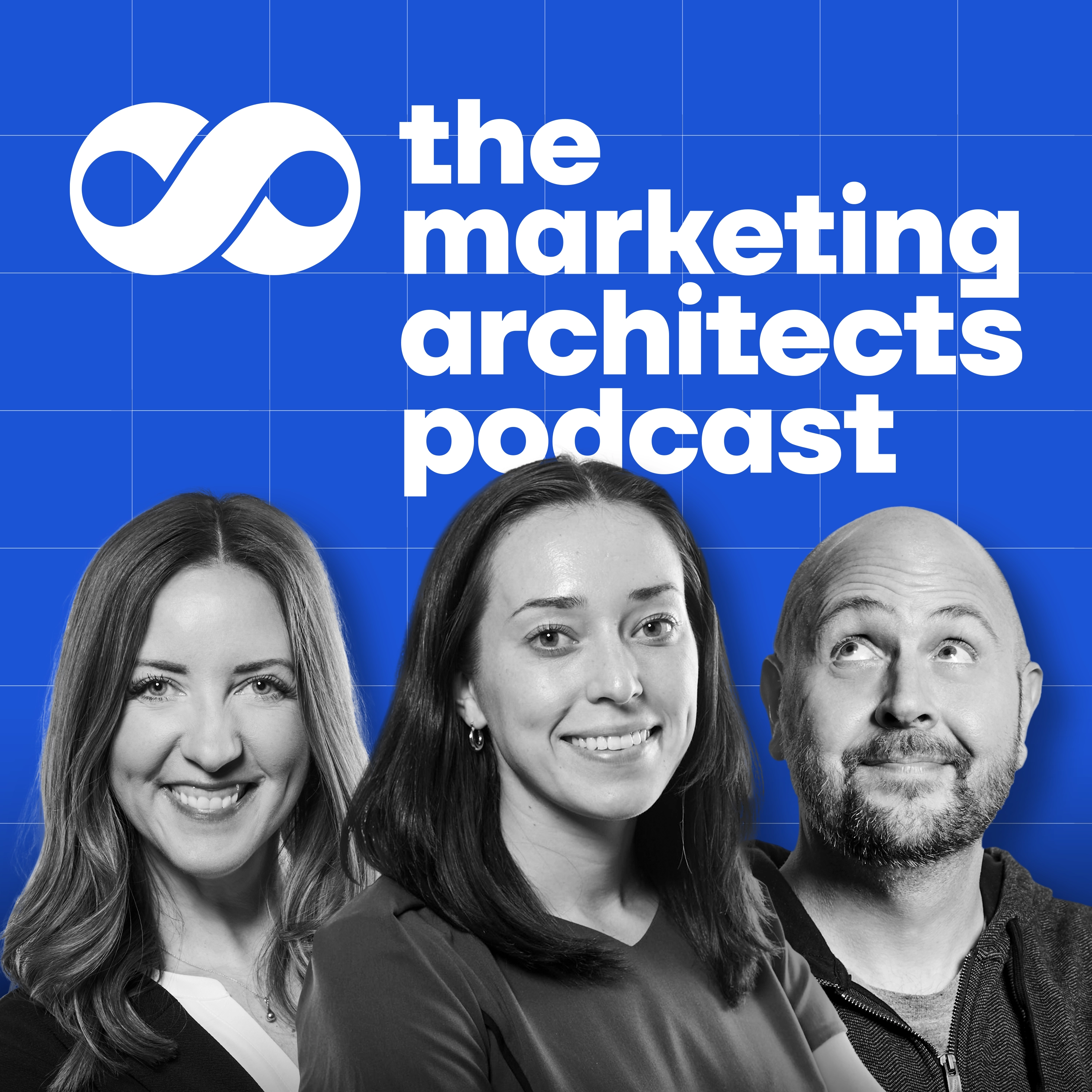
Elena, Angela, and Rob tackle why marketing feels so bland and how to fix it. They share 10 research-backed strategies to stand out in 2026, from expanding your audience to investing in underpriced media. Plus, hear which brands broke through the noise this year and what marketers can learn from their bold moves.

Topics Covered
• [01:00] Why brand conformity is killing differentiation
• [05:00] Building AI agent teams for creative breakthrough
• [11:00] The 60/40 rule for brand vs performance spend
• [14:00] Hunt for underpriced media to boost efficiency
• [16:00] Why emotional campaigns outperform rational ones
• [21:00] Brands that stood out in 2025
Resources:
Brand Strategy Insider Article
Today's Hosts

Elena Jasper
Chief Marketing Officer

Rob DeMars
Chief Product Architect

Angela Voss
Chief Executive Officer
Transcript
Rob: Emotion is something that we all need to continue to look at utilizing in 2026. How do we tap into those feelings as Binet and Field talk about joy, nostalgia, pride, belonging, all of those campaigns tap into our memory structures because they're emotional.
Elena: Hello, and welcome to the Marketing Architects, a research-first podcast dedicated to answering your toughest marketing questions. I'm Elena Jasper on the marketing team here at Marketing Architects, and I'm joined by my co-host Angela Voss, the CEO of Marketing Architects and Rob DeMars, the chief product architect of Misfits and Machines.
Rob: Hello.
Angela: Hey.
Elena: We're back with our thoughts on some recent marketing news, always trying to root our opinions in data research and what drives business results. Today we're talking about why so much marketing is frankly kind of boring and similar, why playing it safe might be your riskiest move of all, and how you can avoid having your brand fall into the bland bucket next year. All very exciting stuff and I'll kick us off as I always do with some research. Today I chose an article by Robert Wheatley. It's titled, "Competing on Sameness: The Marketing Mistake of Our Times."
In the article, Wheatley argues that brands are suffering from an epidemic of conformity. Once distinct categories have collapsed into lookalike competitors all saying and offering the same things. Wheatley describes this as the inevitable outcome of competitive mimicry. When every brand's response to a rival's new feature is to copy it, over time, categories regress towards sameness. Competitive competency will eventually submerge brand distinctions. Everyone's chasing the same consumers with the same promises and differentiation quietly dies.
The antidote he says, isn't more optimization or microsegmentation. It's lopsidedness. The brands that truly stand out are the ones willing to polarize, to make trade-offs and to take stands. Real differentiation requires subtraction, removing what everyone else does, polarization, appealing deeply to someone rather than everyone, and a clear mission that connects. Alright, so the title of this episode isn't clickbait. We do have 10 ideas today we're gonna share for brands to stand out next year. So Ang, do you wanna get us started with the first one?
Rob: First of all, I just have to say that I think when you do those top 10 lists, you're supposed to use odd numbers. People are more likely to click on odd. You're doing clickbait. So there's tip number one right there.
Elena: All right, well then you can add in the 11th tip at the end.
Angela: That's what it was.
Rob: How about that? That's the 11th tip: use odd numbers. There you go. I heard that somewhere anyway.
Angela: My first one, I'm gonna say it and then we're gonna repeat it and it's gonna, this is gonna be a mantra for 2026, okay? Hyper targeting is paying more to ignore your future customers. Ready? Here we go. Hyper targeting is paying more—
Elena: —to ignore your future customers.
Angela: Future customers. Yeah. So my first tip is expand your audience. Most brands today are vastly over targeted. We've optimized ourselves into these tiny little corners of the market and it's killing reach. And when you actually look at how brands grow, and this is Byron Sharp, the IPA data bank, growth comes from those light buyers and those non-buyers. And right now most marketers are spending 80% of their budget talking to the same 20% of people who might have already bought anyway. P.S.
And because everyone is optimizing toward the same segments with the same tools, we've essentially recreated competitive mimicry at the audience level. We're all fishing in the same pond. So my suggestion for next year is test removing some of the targeting parameters that you think have been so crucial to your success. Let your brand breathe a little. Don't be afraid of what you might have thought of as quote, unquote, "waste," because that can be positive. That broad, unpredictable reach is actually how you build mental availability, how you get remembered by the people who only buy occasionally. It's easy to forget or easy to ignore, maybe, that most of your future customers barely know you exist today. You're not gonna convert them with hyper precision. You're gonna convert them by being familiar. Efficiency matters, but if you optimize your way into invisibility, that's pretty expensive.
Elena: Strong. Strong.
Rob: Very good. Wow. Coming out of the gates hot.
Angela: Hyper targeting is paying more to ignore your future customers.
Elena: I love that. We should get shirts.
Rob: Or tattoos.
Angela: Yeah. I know. There we go.
Elena: A long tattoo. All right, Rob.
Angela: Let's do it.
Rob: Are you committed? Are you that committed? All right. All right. I've got one, but I dunno. Mine's a little nerdy. Of course. I'm gonna talk about AI, but maybe not in the way you're thinking about it. Obviously AI is the hot topic. Boy, should you use AI to create remarkable work? Oftentimes, the pushback though, and I think it's really a fair pushback, is that when you try to use AI out of the box, you don't always get the most surprising or novel work. We've got a lot of generators right now, a lot of content generators for campaigns, and you see the work and you're like, yeah, it's expected.
It's kind of what you would think of if you were gonna have a quick brainstorm with some friends. But it's not really truly bold and remarkable work. And I think we're entering into a new era where we have to stop thinking of AI as a single tool and really start thinking of it as a team of agents. I think the mistake that most marketers who are frustrated with AI and using it with their brands is they're really just thinking of it as a single tool. You write a script, you write a brand strategy, but you sort of get that first answer outcome. And instead, how can you look at your AI ecosystem and create feedback loops using multiple agents? So you have one agent that creates, another agent critiques, a third one that maybe does another rewrite of your script or your ad strategy, but really starting to build a creative conversation where the machines are starting to push back on each other and really challenging the most common assumptions that are first regurgitated by the LLM. So that type of tension will create originality, and it's gonna take time, it's gonna take some tuning, but it's not about automation. It's really about how to get the most out of those ecosystems of content.
Elena: I like the thought of building a team. That feels less overwhelming, but also like you could build a team in steps, right? As you build different tools and use them.
Rob: Definitely. I think we have to, and we start to realize these are organisms in and of themselves, and we all value having a partner to brainstorm with. And, but that doesn't mean the AI can't brainstorm with itself. And it really just starts to go—if you can create these tools of specialization, the tools themselves do a better job when they're trying to do one job and not every job. So give them one job and then give another AI another job, and then have those two agents work together.
Elena: Love it. Alright, I have our third idea and it is make sure that your brand is truly distinct in your category, and we're just focusing on distinctiveness for this idea, not differentiation. Under-branding is such a massive issue for brands today, and it's really easy to get trapped in that sameness we were talking about earlier. So I think one thing that every marketer should have full control over is how distinct is your brand. This doesn't necessarily mean rebranding, but it does mean going through an exercise to look at what are all my distinctive assets. What is my color? What does my logo look like? Get them all on a Miro board or a whiteboard if you're in the office. Does your brand have a sound? Does it have—what's the look and feel? And compare that to your category. See, are there any really dangerous overlaps? Then you can chart out your assets and see which ones are both unique to our brand—our competitors don't overlap with us—and are also famous. Then you can go into 2026 and invest heavily in those. If you have assets that aren't unique or aren't famous, you can decide, all right, if they're not famous yet, do I invest more in them? Do I think they can get there?
Or do I need to either not invest in them, not promote them, or do I potentially need to change them if you have severe overlap in your category? I also think that there are distinctive assets that are underutilized, things like mascots, sonic logos. You could add one of those to your brand in the next year, but just make sure that you have the resources to invest fully in them, but it's gonna make all your advertising more effective. It's so devastating how many ads people don't know who the brand is when the ad was over. You're just wasting so much money. So make sure your brand is distinct and invested in.
Angela: Yours along with Rob's marry those two together. Like they're a perfect blend for each other. AI is such an amazing help with distinctive assets. When you think about characters or audio mnemonics, it really kind of changed the game because character work back in the day was CG, it was hard and expensive. Yeah.
Rob: Yeah.
Angela: It's different now.
Rob: Mm-hmm. You used to have to hire Pixar. Now you got Pixar right on your laptop, doing it all for you. I wanna actually continue to snowball, as you said, kind of the AI into how do you get distinctive, and then I kinda wanna double click on what Elena mentioned, which was audio, and really focusing in on audio in 2026. I think the development of a sonic logo and sonic brand standards is still ignored by 90%—I'm making that data up—90% of companies don't do it.
Elena: That's not fair.
Rob: Most of your competition.
Angela: That's not what we do here, Rob.
Rob: Okay. A large percent of brands, can we agree with that? Don't do it. A good chunk of brands, most brands, including your competition. So what a great way to differentiate yourself. I think there's a simple reason. It's easy to deprioritize audio. You can't see it, you can't hang it on a wall, but man, everyone remembers an earworm. Whether you like it or not, they remember that earworm.
Just looking across all of your different aspects of how you engage with consumers, and go, is there a branding opportunity here with audio? Not just in your broadcast spots or your social content, but also your in-store experience and even things like your call center. You know, how can you have that sonic branding hit before every call happens? So many opportunities. It's such an untapped area. So get at it.
Angela: My next is I want brands to take a hard look at how the 60/40 rule applies to them. This comes from Binet and Field's work looking at thousands of campaigns, and what they found pretty universally: roughly 60% of your spend should go towards brand building. That's broad reach, emotional, creative, distinctive assets, the stuff that builds that mental availability and future demand. And the other 40% should go towards performance—the rational activation tactics that convert the demand that you've already created. And what's happened over the last decade, the reason it matters is that many brands have drifted heavily toward performance. It feels safer. There's data, it's measurable. You might not be measuring it right, but you see the clicks. But performance didn't create that demand. I think that's the key piece. It's just harvesting it. And at some point you run out of demand to harvest. So if your brand's feeling stuck, if your paid search curve has flattened, if your CAC is climbing, that's often the signal that maybe you're overweight on the performance side and underweight on the brand side.
Elena: Now I'm going next, which mine I think is a nice transition from what Angela just talked about.
Rob: Can we make a CAC joke first? Anytime I hear a marketer say CAC, I just wanna laugh.
Angela: Okay. Do you have one or no?
Rob: It just shouldn't be used. I don't know why. CAC sounds awful every time someone says CAC.
Angela: Okay.
Elena: Alright, for my tip, which we're on number six now for keeping track, relates to Angela's because brands, you should invest next year as a bold move in an offline channel like television. It doesn't have to be television, but television is the best. I say this because we don't have a lot of sure things in marketing, but there is a law of marketing that's been proven to work. We've had a lot of thought leaders on this show. A lot of them disagree heavily with each other. Really, one of the only laws where I've seen agreement across all of them is that if you can raise your share of voice higher than your share of market, you tend to grow in your category. And I don't think enough marketers consider that when you think about how do I raise my share of voice?
A great way to do that is through an offline channel, because those channels have typically higher attention. You can tell a longer story, you can have broader reach. It can be a very efficient way to reach large groups of people with your message and raise your share of voice. So I think people should consider something like TV. You've got a captive audience. If you're really dependent on digital, a lot continues to change with digital marketing. And TV is something that can help rise all boats, lift your other channels. We even were talking—we were at a show last week and we were talking to someone about how they could actually see even something like billboards raise the impact of their other marketing channels. So there's something different about an offline channel, the experience that it brings. Out of home, radio, television. Consider investing in one of those next year.
Angela: Great one.
Elena: All right.
Angela: Hunt for underpriced media. This is one of the biggest, most overlooked levers in marketing. We obsess over things like targeting and attribution, but we barely question the cost of the impression. So often it drives me crazy, which is the thing that drives efficiency more than anything else. Efficiency that leads to effectiveness. I will say, marry those two up together. A lot of marketers have, I think, really gotten complacent. They accept rate cards, they buy the same channels out of habit. They're falling into the historical practices of the upfronts. And the market is constantly shifting, and this is where AI-powered buying gets interesting. It can scan thousands of price signals and inventory pockets in real time and surface attention that's temporarily, maybe, cost less than it should be, than it was last week. So when you lower your CPM, everything downstream improves. Reach goes up, frequency becomes more efficient, CAC, Rob, comes down and your creative gets more chances to work. So I think next year, don't just ask what channel should I be in, but where is attention underpriced right now? And how can technology help us capture it before everyone else does?
Rob: Very good. Get a good value. I'm an emotional person, but I'm gonna lead with data because, you know, you guys said Rob, you make up data on this podcast, you have to use real ones. I'm gonna use some real data. The IPA's database of over 1,400 campaigns found that emotionally led campaigns outperform rational ones two to one in short-term sales, and nearly four to one in long-term profit growth. Emotion is something that we all need to continue to look at utilizing in 2026. How do we tap into those feelings as Binet and Field talk about? Joy, nostalgia, pride, belonging—all of those campaigns tap into our memory structures because they're emotional. They help us sustain a brand over years and help us feel something about the brand. So I'm going to just—I should start crying maybe or laughing. I'm not sure what emotion I should use to convey just how important it is to use emotion in your work. Definitely look at that for 2026.
Elena: I like it. And after you create this amazing, emotional, funny campaign, you should stick with it for a long time. That is number nine, second to last tip: be consistent because that is going to do your brand a huge favor in the long run. And I don't mean be consistent for a couple months, I mean even for a couple years. Pop quiz, Rob and Angela, who do you think is the longest running mascot on TV?
Rob: Oh, on TV?
Elena: Mm-hmm.
Rob: I would guess—it's funny 'cause it's probably hasn't ran for years, but in my head he's still there—is it Charlie the tuna?
Elena: No. Damn. Okay. I should add, this is based on the research that I can find from a mascot in a TV commercial specifically, not just mascots overall, one that's been running—oh, and I should say one that's been consistent. That was probably clear. I didn't need to say that.
Angela: I am trying to choose between Ronald McDonald himself and the Polar Bear in Coca-Cola.
Rob: That's true. I got—I got Tony the Tiger. It's gotta be Tony the Tiger.
Elena: No.
Angela: Damn it.
Elena: I don't think—I haven't seen Tony the Tiger on TV.
Rob: The leprechaun.
Elena: No. I'll—do you want me to just tell you?
Angela: Yeah.
Elena: It's the Energizer Bunny.
Angela: Oh, the Energizer Bunny. I feel like we talked about that 10 episodes ago. I should have known that.
Rob: I don't believe it. I think it's bad data.
Angela: No, it's been around a long time.
Rob: I know it's been around a long time since like the eighties.
Elena: You have to think of something that's still running, like been running consistently. 1988. You gotta think of something that's still running, like it's been running consistently.
Rob: I get it.
Elena: 1988. I might be wrong, you can let me know if I'm wrong, but I did do my due diligence, I think, in trying to figure this out. Hard to know for sure. There's no report on it. But yeah, the Energizer Bunny. But if you think about in general, like the Geico gecko, it was right up there with the Energizer Bunny. I don't know if Tony the Tiger is currently on air, but these mascots, these distinctive assets that people have invested in for a long time, typically are associated with campaigns that have been successful. So that would be my advice: take your time cooking up an emotional campaign, you've got your distinctive assets, and then run them longer than you think you should. Be brave enough to stick with something. Crucial. Effectiveness compounds year over year if you have the right message. Another fact that I think System One shared recently is that brands that perform better tend to have longer even agency relationships. So just being consistent, if what you're doing and sticking with things can help you get better over time. All right. Ange, I think you have our final tip. 10 or 11. I don't know where we're at.
Angela: Eleven, I'm saying, but yeah. I'm gonna go: aim for fame. Stop spreading your budget across a thousand tiny actions and start thinking like a blockbuster moviemaker. It's empirically proven to be a multiplier effect on both mental availability and pricing power. And Rob, you kind of mentioned some of where I was going just in terms of big emotional storytelling. We as marketers sometimes chop our budget into slivers, telling ourselves that we're being efficient and we wanna test lots of things, but it systematically reduces the probability that anything gets recalled by anyone. And if you wanna grow, pick an idea, make it distinctive, hammer it into memory, be consistent. All these things thread together. That's how brands get built, not a hundred tepid little things.
Elena: Awesome. Great way to end. Alright, before we wrap up, fun closer here. What brand do we think did a great job standing out this year, 2025?
Angela: I am gonna go with Coca-Cola. So they brought back their Share a Coke campaign in 2025. They've layered on simple tech on top of this nostalgia. Every bottle has a QR code that lets you create a quick video or a meme or a message, you can share it on social. And then I also will say in a world full of creative criticism and anxiety about AI replacing originality, Coke has taken a stance and I love that.
Elena: They definitely have not backed down.
Rob: I think when you talk about brands that are distinctive versus differentiating, right? There's a difference. And if I think of the cookie category, it's hard to be distinctive unless you are Nutter Butter. Nutter Butter is unbelievably distinctive thanks to their Nutterverse campaign, which technically started in 2024, I believe, but it's just gone absolutely bananas. And I just think it's such an interesting case of truly being distinctive in a category where it's hard to be either distinctive or differentiating. So I think they've done a great job. If you need a laugh, if you don't know what I'm talking about, their TikTok campaign, the TikTok—
Elena: The TikTok.
Rob: —is just unfricking believable.
Elena: All right. Well, I'm gonna take us out of the food and drink category to jeans, specifically American Eagle.
Rob: Oh.
Elena: Yeah. Yes. I think that their campaign with Sydney Sweeney, while it got a lot of negative reaction from the marketing community, was ultimately a really bold move to stand out this year. I think that it's already sort of clear in their financial results what they've been—they've finally been able to talk about—that their business has been positively impacted by it. It got everybody talking about American Eagle. I heard their CMO on a podcast and he was talking about their longer-term plans for continuing campaigns in the same vein, and they went really bold and they didn't back down when people started coming after them and critiquing them. They stuck with their core idea and I think it's gonna pay off for them in the long run.
Angela: Absolutely.
Elena: I think that's great.
Rob: I heard that she's also potentially gonna be on the new logo for Bud Light.
Angela: You had to go there.
Elena: That'll be a fun case study. How will that do?
Angela: We appreciate all the brands helping us learn in the marketing effectiveness trenches, right? The wins and the losses. Yep. For sure.
Episode 140
10 Ways to Not Be a Boring Brand Next Year
Hyper-targeting is paying more to ignore your future customers. That's the reality most brands face today. They've optimized themselves into tiny corners while competitors copy each other into oblivion. That’s just one tip of many in this week’s episode.
Elena, Angela, and Rob tackle why marketing feels so bland and how to fix it. They share 10 research-backed strategies to stand out in 2026, from expanding your audience to investing in underpriced media. Plus, hear which brands broke through the noise this year and what marketers can learn from their bold moves.
Topics Covered
• [01:00] Why brand conformity is killing differentiation
• [05:00] Building AI agent teams for creative breakthrough
• [11:00] The 60/40 rule for brand vs performance spend
• [14:00] Hunt for underpriced media to boost efficiency
• [16:00] Why emotional campaigns outperform rational ones
• [21:00] Brands that stood out in 2025
Resources:
Brand Strategy Insider Article
Today's Hosts
Elena Jasper
Chief Marketing Officer
Rob DeMars
Chief Product Architect
Angela Voss
Chief Executive Officer
Subscribe on



Enjoy this episode? Leave us a review.
Transcript
Rob: Emotion is something that we all need to continue to look at utilizing in 2026. How do we tap into those feelings as Binet and Field talk about joy, nostalgia, pride, belonging, all of those campaigns tap into our memory structures because they're emotional.
Elena: Hello, and welcome to the Marketing Architects, a research-first podcast dedicated to answering your toughest marketing questions. I'm Elena Jasper on the marketing team here at Marketing Architects, and I'm joined by my co-host Angela Voss, the CEO of Marketing Architects and Rob DeMars, the chief product architect of Misfits and Machines.
Rob: Hello.
Angela: Hey.
Elena: We're back with our thoughts on some recent marketing news, always trying to root our opinions in data research and what drives business results. Today we're talking about why so much marketing is frankly kind of boring and similar, why playing it safe might be your riskiest move of all, and how you can avoid having your brand fall into the bland bucket next year. All very exciting stuff and I'll kick us off as I always do with some research. Today I chose an article by Robert Wheatley. It's titled, "Competing on Sameness: The Marketing Mistake of Our Times."
In the article, Wheatley argues that brands are suffering from an epidemic of conformity. Once distinct categories have collapsed into lookalike competitors all saying and offering the same things. Wheatley describes this as the inevitable outcome of competitive mimicry. When every brand's response to a rival's new feature is to copy it, over time, categories regress towards sameness. Competitive competency will eventually submerge brand distinctions. Everyone's chasing the same consumers with the same promises and differentiation quietly dies.
The antidote he says, isn't more optimization or microsegmentation. It's lopsidedness. The brands that truly stand out are the ones willing to polarize, to make trade-offs and to take stands. Real differentiation requires subtraction, removing what everyone else does, polarization, appealing deeply to someone rather than everyone, and a clear mission that connects. Alright, so the title of this episode isn't clickbait. We do have 10 ideas today we're gonna share for brands to stand out next year. So Ang, do you wanna get us started with the first one?
Rob: First of all, I just have to say that I think when you do those top 10 lists, you're supposed to use odd numbers. People are more likely to click on odd. You're doing clickbait. So there's tip number one right there.
Elena: All right, well then you can add in the 11th tip at the end.
Angela: That's what it was.
Rob: How about that? That's the 11th tip: use odd numbers. There you go. I heard that somewhere anyway.
Angela: My first one, I'm gonna say it and then we're gonna repeat it and it's gonna, this is gonna be a mantra for 2026, okay? Hyper targeting is paying more to ignore your future customers. Ready? Here we go. Hyper targeting is paying more—
Elena: —to ignore your future customers.
Angela: Future customers. Yeah. So my first tip is expand your audience. Most brands today are vastly over targeted. We've optimized ourselves into these tiny little corners of the market and it's killing reach. And when you actually look at how brands grow, and this is Byron Sharp, the IPA data bank, growth comes from those light buyers and those non-buyers. And right now most marketers are spending 80% of their budget talking to the same 20% of people who might have already bought anyway. P.S.
And because everyone is optimizing toward the same segments with the same tools, we've essentially recreated competitive mimicry at the audience level. We're all fishing in the same pond. So my suggestion for next year is test removing some of the targeting parameters that you think have been so crucial to your success. Let your brand breathe a little. Don't be afraid of what you might have thought of as quote, unquote, "waste," because that can be positive. That broad, unpredictable reach is actually how you build mental availability, how you get remembered by the people who only buy occasionally. It's easy to forget or easy to ignore, maybe, that most of your future customers barely know you exist today. You're not gonna convert them with hyper precision. You're gonna convert them by being familiar. Efficiency matters, but if you optimize your way into invisibility, that's pretty expensive.
Elena: Strong. Strong.
Rob: Very good. Wow. Coming out of the gates hot.
Angela: Hyper targeting is paying more to ignore your future customers.
Elena: I love that. We should get shirts.
Rob: Or tattoos.
Angela: Yeah. I know. There we go.
Elena: A long tattoo. All right, Rob.
Angela: Let's do it.
Rob: Are you committed? Are you that committed? All right. All right. I've got one, but I dunno. Mine's a little nerdy. Of course. I'm gonna talk about AI, but maybe not in the way you're thinking about it. Obviously AI is the hot topic. Boy, should you use AI to create remarkable work? Oftentimes, the pushback though, and I think it's really a fair pushback, is that when you try to use AI out of the box, you don't always get the most surprising or novel work. We've got a lot of generators right now, a lot of content generators for campaigns, and you see the work and you're like, yeah, it's expected.
It's kind of what you would think of if you were gonna have a quick brainstorm with some friends. But it's not really truly bold and remarkable work. And I think we're entering into a new era where we have to stop thinking of AI as a single tool and really start thinking of it as a team of agents. I think the mistake that most marketers who are frustrated with AI and using it with their brands is they're really just thinking of it as a single tool. You write a script, you write a brand strategy, but you sort of get that first answer outcome. And instead, how can you look at your AI ecosystem and create feedback loops using multiple agents? So you have one agent that creates, another agent critiques, a third one that maybe does another rewrite of your script or your ad strategy, but really starting to build a creative conversation where the machines are starting to push back on each other and really challenging the most common assumptions that are first regurgitated by the LLM. So that type of tension will create originality, and it's gonna take time, it's gonna take some tuning, but it's not about automation. It's really about how to get the most out of those ecosystems of content.
Elena: I like the thought of building a team. That feels less overwhelming, but also like you could build a team in steps, right? As you build different tools and use them.
Rob: Definitely. I think we have to, and we start to realize these are organisms in and of themselves, and we all value having a partner to brainstorm with. And, but that doesn't mean the AI can't brainstorm with itself. And it really just starts to go—if you can create these tools of specialization, the tools themselves do a better job when they're trying to do one job and not every job. So give them one job and then give another AI another job, and then have those two agents work together.
Elena: Love it. Alright, I have our third idea and it is make sure that your brand is truly distinct in your category, and we're just focusing on distinctiveness for this idea, not differentiation. Under-branding is such a massive issue for brands today, and it's really easy to get trapped in that sameness we were talking about earlier. So I think one thing that every marketer should have full control over is how distinct is your brand. This doesn't necessarily mean rebranding, but it does mean going through an exercise to look at what are all my distinctive assets. What is my color? What does my logo look like? Get them all on a Miro board or a whiteboard if you're in the office. Does your brand have a sound? Does it have—what's the look and feel? And compare that to your category. See, are there any really dangerous overlaps? Then you can chart out your assets and see which ones are both unique to our brand—our competitors don't overlap with us—and are also famous. Then you can go into 2026 and invest heavily in those. If you have assets that aren't unique or aren't famous, you can decide, all right, if they're not famous yet, do I invest more in them? Do I think they can get there?
Or do I need to either not invest in them, not promote them, or do I potentially need to change them if you have severe overlap in your category? I also think that there are distinctive assets that are underutilized, things like mascots, sonic logos. You could add one of those to your brand in the next year, but just make sure that you have the resources to invest fully in them, but it's gonna make all your advertising more effective. It's so devastating how many ads people don't know who the brand is when the ad was over. You're just wasting so much money. So make sure your brand is distinct and invested in.
Angela: Yours along with Rob's marry those two together. Like they're a perfect blend for each other. AI is such an amazing help with distinctive assets. When you think about characters or audio mnemonics, it really kind of changed the game because character work back in the day was CG, it was hard and expensive. Yeah.
Rob: Yeah.
Angela: It's different now.
Rob: Mm-hmm. You used to have to hire Pixar. Now you got Pixar right on your laptop, doing it all for you. I wanna actually continue to snowball, as you said, kind of the AI into how do you get distinctive, and then I kinda wanna double click on what Elena mentioned, which was audio, and really focusing in on audio in 2026. I think the development of a sonic logo and sonic brand standards is still ignored by 90%—I'm making that data up—90% of companies don't do it.
Elena: That's not fair.
Rob: Most of your competition.
Angela: That's not what we do here, Rob.
Rob: Okay. A large percent of brands, can we agree with that? Don't do it. A good chunk of brands, most brands, including your competition. So what a great way to differentiate yourself. I think there's a simple reason. It's easy to deprioritize audio. You can't see it, you can't hang it on a wall, but man, everyone remembers an earworm. Whether you like it or not, they remember that earworm.
Just looking across all of your different aspects of how you engage with consumers, and go, is there a branding opportunity here with audio? Not just in your broadcast spots or your social content, but also your in-store experience and even things like your call center. You know, how can you have that sonic branding hit before every call happens? So many opportunities. It's such an untapped area. So get at it.
Angela: My next is I want brands to take a hard look at how the 60/40 rule applies to them. This comes from Binet and Field's work looking at thousands of campaigns, and what they found pretty universally: roughly 60% of your spend should go towards brand building. That's broad reach, emotional, creative, distinctive assets, the stuff that builds that mental availability and future demand. And the other 40% should go towards performance—the rational activation tactics that convert the demand that you've already created. And what's happened over the last decade, the reason it matters is that many brands have drifted heavily toward performance. It feels safer. There's data, it's measurable. You might not be measuring it right, but you see the clicks. But performance didn't create that demand. I think that's the key piece. It's just harvesting it. And at some point you run out of demand to harvest. So if your brand's feeling stuck, if your paid search curve has flattened, if your CAC is climbing, that's often the signal that maybe you're overweight on the performance side and underweight on the brand side.
Elena: Now I'm going next, which mine I think is a nice transition from what Angela just talked about.
Rob: Can we make a CAC joke first? Anytime I hear a marketer say CAC, I just wanna laugh.
Angela: Okay. Do you have one or no?
Rob: It just shouldn't be used. I don't know why. CAC sounds awful every time someone says CAC.
Angela: Okay.
Elena: Alright, for my tip, which we're on number six now for keeping track, relates to Angela's because brands, you should invest next year as a bold move in an offline channel like television. It doesn't have to be television, but television is the best. I say this because we don't have a lot of sure things in marketing, but there is a law of marketing that's been proven to work. We've had a lot of thought leaders on this show. A lot of them disagree heavily with each other. Really, one of the only laws where I've seen agreement across all of them is that if you can raise your share of voice higher than your share of market, you tend to grow in your category. And I don't think enough marketers consider that when you think about how do I raise my share of voice?
A great way to do that is through an offline channel, because those channels have typically higher attention. You can tell a longer story, you can have broader reach. It can be a very efficient way to reach large groups of people with your message and raise your share of voice. So I think people should consider something like TV. You've got a captive audience. If you're really dependent on digital, a lot continues to change with digital marketing. And TV is something that can help rise all boats, lift your other channels. We even were talking—we were at a show last week and we were talking to someone about how they could actually see even something like billboards raise the impact of their other marketing channels. So there's something different about an offline channel, the experience that it brings. Out of home, radio, television. Consider investing in one of those next year.
Angela: Great one.
Elena: All right.
Angela: Hunt for underpriced media. This is one of the biggest, most overlooked levers in marketing. We obsess over things like targeting and attribution, but we barely question the cost of the impression. So often it drives me crazy, which is the thing that drives efficiency more than anything else. Efficiency that leads to effectiveness. I will say, marry those two up together. A lot of marketers have, I think, really gotten complacent. They accept rate cards, they buy the same channels out of habit. They're falling into the historical practices of the upfronts. And the market is constantly shifting, and this is where AI-powered buying gets interesting. It can scan thousands of price signals and inventory pockets in real time and surface attention that's temporarily, maybe, cost less than it should be, than it was last week. So when you lower your CPM, everything downstream improves. Reach goes up, frequency becomes more efficient, CAC, Rob, comes down and your creative gets more chances to work. So I think next year, don't just ask what channel should I be in, but where is attention underpriced right now? And how can technology help us capture it before everyone else does?
Rob: Very good. Get a good value. I'm an emotional person, but I'm gonna lead with data because, you know, you guys said Rob, you make up data on this podcast, you have to use real ones. I'm gonna use some real data. The IPA's database of over 1,400 campaigns found that emotionally led campaigns outperform rational ones two to one in short-term sales, and nearly four to one in long-term profit growth. Emotion is something that we all need to continue to look at utilizing in 2026. How do we tap into those feelings as Binet and Field talk about? Joy, nostalgia, pride, belonging—all of those campaigns tap into our memory structures because they're emotional. They help us sustain a brand over years and help us feel something about the brand. So I'm going to just—I should start crying maybe or laughing. I'm not sure what emotion I should use to convey just how important it is to use emotion in your work. Definitely look at that for 2026.
Elena: I like it. And after you create this amazing, emotional, funny campaign, you should stick with it for a long time. That is number nine, second to last tip: be consistent because that is going to do your brand a huge favor in the long run. And I don't mean be consistent for a couple months, I mean even for a couple years. Pop quiz, Rob and Angela, who do you think is the longest running mascot on TV?
Rob: Oh, on TV?
Elena: Mm-hmm.
Rob: I would guess—it's funny 'cause it's probably hasn't ran for years, but in my head he's still there—is it Charlie the tuna?
Elena: No. Damn. Okay. I should add, this is based on the research that I can find from a mascot in a TV commercial specifically, not just mascots overall, one that's been running—oh, and I should say one that's been consistent. That was probably clear. I didn't need to say that.
Angela: I am trying to choose between Ronald McDonald himself and the Polar Bear in Coca-Cola.
Rob: That's true. I got—I got Tony the Tiger. It's gotta be Tony the Tiger.
Elena: No.
Angela: Damn it.
Elena: I don't think—I haven't seen Tony the Tiger on TV.
Rob: The leprechaun.
Elena: No. I'll—do you want me to just tell you?
Angela: Yeah.
Elena: It's the Energizer Bunny.
Angela: Oh, the Energizer Bunny. I feel like we talked about that 10 episodes ago. I should have known that.
Rob: I don't believe it. I think it's bad data.
Angela: No, it's been around a long time.
Rob: I know it's been around a long time since like the eighties.
Elena: You have to think of something that's still running, like been running consistently. 1988. You gotta think of something that's still running, like it's been running consistently.
Rob: I get it.
Elena: 1988. I might be wrong, you can let me know if I'm wrong, but I did do my due diligence, I think, in trying to figure this out. Hard to know for sure. There's no report on it. But yeah, the Energizer Bunny. But if you think about in general, like the Geico gecko, it was right up there with the Energizer Bunny. I don't know if Tony the Tiger is currently on air, but these mascots, these distinctive assets that people have invested in for a long time, typically are associated with campaigns that have been successful. So that would be my advice: take your time cooking up an emotional campaign, you've got your distinctive assets, and then run them longer than you think you should. Be brave enough to stick with something. Crucial. Effectiveness compounds year over year if you have the right message. Another fact that I think System One shared recently is that brands that perform better tend to have longer even agency relationships. So just being consistent, if what you're doing and sticking with things can help you get better over time. All right. Ange, I think you have our final tip. 10 or 11. I don't know where we're at.
Angela: Eleven, I'm saying, but yeah. I'm gonna go: aim for fame. Stop spreading your budget across a thousand tiny actions and start thinking like a blockbuster moviemaker. It's empirically proven to be a multiplier effect on both mental availability and pricing power. And Rob, you kind of mentioned some of where I was going just in terms of big emotional storytelling. We as marketers sometimes chop our budget into slivers, telling ourselves that we're being efficient and we wanna test lots of things, but it systematically reduces the probability that anything gets recalled by anyone. And if you wanna grow, pick an idea, make it distinctive, hammer it into memory, be consistent. All these things thread together. That's how brands get built, not a hundred tepid little things.
Elena: Awesome. Great way to end. Alright, before we wrap up, fun closer here. What brand do we think did a great job standing out this year, 2025?
Angela: I am gonna go with Coca-Cola. So they brought back their Share a Coke campaign in 2025. They've layered on simple tech on top of this nostalgia. Every bottle has a QR code that lets you create a quick video or a meme or a message, you can share it on social. And then I also will say in a world full of creative criticism and anxiety about AI replacing originality, Coke has taken a stance and I love that.
Elena: They definitely have not backed down.
Rob: I think when you talk about brands that are distinctive versus differentiating, right? There's a difference. And if I think of the cookie category, it's hard to be distinctive unless you are Nutter Butter. Nutter Butter is unbelievably distinctive thanks to their Nutterverse campaign, which technically started in 2024, I believe, but it's just gone absolutely bananas. And I just think it's such an interesting case of truly being distinctive in a category where it's hard to be either distinctive or differentiating. So I think they've done a great job. If you need a laugh, if you don't know what I'm talking about, their TikTok campaign, the TikTok—
Elena: The TikTok.
Rob: —is just unfricking believable.
Elena: All right. Well, I'm gonna take us out of the food and drink category to jeans, specifically American Eagle.
Rob: Oh.
Elena: Yeah. Yes. I think that their campaign with Sydney Sweeney, while it got a lot of negative reaction from the marketing community, was ultimately a really bold move to stand out this year. I think that it's already sort of clear in their financial results what they've been—they've finally been able to talk about—that their business has been positively impacted by it. It got everybody talking about American Eagle. I heard their CMO on a podcast and he was talking about their longer-term plans for continuing campaigns in the same vein, and they went really bold and they didn't back down when people started coming after them and critiquing them. They stuck with their core idea and I think it's gonna pay off for them in the long run.
Angela: Absolutely.
Elena: I think that's great.
Rob: I heard that she's also potentially gonna be on the new logo for Bud Light.
Angela: You had to go there.
Elena: That'll be a fun case study. How will that do?
Angela: We appreciate all the brands helping us learn in the marketing effectiveness trenches, right? The wins and the losses. Yep. For sure.