/nav-logo-desktop.webp "Marketing Architects")
Episode 139
Finding the Efficiency/Effectiveness Balance
Budget explains 89% of profit variation in award-winning campaigns. ROI? Just 11%. Yet 65% of senior marketers still believe ROI is the biggest contributor to success.
This week, Elena, Angela, and Rob discuss new research from Les Binet and Will Davis that reveals a major misunderstanding at the heart of modern marketing. For years, marketers have obsessed over efficiency: optimizing clicks, proving short-term ROI, and doing more with less. The team breaks down why budget and reach matter more than most realize, how to escape the "death spiral" of shrinking investments, and what it means to go big or go home with your marketing plan.

Topics Covered
• [01:00] Why budget is 8x more important than ROI for driving profit
• [03:00] Defining marketing efficiency vs marketing effectiveness
• [11:00] Making the case internally for bigger budgets and broader reach
• [13:00] How this research should change your channel planning
• [19:00] Balancing efficiency and effectiveness in your marketing mix
• [21:00] What creativity at scale really looks like
Resources:
2025 IPA Effectiveness Conference Article
Today's Hosts

Elena Jasper
Chief Marketing Officer

Rob DeMars
Chief Product Architect

Angela Voss
Chief Executive Officer
Transcript
Angela: Not every brand is at a point in which they can meaningfully go big or go home. I think the question is shifting from which channels are most efficient to which channels can deliver the scale and the exposures that we actually need to grow.
Elena: Hello and welcome to the Marketing Architects, a research first podcast dedicated to answering our toughest marketing questions. I'm Elena Jasper. I'm on the marketing team here at Marketing Architects, and I'm joined by my co-hosts Angela Voss, the CEO of Marketing Architects, and Rob DeMars, the Chief Product architect of Misfits.
Rob: Hello.
Angela: Hi guys.
Elena: We're back with our thoughts on some recent marketing news, always trying to root our opinions and data research, and what drives business results. Today we're talking about the balance of efficiency and effectiveness. This episode was inspired by new research that's making the rounds from Les Binet and Will Davis.
They presented this at the 2025 IPA Effectiveness Conference, and the research reveals a major misunderstanding at the heart of marketing today. Over the past decade, marketing has become obsessed with efficiency. How do we get more clicks for less money? How do we optimize our ROAS and how do we prove short term performance?
This mindset, while logical, has come at a cost, which is long-term effectiveness. And that's the research we are going to open with today. And we're gonna start with a finding that's probably gonna shock everybody listening to this right now. According to Binet and Davis's analysis of the IPA Data bank, budget is eight times more important than ROI in driving marketing effectiveness. In award-winning campaigns, ROI explained only 11% of profit variation.
Budget explained a whopping 89%. Yet marketers tend to have this backwards. In a survey of 500 senior marketing leaders, 65% said ROI was the biggest contributor to success, only 35% named budget. And this misunderstanding is shaping how brands plan their marketing with tighter budgets. Marketers scale back their ambition.
They start to target small segments, over focus on digital performance and neglect older audiences who actually drive half of consumer spending. Les Binet warns that this creates a death spiral. Smaller budgets lead to smaller reach, smaller profits, and more pressure to do more with less. Instead, this data shows that big media and broad reach drive growth.
Binet and Davis argued that to escape the spiral, marketers need to go big or go home. So what would that look like? They talk about a few different things. One is focusing less on efficiency, more on effectiveness. ROI has gone up since COVID, but profits are down. Efficiency doesn't always translate into growth. Relearn the power of budget and scale. Outstanding creative and planning matter, but not as much as how much you invest. Be better at budget setting. Most budgets are decided with crude methods and little financial modeling, even though it's the single most important decision. And think big. Media campaigns need tens or hundreds of millions of exposures to drive meaningful results.
Without broad reach, growth tends to stagnate. Okay, there's a lot to unpack here. I really wanted to talk about this today 'cause I've seen this debate getting greater and greater in the marketing world, and sometimes it confuses me a little bit. I thought it'd be good to cover on the show. Let's start by defining some key terms. What do we mean, when we talk about marketing efficiency versus marketing effectiveness?
Angela: I think a lot of people are confused by this. It doesn't get enough attention. So I was so excited to see the research. When we talk about efficiency in marketing, we're talking about how much you get for every dollar you spend. Generally, that's what we hear from clients, et cetera. I put a dollar in, how much can I track I got out of that? So it becomes more about optimization, reducing waste, lowering costs per lead, ultimately all in effort to try to improve that ROI. And so efficiency looks more inward and asks how tight can we make this machine?
Versus effectiveness is about outcomes. It's that total impact that your marketing has on business growth, on sales, on profit, on market share. Ultimately, it's not just how well you spend in the short term, it's whether what you're spending is actually moving the needle. And Binet and Davis are warning against chasing higher ROI with tighter targeting. Marketers have optimized themselves into smaller and smaller worlds. To your point, Elena, maybe it looks efficient, but it's not long-term effective. Real effectiveness requires scale, reach, investment, spending enough to actually grow the business.
Elena: Maybe one example might be your most efficient marketing plan might just have looked like bottom of the funnel paid search advertising. Like that's gonna get you the most efficient result, the most kind of bang for your buck, but it's not gonna grow your brand in the long term. There's no scale there.
Angela: Yeah. And I think when you really understand the marketing effectiveness research, whether it be long and short, there's been a lot that has been produced by a variety of players over the years. This is all still tied back to reach, so it makes sense. But eight X is a big number. I don't know that anyone of us would've said it was eight X.
Elena: Yeah, and I was surprised too in the research. Most marketers thought that ROI was the primary driver of success. Why do we think that's become the case?
Angela: Well, I think we're all under pressure to deliver. If I as CEO don't deliver outcomes today for our owner, like that's a problem, right? So ROI feels like a safe, rational number, something you can defend in a boardroom. It's tidy, it fits in a spreadsheet, and especially when budgets are tight, showing that you're getting more out of every dollar feels like the responsible thing to do and might actually be depending on the situation that you're in as a business.
But the problem is, ROI is only a part of the story. It's rewarding that efficiency, but not necessarily the impact. And so a very small campaign can have a huge ROI because the denominator is small. It might barely move total sales or profit. So CMOs end up optimizing to look good on paper instead of creating real business growth. And that's reinforced by finance teams and dashboards that make ROI the headline, while actual profit or market share gains are buried or maybe it's just hard to track. And so what they feel they can track gets the focus.
Rob: Don't we, on the most primal level, get a little bit bummed out about this finding? And what I mean by that is we want clarity as humans, right? We just want to be with our fellow human beings. We find out like, oh, don't eat carbs and you'll lose weight. Great. Life's good again, right? Don't eat carbs. I got it. I'm clear. You're clear on what that means. I'm clear, and then it turns out maybe that's not the healthiest for you in the long run. And when you find out a fact like this, ROI has just been this comfy blanket we can all agree upon. You can be an absolute idiot in a boardroom.
Someone can propose an idea and all you have to say is, well, what's the ROI on that? And you sound smart, right? And so it does just become this universal language of alignment. And marketing's hard enough to align on what success looks like. So to have these three little letters now get dispelled. And I totally agree with the, I mean, it totally makes sense. And so I'm not arguing with the science or the physics of this study, but there's a part of you going, gosh, I thought we finally figured out how to get along. And it turns out, it's not quite that easy.
Elena: I think too, like ROI has become something that marketers hang their hat on, and I've even fallen into that trap. Like marketing should drive revenue. You know, marketing should be responsible for things beyond making it pretty. Not to call ourselves out, but I believe one of our many taglines at one point was R-O-I-A-S-A-P.
Rob: I did, and I did come up with that.
Elena: And Rob's responsible for that. So we're not saying we weren't once part of that.
Rob: That's why I'm saying it is just like, I also used to, you know, not eat carbs.
Elena: Right? Well, so this research, it was very definitive. Budget explains 89% of profit variation. That's pretty damning of ROI. Why do we think budget is such a powerful driver?
Angela: Yeah, I think we have to be careful, 'cause even at 11% it is 11%. ROI does matter. So short answer, I think to your question is because profit is mostly a scale game and budget is the throttle for scale. This is why it dominates. Profit from advertising is ROI times spend. That's why ROI still matters. So if ROI moves a bit, but spend swings a lot, spend explains most of the variation in profit. And that's exactly what Binet and Davis see in this data. I think another important understanding too is that ROIs tend to cluster within a band across brands, but budgets range very wildly across brands and campaigns. So budget ends up explaining the majority of the profit variation versus that 11% for ROI, hence budget is eight X more important. But this again, all ties back to reach. Reach drives growth and it's budget that unlocks that reach.
Rob: Absolutely. It's physics, right? It's like the budget is gravity and there's nothing you can beat. Gravity. The more you invest, the more mass your brand builds. And then to your point, more impressions, more memory, more sales. So even if your creative is perfect and your targeting is just pristine, you just can't deny gravity.
Angela: If your targeting is pristine, you're probably doing it wrong, transparently. Like, it probably needs to be more broad.
Rob: That's what everybody thinks, right? Brilliant creative, well targeted. Yeah. But you're not gonna defy gravity.
Angela: Yep.
Elena: This reminds me of when we had Dale on the podcast and he was talking about how you can see this from category to category. The biggest brands are the biggest and they spend the most on marketing, like almost every category that holds true. And even if you look at Salesforce's marketing budget versus HubSpot's, HubSpot is a fraction. Even if HubSpot has a much higher ROI on all their marketing channels, you still can't compete with just like the scale of a category leader. And so that tends to hold true. Well, say I am a marketer, Rob, and my finance team is super focused on ROI, so maybe I'm already small in my category, and they're just overly focused on that. How could a marketer make the case internally for a bigger budget or more of a focus on reach when ROI has been the norm?
Rob: Since you are a marketer, Elena, I would challenge you to, you know, eat your own dog food and say, okay, well I have an audience and I have a challenge that I have to reframe, right? Because that's what marketing is. We take a product, we reframe it so the audience can see the value in it. And I think we have to reframe what spending means. Turn it from a cost center into a growth engine, right? Instead of saying, we need more budget, say we're leaving profit on the table, right? And the data shows that bigger budgets lead to bigger profits. So, kind of like jujitsu, right? So take ROI and flip it. And say, okay, let's say if we spend too little, we may actually not hit our goals. So it's that lever, it's that growth move. It's that power move instead of it's this thing we have to do. It's the engine.
Elena: I think too, marketers, we don't have this type of research all that often. So maybe you could open your budget planning meeting with this research too. You could slap that 89% on a PowerPoint slide and see if that helps you make the case. So one phrase that stood out to me was death spiral. Les Binet called this current situation we're in a bit of a death spiral. Rob, have we seen this play out with brands that have, you know, over-optimized towards efficiency?
Rob: Yeah. I think, again, going back to the point of this whole thing, I think those that chase math, if you're caught up, your world, your brand is all caught up in a spreadsheet, it actually makes sense that you would trim your budget. Because when you trim your budget, all of a sudden your ROI looks better. It makes sense, you know, in the short term. So then, your boss is like, Hey, great job. So what do you do? You trim a little bit more. And all of a sudden your ROI looks better again, again in the short term. And you can literally optimize yourself into irrelevance.
Elena: So, I was speechless, and that's all I got to say about that.
Rob: Okay, great. You don't wanna leave any silence on this podcast because Rob's gonna fill it with something like that.
Elena: Alright, well, one thing that I thought could be fun to talk about is we like to cover research on this show, but we also try to make it a little bit practical. So it's one thing to say, okay, budget matters. Maybe I take that into my planning for next year. I advocate for more. I look at where I'm at in my category. I think this could also influence what channels brands decide to invest in. I think that's another takeaway we could have from this if we're trying to have more effective marketing. So, Ang, what do you think? How should this change those channel plans for next year?
Angela: We've said this before too. I was just gonna say, not every brand is
Rob: What do you think about TV? Ang? Is that one we should consider?
Angela: Not every brand is at a point in which they can meaningfully go big or go home. TV is not right for everybody. But I would just say like if budget and reach explain the majority of the variation in profit, then I think the question is shifting from which channels are most efficient to which channels can deliver the scale and the exposures that we actually need to grow. So instead of optimizing within silos, what's my best performing digital channel? Start by asking where can I reach the most potential buyers, including the light ones? Binet and Davis remind us that fewer than half of CMOs maximize reach. That's a huge missed opportunity.
Use ROI as a tuning metric versus a steering wheel for your marketing plan. ROI does tell you efficiency within a channel. But when you're deciding between channels, you need to look at the total profit contribution, and that's driven by that audience size and that exposure. Practically speaking, an example related to television is we measure everything. We're just absolutely obsessed with data. We can track when people hit a client's website, et cetera. Does that happen immediately? Does it happen within seven days? Does it happen within 30 days? There's a lot of technology that allows you to do things like that today, and we've talked about how harmful that can be at times.
We don't only optimize to that data, we definitely look at it, channel versus channel. And by channel I mean, a Fox News versus a CNN or something like that. But we also plan to audience as well, because we know not everyone's in market right now, and those impressions and those exposures matter. And then I think the go big or go home piece, as they say, just to keep in mind, to move those markets, you do need 30 to 60 million exposures for a statistically significant sales lift, and 200 million to 1 billion for that real share growth. So the right channels are the ones that can get you there affordably, repeatedly, and also help you deliver quality creative, things like that.
Rob: I figured Ang would cover reach, and anything related to math. So I'm gonna go the other route and say, also, don't forget to invest in the channels that really help build those memory structures. Video, audio, the nature of outdoor, things that can still, you know, really add the added value of tapping into people's emotions, 'cause we all know those are the stickiest, right? And that tied with the reach definitely, you know, something to be mindful of. But like we've said earlier, the creative is only a small part of that. But let's not forget it, let's not forget to make 'em memorable.
Elena: I would add that Rob and I, we covered an IPA alert recently that did find TV is the most effective channel. So if you're looking for scale, TV is gonna have the greatest scale possible.
Angela: And you mentioned in your answer there that this study's honestly just full of fun surprises, but one of the stats they shared was that you need 30 to 60 million campaign exposures, minimum, to see real results. And you even pointed out that gets even higher, like 200 million to a billion is what you said. I think for like long-term growth, that's a lot. Like how do brands think practically about hitting that sort of scale?
Angela: I think, you know, this isn't about spending recklessly, it's about understanding how the cost of media determines what's even possible. And I think sometimes people get confused because we hear things like it's not efficiency, it's effectiveness. So then all of a sudden it's like, well, efficient media maybe works against you. And that's where I think you can get tripped up. If effectiveness depends on scale, then the cost of your media dictates how much scale you can actually buy. When CPMs are high, this feels dumb to be saying this, but when CPMs are high, you hit a ceiling really fast. Reach gets capped. Frequency spikes. Your effective audience shrinks. When CPMs are lower, not recklessly, you know, not targeting anyone and just buying overnights and things like that, but when CPMs are lower, like in TV, like we talk about radio, other broad reach channels, you can afford the repetition and exposure levels that really drive that behavior change. And that's why Binet's message ties so closely to ours. Everything works at zero. We've said that before. The lower your cost per thousand, the more chances you have to reach real people and make your creative work harder.
Elena: I know people get upset about that argument, but TV is just sort of a different type of channel. Even with digital media, if you can buy quality media for less, like you said, you're gonna be able to reach more people and get that sort of scale. It's gonna be really hard, especially if you're not a giant brand, to get the type of scale you need if you're paying a premium for these different channels.
Elena: Alright, so like you said, Ang, ROI is not responsible for zero. It's 11%, so it still matters in this equation. So if efficiency helps us, you know, optimize in the short term, effectiveness drives that long-term growth. How should we think about balancing the two?
Angela: I think efficiency is about today, making sure each dollar is well spent, minimizing waste. You know, it's how you learn, you iterate and you stay accountable. Effectiveness is about tomorrow, building the kind of memory structures, that mental availability and that reach that create future demand and ultimately pricing power and profit. The problem is when one side completely crowds out the other. If you only chase that efficiency, whether that be optimizing for clicks, et cetera, short term ROI, microtargeting, you end up with beautiful dashboards, but a shrinking brand. If you ignore efficiency altogether, you risk burning through budget without learning or scaling smartly.
So it's sequencing and proportion in my head, using those efficiency metrics to optimize within your effectiveness plan, but set those effectiveness goals, reach profit penetration, as your North Star. The IPA and Binet's work consistently shows that the best performing brands balance their investment, roughly that 60-40 split between brand building and short term activation. The long term work builds that growth and the short term work keeps the machine funded and running well. So it's efficiency in service of effectiveness.
Elena: I was listening to Mark Ritson's podcast this morning and he was talking about a theme that he speaks about frequently, which marketers probably don't love, but it's the truth, that creative is less important than we think. Sorry, Rob. But it's true, and this study finds the same thing. Budget and scale matter a lot more than optimizing your creative. But that doesn't mean creative doesn't matter or that it's not important. Reading this study, I was thinking about how this could shift marketers' mindset. A lot of marketers right now are obsessed with optimizing their creative testing.
Thousands of different versions. How do we adapt quickly? And that's not saying that's not important, but this research seems like it's pushing us to rediscover a bit of what does it mean to be creative at scale. But we have all this fragmentation and we have momentum pushing against us. So Rob, how do you think marketers can respond creatively to this research?
Rob: Creativity at scale does not mean a thousand TikTok videos and a prayer, right? It still comes back to what is that one big, gigantic, amazing campaign idea that can survive every format that you throw at it? It's about building really a system of thinking versus one-off ads. You can obviously heard it a thousand times. Geico, 15 minutes could save you thousands using Geico. You can use that a thousand different ways in a thousand different channels. Apple's shot on iPhone, right? Translates amazingly well. TV, social videos. It's just, that has, these are scalable, you know, creative engines. And that doesn't require a ton of people. It just requires a framework that can generate new expressions of the same idea over and over again.
Elena: Yeah, so it doesn't necessarily mean you have to just have one 30-second spot that you run over and over again, but how can you keep things consistent with the campaign idea or the overarching story over time? One thing in the research was they mentioned that if you wanna escape the death spiral, there is a way. You need to go big or go home. So what would it look like for a brand to really go big or go home next year?
Angela: I think it's having courage to invest at the level that your growth ambitions actually require. And sometimes setting growth ambitions that feel like a stretch can get you to think differently too. A little easier for a privately held company to say versus a public company. But those are things that you can do when you're a private company. And then I think just in terms of the plan, going big means setting budgets based on those growth goals versus what we spent last year,
or the ROI that we're seeing out of each channel in Q4 or what we think Q1 is gonna look like. Use financial modeling to tie budget to potential profit instead of last year's plus some X factor or percent in inflation. As Binet says, budget setting is the most important decision in marketing, and most companies still treat it as a bit of an afterthought as they are doing annual planning. I think buy big media at smart prices. Prioritize channels that deliver that mass reach at the lowest CPM. Linear and connected TV, Rob, are great ways to do that. Radio is great to do that. High impact video. Even digital, it is just about thinking where are those exposures that you need
in order to ultimately tie your growth to the reach that you need in order to get there. And then Rob, I think just said it best related to creative commitment. These brands would focus on fewer, bigger, better ideas, assets that run long enough to work. Not endless one-off bursts. Wear out is mostly a myth and under exposure is the bigger problem.
Elena: Yeah, I love the advice to be bold. I think that it's just human nature. Rob was talking about this earlier to want to have the easy answers, to wanna fit in and be like everybody else. But what's something your brand is doing next year that's different from your category? If you're in the United States, maybe commit to marketing effectiveness, 'cause that would probably be pretty different than what most brands are doing.
The best athletes, people who break through barriers, they're usually doing something different. Like they're not using the exact same formula as everybody else. So that'd be my challenge. How could you challenge your brand to do something that would stand out in the category next year? To wrap us up with something fun, what is something in your life that you've been way too efficient about, but maybe not so effective? Ang, you started.
Angela: Yes. One came to mind immediately for me and it's a tension point between myself and my husband. I'm very type A and so if we travel, I have every minute optimized of that trip. No room for spontaneity. No room for relaxation necessarily. So was it effective or was it just efficient?
Rob: Do you actually schedule your relaxation time as well? Is that right?
Angela: Would you call pool time, quote unquote, relaxation?
Rob: Right, right, exactly. So you've, yeah, you've got, and
Angela: He means like, you know, potentially time in a hotel room doing nothing.
And I'm
Rob: Oh yeah. Right. Serendipity.
Angela: Yeah.
Rob: That's a good one. I literally track all of my health data for reasons I don't know. I mean, I literally measure my blood oxygen when I'm sleeping. I am checking my VO2 max. I literally considered a urine tracker. There's like this thing you can put in your toilet and it gives you like, you know, readouts on your health.
Elena: Wait, you're doing that?
Rob: No, no, I thought about that one, that one I didn't do. I saw,
Elena: Oh, God.
Rob: I was debating it, but the only problem is I pee in too many toilets so the data would be wrong. And I'll even feed all of this into ChatGPT, so it can like, help me understand my health. And ChatGPT will literally tell me, I think you might burn yourself out tracking all of this stuff. Is this effective? So I actually am not sure I've gotten any value out of taking my blood pressure every day, but I do it anyways.
Angela: I was just so happy that this is out in the world now and Elena and I don't have to sit with this insight that you have a spreadsheet that you're plugging into every day.
Now you really know Snoop Rob, people. You really know. You're in the inside circle.
Rob: This is true.
Elena: Yeah. I can see how that is too much efficiency.
Rob: I did stop daily checking my blood glucose voluntarily 'cause it started to hurt my finger. So that one did, I stopped.
Elena: Oh, my gosh. You were doing that to yourself. Poor thing.
Rob: I know. I wasn't even diabetic and I'm pricking my own finger. I'm like,
but I am surprised you didn't have the one on your, you know, on your arm. I did do that. I did do that until it exploded. The capsule that you inject on your arm exploded and it bled all over my pants. And I said, okay, I'm out on that one.
Elena: I also say from my own experience with doctors, I can imagine you walking into Mayo Clinic with all this information. They're probably gonna do their own labs, you know, they're gonna do their own thing.
Rob: I pulled my laptop out during our conversations and they're like, we don't look at your data.
Elena: Yeah. They don't care.
Rob: Snoop Rob.
Angela: Oh my gosh.
Elena: But you've got it. You've got it.
Angela: What's yours, Elena?
Elena: Yeah. So I'm a speed reader. I'm not like an elite speed reader, but I have taken tests online about my speed reading ability and yeah, and it's up there. So I read a lot of books and I read them really fast, and I take pride in that. But I recently started rereading some series that I've read before. I'm like, wow, I don't retain much when I'm reading. So I think maybe I'm a little too efficient, not quite as effective. Might be helpful to slow down, but there's nothing better than getting through a book fast.
Elena: No, there's no real reason to, but I just like it.
Rob: That is such a superpower. I literally read so slow that I have to remind myself I'm reading. Like, wait a minute, you've been on the same page for three days.
Elena: I've definitely done something where you read a page so fast, I'm like, I have to read that again 'cause I have no idea. I didn't retain any of that. It's completely gone.
Episode 139
Finding the Efficiency/Effectiveness Balance
Budget explains 89% of profit variation in award-winning campaigns. ROI? Just 11%. Yet 65% of senior marketers still believe ROI is the biggest contributor to success.
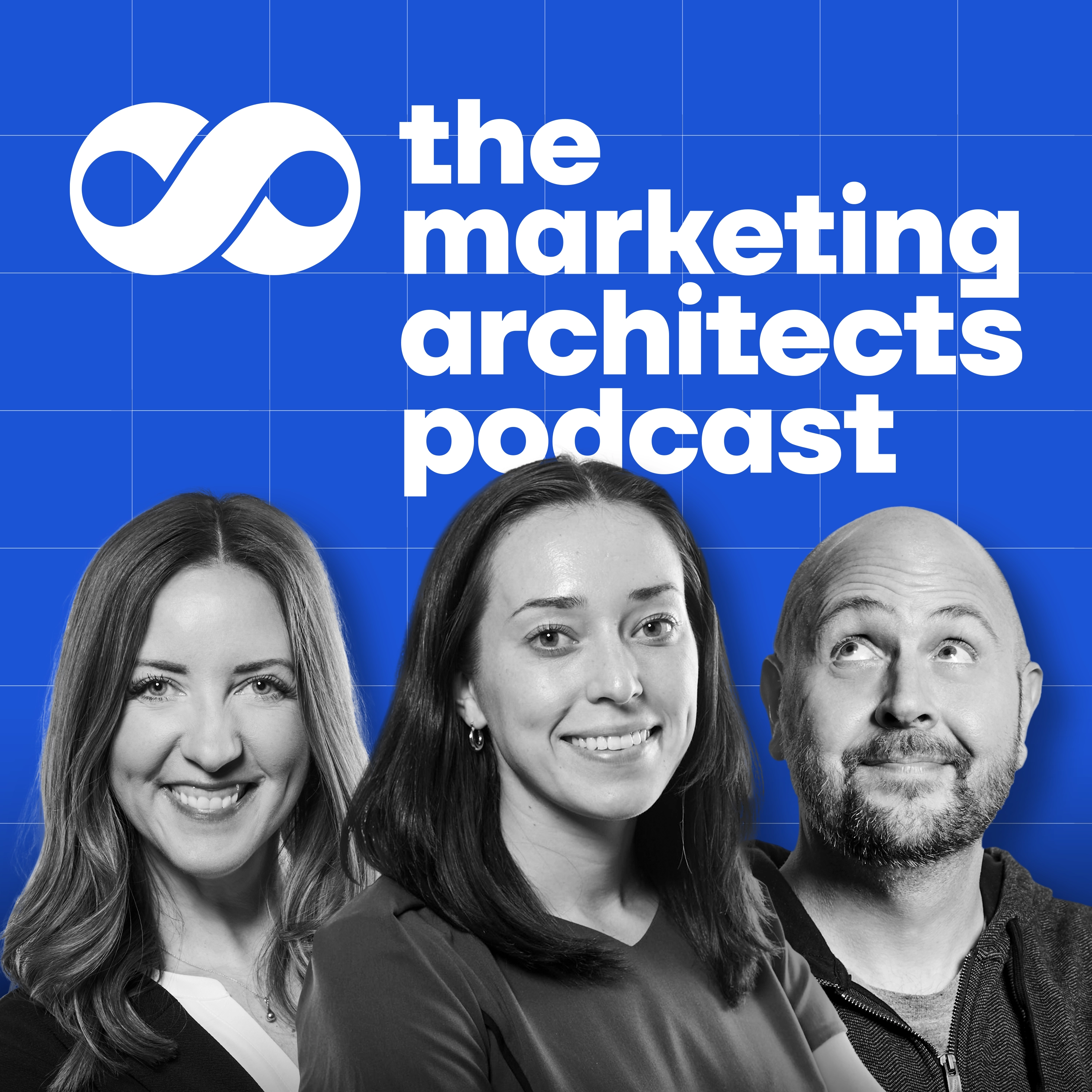
This week, Elena, Angela, and Rob discuss new research from Les Binet and Will Davis that reveals a major misunderstanding at the heart of modern marketing. For years, marketers have obsessed over efficiency: optimizing clicks, proving short-term ROI, and doing more with less. The team breaks down why budget and reach matter more than most realize, how to escape the "death spiral" of shrinking investments, and what it means to go big or go home with your marketing plan.
Topics Covered
• [01:00] Why budget is 8x more important than ROI for driving profit
• [03:00] Defining marketing efficiency vs marketing effectiveness
• [11:00] Making the case internally for bigger budgets and broader reach
• [13:00] How this research should change your channel planning
• [19:00] Balancing efficiency and effectiveness in your marketing mix
• [21:00] What creativity at scale really looks like
Resources:
2025 IPA Effectiveness Conference Article
Today's Hosts
Elena Jasper
Chief Marketing Officer
Rob DeMars
Chief Product Architect
Angela Voss
Chief Executive Officer
Subscribe on



Enjoy this episode? Leave us a review.
Transcript
Angela: Not every brand is at a point in which they can meaningfully go big or go home. I think the question is shifting from which channels are most efficient to which channels can deliver the scale and the exposures that we actually need to grow.
Elena: Hello and welcome to the Marketing Architects, a research first podcast dedicated to answering our toughest marketing questions. I'm Elena Jasper. I'm on the marketing team here at Marketing Architects, and I'm joined by my co-hosts Angela Voss, the CEO of Marketing Architects, and Rob DeMars, the Chief Product architect of Misfits.
Rob: Hello.
Angela: Hi guys.
Elena: We're back with our thoughts on some recent marketing news, always trying to root our opinions and data research, and what drives business results. Today we're talking about the balance of efficiency and effectiveness. This episode was inspired by new research that's making the rounds from Les Binet and Will Davis.
They presented this at the 2025 IPA Effectiveness Conference, and the research reveals a major misunderstanding at the heart of marketing today. Over the past decade, marketing has become obsessed with efficiency. How do we get more clicks for less money? How do we optimize our ROAS and how do we prove short term performance?
This mindset, while logical, has come at a cost, which is long-term effectiveness. And that's the research we are going to open with today. And we're gonna start with a finding that's probably gonna shock everybody listening to this right now. According to Binet and Davis's analysis of the IPA Data bank, budget is eight times more important than ROI in driving marketing effectiveness. In award-winning campaigns, ROI explained only 11% of profit variation.
Budget explained a whopping 89%. Yet marketers tend to have this backwards. In a survey of 500 senior marketing leaders, 65% said ROI was the biggest contributor to success, only 35% named budget. And this misunderstanding is shaping how brands plan their marketing with tighter budgets. Marketers scale back their ambition.
They start to target small segments, over focus on digital performance and neglect older audiences who actually drive half of consumer spending. Les Binet warns that this creates a death spiral. Smaller budgets lead to smaller reach, smaller profits, and more pressure to do more with less. Instead, this data shows that big media and broad reach drive growth.
Binet and Davis argued that to escape the spiral, marketers need to go big or go home. So what would that look like? They talk about a few different things. One is focusing less on efficiency, more on effectiveness. ROI has gone up since COVID, but profits are down. Efficiency doesn't always translate into growth. Relearn the power of budget and scale. Outstanding creative and planning matter, but not as much as how much you invest. Be better at budget setting. Most budgets are decided with crude methods and little financial modeling, even though it's the single most important decision. And think big. Media campaigns need tens or hundreds of millions of exposures to drive meaningful results.
Without broad reach, growth tends to stagnate. Okay, there's a lot to unpack here. I really wanted to talk about this today 'cause I've seen this debate getting greater and greater in the marketing world, and sometimes it confuses me a little bit. I thought it'd be good to cover on the show. Let's start by defining some key terms. What do we mean, when we talk about marketing efficiency versus marketing effectiveness?
Angela: I think a lot of people are confused by this. It doesn't get enough attention. So I was so excited to see the research. When we talk about efficiency in marketing, we're talking about how much you get for every dollar you spend. Generally, that's what we hear from clients, et cetera. I put a dollar in, how much can I track I got out of that? So it becomes more about optimization, reducing waste, lowering costs per lead, ultimately all in effort to try to improve that ROI. And so efficiency looks more inward and asks how tight can we make this machine?
Versus effectiveness is about outcomes. It's that total impact that your marketing has on business growth, on sales, on profit, on market share. Ultimately, it's not just how well you spend in the short term, it's whether what you're spending is actually moving the needle. And Binet and Davis are warning against chasing higher ROI with tighter targeting. Marketers have optimized themselves into smaller and smaller worlds. To your point, Elena, maybe it looks efficient, but it's not long-term effective. Real effectiveness requires scale, reach, investment, spending enough to actually grow the business.
Elena: Maybe one example might be your most efficient marketing plan might just have looked like bottom of the funnel paid search advertising. Like that's gonna get you the most efficient result, the most kind of bang for your buck, but it's not gonna grow your brand in the long term. There's no scale there.
Angela: Yeah. And I think when you really understand the marketing effectiveness research, whether it be long and short, there's been a lot that has been produced by a variety of players over the years. This is all still tied back to reach, so it makes sense. But eight X is a big number. I don't know that anyone of us would've said it was eight X.
Elena: Yeah, and I was surprised too in the research. Most marketers thought that ROI was the primary driver of success. Why do we think that's become the case?
Angela: Well, I think we're all under pressure to deliver. If I as CEO don't deliver outcomes today for our owner, like that's a problem, right? So ROI feels like a safe, rational number, something you can defend in a boardroom. It's tidy, it fits in a spreadsheet, and especially when budgets are tight, showing that you're getting more out of every dollar feels like the responsible thing to do and might actually be depending on the situation that you're in as a business.
But the problem is, ROI is only a part of the story. It's rewarding that efficiency, but not necessarily the impact. And so a very small campaign can have a huge ROI because the denominator is small. It might barely move total sales or profit. So CMOs end up optimizing to look good on paper instead of creating real business growth. And that's reinforced by finance teams and dashboards that make ROI the headline, while actual profit or market share gains are buried or maybe it's just hard to track. And so what they feel they can track gets the focus.
Rob: Don't we, on the most primal level, get a little bit bummed out about this finding? And what I mean by that is we want clarity as humans, right? We just want to be with our fellow human beings. We find out like, oh, don't eat carbs and you'll lose weight. Great. Life's good again, right? Don't eat carbs. I got it. I'm clear. You're clear on what that means. I'm clear, and then it turns out maybe that's not the healthiest for you in the long run. And when you find out a fact like this, ROI has just been this comfy blanket we can all agree upon. You can be an absolute idiot in a boardroom.
Someone can propose an idea and all you have to say is, well, what's the ROI on that? And you sound smart, right? And so it does just become this universal language of alignment. And marketing's hard enough to align on what success looks like. So to have these three little letters now get dispelled. And I totally agree with the, I mean, it totally makes sense. And so I'm not arguing with the science or the physics of this study, but there's a part of you going, gosh, I thought we finally figured out how to get along. And it turns out, it's not quite that easy.
Elena: I think too, like ROI has become something that marketers hang their hat on, and I've even fallen into that trap. Like marketing should drive revenue. You know, marketing should be responsible for things beyond making it pretty. Not to call ourselves out, but I believe one of our many taglines at one point was R-O-I-A-S-A-P.
Rob: I did, and I did come up with that.
Elena: And Rob's responsible for that. So we're not saying we weren't once part of that.
Rob: That's why I'm saying it is just like, I also used to, you know, not eat carbs.
Elena: Right? Well, so this research, it was very definitive. Budget explains 89% of profit variation. That's pretty damning of ROI. Why do we think budget is such a powerful driver?
Angela: Yeah, I think we have to be careful, 'cause even at 11% it is 11%. ROI does matter. So short answer, I think to your question is because profit is mostly a scale game and budget is the throttle for scale. This is why it dominates. Profit from advertising is ROI times spend. That's why ROI still matters. So if ROI moves a bit, but spend swings a lot, spend explains most of the variation in profit. And that's exactly what Binet and Davis see in this data. I think another important understanding too is that ROIs tend to cluster within a band across brands, but budgets range very wildly across brands and campaigns. So budget ends up explaining the majority of the profit variation versus that 11% for ROI, hence budget is eight X more important. But this again, all ties back to reach. Reach drives growth and it's budget that unlocks that reach.
Rob: Absolutely. It's physics, right? It's like the budget is gravity and there's nothing you can beat. Gravity. The more you invest, the more mass your brand builds. And then to your point, more impressions, more memory, more sales. So even if your creative is perfect and your targeting is just pristine, you just can't deny gravity.
Angela: If your targeting is pristine, you're probably doing it wrong, transparently. Like, it probably needs to be more broad.
Rob: That's what everybody thinks, right? Brilliant creative, well targeted. Yeah. But you're not gonna defy gravity.
Angela: Yep.
Elena: This reminds me of when we had Dale on the podcast and he was talking about how you can see this from category to category. The biggest brands are the biggest and they spend the most on marketing, like almost every category that holds true. And even if you look at Salesforce's marketing budget versus HubSpot's, HubSpot is a fraction. Even if HubSpot has a much higher ROI on all their marketing channels, you still can't compete with just like the scale of a category leader. And so that tends to hold true. Well, say I am a marketer, Rob, and my finance team is super focused on ROI, so maybe I'm already small in my category, and they're just overly focused on that. How could a marketer make the case internally for a bigger budget or more of a focus on reach when ROI has been the norm?
Rob: Since you are a marketer, Elena, I would challenge you to, you know, eat your own dog food and say, okay, well I have an audience and I have a challenge that I have to reframe, right? Because that's what marketing is. We take a product, we reframe it so the audience can see the value in it. And I think we have to reframe what spending means. Turn it from a cost center into a growth engine, right? Instead of saying, we need more budget, say we're leaving profit on the table, right? And the data shows that bigger budgets lead to bigger profits. So, kind of like jujitsu, right? So take ROI and flip it. And say, okay, let's say if we spend too little, we may actually not hit our goals. So it's that lever, it's that growth move. It's that power move instead of it's this thing we have to do. It's the engine.
Elena: I think too, marketers, we don't have this type of research all that often. So maybe you could open your budget planning meeting with this research too. You could slap that 89% on a PowerPoint slide and see if that helps you make the case. So one phrase that stood out to me was death spiral. Les Binet called this current situation we're in a bit of a death spiral. Rob, have we seen this play out with brands that have, you know, over-optimized towards efficiency?
Rob: Yeah. I think, again, going back to the point of this whole thing, I think those that chase math, if you're caught up, your world, your brand is all caught up in a spreadsheet, it actually makes sense that you would trim your budget. Because when you trim your budget, all of a sudden your ROI looks better. It makes sense, you know, in the short term. So then, your boss is like, Hey, great job. So what do you do? You trim a little bit more. And all of a sudden your ROI looks better again, again in the short term. And you can literally optimize yourself into irrelevance.
Elena: So, I was speechless, and that's all I got to say about that.
Rob: Okay, great. You don't wanna leave any silence on this podcast because Rob's gonna fill it with something like that.
Elena: Alright, well, one thing that I thought could be fun to talk about is we like to cover research on this show, but we also try to make it a little bit practical. So it's one thing to say, okay, budget matters. Maybe I take that into my planning for next year. I advocate for more. I look at where I'm at in my category. I think this could also influence what channels brands decide to invest in. I think that's another takeaway we could have from this if we're trying to have more effective marketing. So, Ang, what do you think? How should this change those channel plans for next year?
Angela: We've said this before too. I was just gonna say, not every brand is
Rob: What do you think about TV? Ang? Is that one we should consider?
Angela: Not every brand is at a point in which they can meaningfully go big or go home. TV is not right for everybody. But I would just say like if budget and reach explain the majority of the variation in profit, then I think the question is shifting from which channels are most efficient to which channels can deliver the scale and the exposures that we actually need to grow. So instead of optimizing within silos, what's my best performing digital channel? Start by asking where can I reach the most potential buyers, including the light ones? Binet and Davis remind us that fewer than half of CMOs maximize reach. That's a huge missed opportunity.
Use ROI as a tuning metric versus a steering wheel for your marketing plan. ROI does tell you efficiency within a channel. But when you're deciding between channels, you need to look at the total profit contribution, and that's driven by that audience size and that exposure. Practically speaking, an example related to television is we measure everything. We're just absolutely obsessed with data. We can track when people hit a client's website, et cetera. Does that happen immediately? Does it happen within seven days? Does it happen within 30 days? There's a lot of technology that allows you to do things like that today, and we've talked about how harmful that can be at times.
We don't only optimize to that data, we definitely look at it, channel versus channel. And by channel I mean, a Fox News versus a CNN or something like that. But we also plan to audience as well, because we know not everyone's in market right now, and those impressions and those exposures matter. And then I think the go big or go home piece, as they say, just to keep in mind, to move those markets, you do need 30 to 60 million exposures for a statistically significant sales lift, and 200 million to 1 billion for that real share growth. So the right channels are the ones that can get you there affordably, repeatedly, and also help you deliver quality creative, things like that.
Rob: I figured Ang would cover reach, and anything related to math. So I'm gonna go the other route and say, also, don't forget to invest in the channels that really help build those memory structures. Video, audio, the nature of outdoor, things that can still, you know, really add the added value of tapping into people's emotions, 'cause we all know those are the stickiest, right? And that tied with the reach definitely, you know, something to be mindful of. But like we've said earlier, the creative is only a small part of that. But let's not forget it, let's not forget to make 'em memorable.
Elena: I would add that Rob and I, we covered an IPA alert recently that did find TV is the most effective channel. So if you're looking for scale, TV is gonna have the greatest scale possible.
Angela: And you mentioned in your answer there that this study's honestly just full of fun surprises, but one of the stats they shared was that you need 30 to 60 million campaign exposures, minimum, to see real results. And you even pointed out that gets even higher, like 200 million to a billion is what you said. I think for like long-term growth, that's a lot. Like how do brands think practically about hitting that sort of scale?
Angela: I think, you know, this isn't about spending recklessly, it's about understanding how the cost of media determines what's even possible. And I think sometimes people get confused because we hear things like it's not efficiency, it's effectiveness. So then all of a sudden it's like, well, efficient media maybe works against you. And that's where I think you can get tripped up. If effectiveness depends on scale, then the cost of your media dictates how much scale you can actually buy. When CPMs are high, this feels dumb to be saying this, but when CPMs are high, you hit a ceiling really fast. Reach gets capped. Frequency spikes. Your effective audience shrinks. When CPMs are lower, not recklessly, you know, not targeting anyone and just buying overnights and things like that, but when CPMs are lower, like in TV, like we talk about radio, other broad reach channels, you can afford the repetition and exposure levels that really drive that behavior change. And that's why Binet's message ties so closely to ours. Everything works at zero. We've said that before. The lower your cost per thousand, the more chances you have to reach real people and make your creative work harder.
Elena: I know people get upset about that argument, but TV is just sort of a different type of channel. Even with digital media, if you can buy quality media for less, like you said, you're gonna be able to reach more people and get that sort of scale. It's gonna be really hard, especially if you're not a giant brand, to get the type of scale you need if you're paying a premium for these different channels.
Elena: Alright, so like you said, Ang, ROI is not responsible for zero. It's 11%, so it still matters in this equation. So if efficiency helps us, you know, optimize in the short term, effectiveness drives that long-term growth. How should we think about balancing the two?
Angela: I think efficiency is about today, making sure each dollar is well spent, minimizing waste. You know, it's how you learn, you iterate and you stay accountable. Effectiveness is about tomorrow, building the kind of memory structures, that mental availability and that reach that create future demand and ultimately pricing power and profit. The problem is when one side completely crowds out the other. If you only chase that efficiency, whether that be optimizing for clicks, et cetera, short term ROI, microtargeting, you end up with beautiful dashboards, but a shrinking brand. If you ignore efficiency altogether, you risk burning through budget without learning or scaling smartly.
So it's sequencing and proportion in my head, using those efficiency metrics to optimize within your effectiveness plan, but set those effectiveness goals, reach profit penetration, as your North Star. The IPA and Binet's work consistently shows that the best performing brands balance their investment, roughly that 60-40 split between brand building and short term activation. The long term work builds that growth and the short term work keeps the machine funded and running well. So it's efficiency in service of effectiveness.
Elena: I was listening to Mark Ritson's podcast this morning and he was talking about a theme that he speaks about frequently, which marketers probably don't love, but it's the truth, that creative is less important than we think. Sorry, Rob. But it's true, and this study finds the same thing. Budget and scale matter a lot more than optimizing your creative. But that doesn't mean creative doesn't matter or that it's not important. Reading this study, I was thinking about how this could shift marketers' mindset. A lot of marketers right now are obsessed with optimizing their creative testing.
Thousands of different versions. How do we adapt quickly? And that's not saying that's not important, but this research seems like it's pushing us to rediscover a bit of what does it mean to be creative at scale. But we have all this fragmentation and we have momentum pushing against us. So Rob, how do you think marketers can respond creatively to this research?
Rob: Creativity at scale does not mean a thousand TikTok videos and a prayer, right? It still comes back to what is that one big, gigantic, amazing campaign idea that can survive every format that you throw at it? It's about building really a system of thinking versus one-off ads. You can obviously heard it a thousand times. Geico, 15 minutes could save you thousands using Geico. You can use that a thousand different ways in a thousand different channels. Apple's shot on iPhone, right? Translates amazingly well. TV, social videos. It's just, that has, these are scalable, you know, creative engines. And that doesn't require a ton of people. It just requires a framework that can generate new expressions of the same idea over and over again.
Elena: Yeah, so it doesn't necessarily mean you have to just have one 30-second spot that you run over and over again, but how can you keep things consistent with the campaign idea or the overarching story over time? One thing in the research was they mentioned that if you wanna escape the death spiral, there is a way. You need to go big or go home. So what would it look like for a brand to really go big or go home next year?
Angela: I think it's having courage to invest at the level that your growth ambitions actually require. And sometimes setting growth ambitions that feel like a stretch can get you to think differently too. A little easier for a privately held company to say versus a public company. But those are things that you can do when you're a private company. And then I think just in terms of the plan, going big means setting budgets based on those growth goals versus what we spent last year,
or the ROI that we're seeing out of each channel in Q4 or what we think Q1 is gonna look like. Use financial modeling to tie budget to potential profit instead of last year's plus some X factor or percent in inflation. As Binet says, budget setting is the most important decision in marketing, and most companies still treat it as a bit of an afterthought as they are doing annual planning. I think buy big media at smart prices. Prioritize channels that deliver that mass reach at the lowest CPM. Linear and connected TV, Rob, are great ways to do that. Radio is great to do that. High impact video. Even digital, it is just about thinking where are those exposures that you need
in order to ultimately tie your growth to the reach that you need in order to get there. And then Rob, I think just said it best related to creative commitment. These brands would focus on fewer, bigger, better ideas, assets that run long enough to work. Not endless one-off bursts. Wear out is mostly a myth and under exposure is the bigger problem.
Elena: Yeah, I love the advice to be bold. I think that it's just human nature. Rob was talking about this earlier to want to have the easy answers, to wanna fit in and be like everybody else. But what's something your brand is doing next year that's different from your category? If you're in the United States, maybe commit to marketing effectiveness, 'cause that would probably be pretty different than what most brands are doing.
The best athletes, people who break through barriers, they're usually doing something different. Like they're not using the exact same formula as everybody else. So that'd be my challenge. How could you challenge your brand to do something that would stand out in the category next year? To wrap us up with something fun, what is something in your life that you've been way too efficient about, but maybe not so effective? Ang, you started.
Angela: Yes. One came to mind immediately for me and it's a tension point between myself and my husband. I'm very type A and so if we travel, I have every minute optimized of that trip. No room for spontaneity. No room for relaxation necessarily. So was it effective or was it just efficient?
Rob: Do you actually schedule your relaxation time as well? Is that right?
Angela: Would you call pool time, quote unquote, relaxation?
Rob: Right, right, exactly. So you've, yeah, you've got, and
Angela: He means like, you know, potentially time in a hotel room doing nothing.
And I'm
Rob: Oh yeah. Right. Serendipity.
Angela: Yeah.
Rob: That's a good one. I literally track all of my health data for reasons I don't know. I mean, I literally measure my blood oxygen when I'm sleeping. I am checking my VO2 max. I literally considered a urine tracker. There's like this thing you can put in your toilet and it gives you like, you know, readouts on your health.
Elena: Wait, you're doing that?
Rob: No, no, I thought about that one, that one I didn't do. I saw,
Elena: Oh, God.
Rob: I was debating it, but the only problem is I pee in too many toilets so the data would be wrong. And I'll even feed all of this into ChatGPT, so it can like, help me understand my health. And ChatGPT will literally tell me, I think you might burn yourself out tracking all of this stuff. Is this effective? So I actually am not sure I've gotten any value out of taking my blood pressure every day, but I do it anyways.
Angela: I was just so happy that this is out in the world now and Elena and I don't have to sit with this insight that you have a spreadsheet that you're plugging into every day.
Now you really know Snoop Rob, people. You really know. You're in the inside circle.
Rob: This is true.
Elena: Yeah. I can see how that is too much efficiency.
Rob: I did stop daily checking my blood glucose voluntarily 'cause it started to hurt my finger. So that one did, I stopped.
Elena: Oh, my gosh. You were doing that to yourself. Poor thing.
Rob: I know. I wasn't even diabetic and I'm pricking my own finger. I'm like,
but I am surprised you didn't have the one on your, you know, on your arm. I did do that. I did do that until it exploded. The capsule that you inject on your arm exploded and it bled all over my pants. And I said, okay, I'm out on that one.
Elena: I also say from my own experience with doctors, I can imagine you walking into Mayo Clinic with all this information. They're probably gonna do their own labs, you know, they're gonna do their own thing.
Rob: I pulled my laptop out during our conversations and they're like, we don't look at your data.
Elena: Yeah. They don't care.
Rob: Snoop Rob.
Angela: Oh my gosh.
Elena: But you've got it. You've got it.
Angela: What's yours, Elena?
Elena: Yeah. So I'm a speed reader. I'm not like an elite speed reader, but I have taken tests online about my speed reading ability and yeah, and it's up there. So I read a lot of books and I read them really fast, and I take pride in that. But I recently started rereading some series that I've read before. I'm like, wow, I don't retain much when I'm reading. So I think maybe I'm a little too efficient, not quite as effective. Might be helpful to slow down, but there's nothing better than getting through a book fast.
Elena: No, there's no real reason to, but I just like it.
Rob: That is such a superpower. I literally read so slow that I have to remind myself I'm reading. Like, wait a minute, you've been on the same page for three days.
Elena: I've definitely done something where you read a page so fast, I'm like, I have to read that again 'cause I have no idea. I didn't retain any of that. It's completely gone.