
Episode 190
The Truth About Targeting Gen Z
Only 18% of sub-brands skew toward any age group. That's the finding from 17 years of UK purchase data. So what is a generational label really telling you?
This week, Elena, Angela and Rob unpack why generational targeting feels precise but predicts little. They cover GWI's warning that AI can turn clichés into insights, three ways to pressure-test audience research and the Ehrenberg-Bass study behind the data. Learn why buying situations beat birth years, how media habits should and shouldn't shape channel choices and what brands give up by ignoring older buyers. Plus, guess which generation gets stuck with "rizz" in a stereotype trivia round.

Topics Covered
• [00:00] How old is Gen Z, really?
• [02:00] GWI, AI and generational clichés
• [05:00] "Ageism Kills Brands" study
• [08:00] Category entry points over birth years
• [12:00] Media habits and the Gen Alpha hype
• [15:00] What brands lose by ignoring older buyers
• [17:00] Generational stereotype trivia
Resources:
The Current Article 2026
2022 Ageism Kills Brands Study
Today's Hosts

Elena Jasper
Chief Marketing Officer

Rob DeMars
Chief Misfit

Angela Voss
Chief Executive Officer
Transcript
Elena: I'm Elena Jasper. I'm on the marketing team here at Marketing Architects, and I'm joined by my co-hosts, Angela Voss, the CEO of Marketing Architects, and Rob DeMars, chief misfit at Misfits & Machines.
Angela: Hello.
Rob: Good morning.
Elena: Hello. Today we are talking about generational marketing. It can feel like almost every brand today is saying, "We gotta reach Gen Z," but Gen Alpha is also showing up already in marketers' minds. But do younger buyers actually buy differently from others in a category? We are gonna get into some data and studies today, but before we do that, I wanted to ask you both for a gut check. How old do you think Gen Z people are right now? Like, if you had to guess, without looking it up, if you had to guess an age range?
Angela: Yeah, Ithink my middle one is right on the edge of Gen Alpha. I remember looking that up a while ago. So I would say Gen Z is 15 to 28. 27?
Rob: Yeah. Well, that's pretty good. I confess, I had to start looking this stuff up because there's just, there's so many of them and they're from different decades and whatnot, so I kinda cheated, and I know it's somewhere in that 13 to 28 range, and I have two of them myself.
Elena: Okay, so Rob, you didn't even bother to guess. You just cheated.
Rob: I just cheated. I, had... And the, and the thing I love about this is there's no official source for... 'cause I'm like, well, who determines these things? Like, who actually... And it's, like, a bunch of people in a bar eating chicken wings. you know? There's no, like, official...
Angela: Is this a Rob history lesson? Give us the history of...
Rob: I was curious. So I was curious. It was like, there's no official source. But yes, that's, Ithink that's the agreed-upon range, somewhere in... Correct me if I'm wrong.
Angela: Elena?
Elena: No, you'd be right. according to Beresford Research, Gen Z was born between 1997 and 2012. So the oldest Gen Z-ers are now 29, and I believe the youngest would be 14. So you both were, like, right in the range. however, you know, a lot of these young audience insights, people think of Gen Z as being very young, but a lot of that generation is kind of aging out of that stereotype. We're not talking about just teenagers anymore. Most of Gen Z are in their, in their 20s. But as youmentioned, Ange, just below Gen Z is Gen Alpha, so kind of the new kids on the block, and then older than Gen Z would be millennials, then Gen X, and then baby boomers. And the age math matters because what brands know about different generations is changing, rapidly. Today's episode was inspired by a piece from The Current. They covered a panel at Advertising Week New York, which was moderated by GWI, and they started with, "Why are brands so fixated on Gen Z?" Well, their spending power is projected to reach 12 trillion globally by 2030, and they're seen as the people who sort of set the culture. But the panel's warning was about AI. GWI'data showed that about 80% of respondents say AI helps them understand their audience better than traditional research, almost the same share that they've seen AI answers built on generational clichés . So GWI's Gen Z 2026 report said, "A broad label becomes a confident answer." What this report says is that Gen Z is full of contradictions. US Gen Z people are skeptical of branding, but influenced by creators. They're financially anxious, but willing to spend on experiences. And one panelist argued that putting an age constraint on your targeting means you're missing users beyond it. So today, we're gonna talk about whether generational labels are telling us anything real and useful, or are we just making a messy audience look neatly defined when it can't really be? so Rob, with that topic of AI'doing audience research, and it being able to hand back stereotypes, it's still, like, using AI for research is amazing. It's faster, it's cheaper. You know, it gives people access to research. We use a lot of AI research here, but how could a marketer kind of pressure test things like generational insights in general, whether they're coming from a vendor, a deck, or increasingly from AI or an LLM?
Rob: Yeah. I mean, it, it's fascinating to use AI as a superpower when it comes to research. But like any research, Ithink it doesn't matter if it's AI or a survey panel, whatever it might be, Ithink you can run three basic tests, right? So the one is kind of the say-do test. You know, is the insight based on a survey or what people actually buy? And is there a way you can challenge the data to the true source of ultimately the buying behavior? 'Cause that gap can obviously be huge. you know, the second one is "compared to who?" So, and you can even run this with AI w-as you're getting information from it. Say, "Okay, well, Gen Z loves experiences." Well, compared to who , right? I mean, millennials have the same, of the same age, everybody. You know, usually that difference is actually kind of tiny. So it, it's good to stress-test that. And then also encourage AIto argue with itself. So say, "Hey, well, show me the evidence that proves this is not true." Right? So you can kind of have it steel man its own argument as well. So, Ithink the, you know, the bottom line is, you know, everyone's like, "Oh, AI is, you know, it, it's misleading. It's wrong." Well, it's a thought partner and it has a lot of valuable information. But like even the smartest people on the planet, it's okay to interrogate them. It's okay to steel man their arguments. You know, that's what separates just accepting something versus seeking that true insight.
Elena: Mm-hmm. Well, I know that our strategy team, they've said before that with traditional research as well, it doesn't mean whatever you come up with in research you go do . Like, you also need to stress test that. And like you said, a lot of times what people say they think is not actually what they,
Rob: What they do. More times than not, actually.
Elena: Right. It's a good point too that you wonder about some of these things you hear about Gen Z, and they say things like they care more about certain topics or, yeah, they like more experiences. And it's a good question, if you actually saw the data, how much more is it than... Or is it just a little bit more that we sort of all glommed onto that, where, like, all these people, they're just completely, totally different? so to prep for this, I also looked at a study that was trying to see whether any of this generational bias shows up in what people actually buy, which could help answer this question of, we're seeing, like, all these generations are all different, is that change in their buying behavior? So this study is called "Ageism Kills Brands," so you can kinda guess where this is going. It was published in the Australasian Marketing Journal by researchers at the Ehrenberg-Bass Institute. That would make sense. They looked at 17 years of UK household panel data covering 5,913 sub-brands across 101 categories, and only 18% of sub-brands skewed towards any age group. Growing, stable, and declining sub-brands all appealed equally to all ages. So, Ange, generational targets, they might feel helpful in planning discussions, but this study says that most brands are actually selling to everybody. Why do you think these categories can feel so definitive to marketers, and where do they come from?
Angela: Yeah, Ithink marketers like these generational... Okay, I'm gonna use it. Ithink marketers like these labels because they just make something that could be complicated just feel more simple. And broadly, I'don't ag... I'don't disagree with that. Ithink, actually as marketers, we like to make things more complicated sometimes. So Ithink that's a great place to start from . But Ithink we can put millions of people into a bucket and assign them a few characteristics, and suddenly we feel like we're experts in who they are. So we start saying things like Gen Z loves authenticity and millennials value experiences and boomers are really the only brand loyalists, which Ithink can be harmful. you know, Ithink we have to remember that there's an entire industry built around convincing marketers that every new generation requires a completely different playbook. Otherwise, why do we need them, right? So, but to your point, what I love about this Ehrenberg-Bass research is that it challenges the whole premise. The overwhelming majority of brands don't actually have these distinct age profiles, and Ithink sometimes we confuse our ability to describe an audience with our ability to predict what they're going to do. And so we've gotten, we like to think we're good at describing the generations, but not great yet at predicting maybe why they would buy our product or service.
Elena: So I know as an agency, when we think about targeting with clients, we're not against age targeting when we look at, like, your bullseye target, like, what is, like, the smallest target you wanna reach. But if marketers, if they're not, if we're not gonna target generations, what does feel helpful? Like, how would you recommend they think about audience targeting ranges if we're not gonna classify it by a generation?
Angela: Yeah, Ithink we should spend more time maybe understanding the circumstances that cause someone to enter a category versus trying to define that behavior by their age. Jenny Romaniuk has done great, interesting work around category entry points, which are just essentially those situations that trigger someone to think about a category. So if we think of something like, mattresses, for example, a 25-year-old and a 55-year-old might both be shopping because they're both moving. Their mattress is worn out, or they're not sleeping well, or whatever the situation may be. And so those situations tell us something meaningful about why someone might buy. Their generation doesn't necessarily tell us that. And Ithink because most people aren't in the market for most products most of the time, we need to build these memory structures that make our brand come to mind when those situations arise. So instead of getting overly precise about who we're targeting, just start with the broadest realistic pool of category buyers and then think about the buying situations we want our brand associated with. I'd rather understand what makes someone a buyer than, you know, intimately understand their birth year and what that tells me.
Elena: Yeah, that's a good point. Like, if you're spending a lot of time in planning discussions, you're probably gonna learn more about your audience by talking about the buying situations than trying to focus on, "All right, we think our ideal customer is a 50-year-old woman, and what is she interested in?" That's probably not gonna get you as far. so in this study, the young people, the youths, did show up more heavily around new brand launches. And the authors thought, you know, maybe this is due to younger audiences simply being new entrants to certain categories. most people reach a certain age before they're in the market for something like an espresso machine, a financial planner, or things like anti-aging skincare. So, Rob, if you're launching a brand, and it's new, how do youmake creative that gets noticed by younger buyers without, like, shutting out or maybe even having everyone else not like you? You don't wanna also seem like that brand that's, like, really trying to, like, speak to the, speak to the young people.
Rob: You ju... you just nailed it there. In investing, there's the principle of don't time the market, right? Stick with the fundamentals. And Ithink you don't wanna be Coca-Cola, who's throwing out the term "rizz," 'cause that could go really well for you or that could go really bad. And i... i... instead , how do you focus on the fundamentals, distinctive assets that make you famous, right? We talk about that all the time on this podcast for a reason. You know, the universal stuff, using humor, real-life moments, characters, and sounds. You know, young buyers are new to categories, so they don't have those memory structures yet, and that's the great opportunity, because how do you build those memory structures while you're still talking to your older audiences, as well, who do remember those assets? So it's really a one plus one equals three by just focusing on the fundamentals and just avoiding the temptation to look hip. And I, I'm sorry, that probably sounds old man of me, but you don't wanna be the old white guy doing rap, right? You just don't wanna be that guy. So that would be my, that would be my recommendation.
Angela: How's that going for you, Rob?
Elena: Yeah. As your name is Snoop Rob in this recording, right?
Rob: Gosh. Shots fired.
Angela: That's okay. You can get me back later. I belong... I'don't even belong in this conversation. I'm so uncool.
Rob: Pretty damn good, actually. I'm gonna give you that one. I'm not even gonna try to come back from that.
Elena: All right, so we know that younger people, they spend their media time differently than older audiences. Ange, how do you think this should inform, like, the media channels that marketers are investing in?
Angela: Yeah, I just think we need to think about two separate things: who we're trying to reach and then how we're gonna reach them. You know, different generations do consume media differently. We're not, we're not arguing with that. But Ithink there's a tendency to equate time spent on a platform with maybe how much advertising, investment that platform deserves . And we just need to keep in mind, you know, how effectively can we reach an audience, and how much incremental reach are we getting, and what are we paying for it? So TV's a great example that, of course, we speak to all the time just given where we play. We hear all the time that younger people don't watch TV, but they're absolutely consuming professionally produced content through streaming and through connected TVs. So how should then linear and streaming TV complement each other if we're thinking about category entry points and buying moments versus just generations, just with the goal being buying media that most effectively reaches the people who could buy your product, whatever that situation might be?
Elena: I mentioned earlier, Rob, about Gen Alpha is already becoming a part of conversations. I swear I saw an article the other day about Gen Alpha already, but the oldest people in this generation are actually barely teenagers. So what do you think is the risk of already starting to build out creative and strategy and even all these discussions around a generation of kids that at this point are defined mostly by stereotypes? Like, do you have something you would do instead?
Rob: I'm gonna sound like I'm on repeat here, but Angela mentioned this earlier. I mean, every 15 years, our industry discovers teenagers, you know? And it's like, "What in the world?" This group of people changes their mind, you know, they walk around a corner and they 've changed their mind. I mean, so we're gonna try to target them specifically on one particular aspect of their psychographics? Forget it. I mean, again, going back to the fundamentals: building that mental availability. Sure, they are going to be tomorrow's buyer. Great. We've been saying that every 15 years, so we get that principle. Again, going back to those fundamentals, right? How are you sticking in their brain in a way that they will remember you when they're ready to buy that car? But that's a timeless principle. That's not a trend. That's a new insight. This has been going on since the Donna time
Elena: Yeah. One other thing I struggle with when we get so obsessed with this new generation being totally different from the others: one thing people bring up a lot is that new generations are only gonna be scrolling Reels. Ithink a lot of it depends on the time of your life. Like when you're in college, you're spending a lot of time alone, so you're probably scrolling a lot on your phone. But then you get married, you're in a house, you start watching p rogramming with your spouse, and then you have kids. I'don't know. So sometimes Ithink, too, we say, "Oh, this is gonna change the entire generation," but actually it's more of just a coming-of-age thing where your habits are gonna change anyway.
Rob: When it comes back to timing the market again, Reels didn't even exist, how long ago, right? So, you know, what is gonna be the new Reels coming up? I mean, there's just... But if those Reels are memorable, right? If they're distinctive, if they have. .. Again, it just comes back to the fundamentals.
Angela: Well, and raise your hand if you're not Gen Alpha and you scroll on your phone.
Elena: Oh, right.
Angela: So yeah, for those listening, all three of us are raising our hands.
Elena: Yes. So another part of this conversation that Ithink is a good one to have is that we get so obsessed with these younger generations that Ithink a lot of the advertising industry tends to ignore older adults, who are a huge group. They hold roughly half of US household wealth. They watch a lot of TV, and yet again, we all get sort of obsessed with this youngest buyer. Ange, what do you think a brand gives up when they underinvest in understanding, you know, in targeting and reaching an older audience?
Angela: Yeah. I mean, I'dug into this a little bit because I actually had in my head that it's even more than that. If you go down to 55 years old and older, that group holds like three-quarters of the household wealth. Like, it's insane. It's an enormous amount of economic power. But right, there's this cultural bias in our industry toward youth. You know, we want our brands to feel young or cool and relevant, and we're just thinking about the future. So I just wonder how much of that is driven by what marketers find interesting versus what actually drives business results, you know? Because older consumers are buying homes and they're traveling and they're renovating and they're changing financial services and entering new categories all the time. And Ithink the bigger question is whether marketers are making decisions based on the commercial opportunity that's in front of them or the audience they find most culturally interesting. And I know for myself, I am introducing brands to my children, and right now I am the buyer. So even if it's for them, they need to care about me as the buyer if they wanna get their brand in front of someone and have them grow with them as they age. So yeah, there's a lot to consider there.
Elena: Yeah. Ithink there's also this false belief that older generations are fiercely brand loyal and they're never gonna change what brands they buy, which is also false. So even thinking, "I have to capture people while they're young," that's not necessarily wrong, but that doesn't mean you can't get new buyers in older generations, too. Okay, well, to wrap us up here, I have a short trivia game. I'm going to read a generational stereotype, and I want you to guess which generation is sort of stuck with it. Right?
Rob: Fantastic.
Elena: Okay, so what generation do we say kinda gets a participation trophy for everything, or maybe got one when they were growing up?
Angela: That's gotta be millennials.
Rob: Yeah, I'm going with millennials.
Elena: Yes, you'd be correct. Okay. What generation says "rizz" and "no cap"? Bonus points if you know what either of those mean.
Rob: Well, "rizz" I've heard from my daughter, and it has something to do with a dude being cool, Ithink. That's what... They...
Angela: There's like chemistry, right? There's rizz.
Rob: They got the rizz or whatever. I...
Angela: Ithink. Is that...
Rob: Am I right? Am I right, though? I...
Elena: Ithink so. I'm also not gonna be a good person to answer this, but I believe so.
Rob: So "rizz" is definitely a Gen Z...
Angela: Oh, I'd say Alpha. My kids say "rizz."
Elena: It is Gen Z.
Angela: Is it really?
Elena: Mm-hmm. That surprised me too. But I mean, when you think about it, Gen Z can be as young as, like, 14, 15.
Angela: Okay, got it. All right.
Elena: Do you know what "no cap" means?
Angela: I'don't. I'don't know what that means.
Elena: So luckily for us, our producer is younger than us, and she's telling me in the chat. She said "rizz" means like you've got game, and "no cap" means like no lie. You're not...
Angela: Oh, all right.
Elena: ...capping. Yeah. Thank you, Taylor, for helping us. Okay, which generation was called kind of latchkey kids? They were raised on MTV and mixtapes.
Rob: Yeah!
Angela: That's gotta be X.
Rob: I'm wearing my Stone Temple Pilots shirt just to represent the Gen Xers right now.
Angela: Yeah.
Elena: Yes, you'd be correct. Okay. Who was called the Me Generation?
Angela: I'don't know this one. I'm gonna...
Rob: I know that one.
Angela: I'm guessing millennials. Like, it... no. That's, this is people from the '80s. That was... That is millennials. Oh, you're right, you're right. I am a geriatric millennial.
Rob: It's the whole, you know, "greed is good," Wall Street, Michael Douglas.
Elena: So you're actually both right. Tom Wolfe said it was evident in boomers, and Time called millennials the "me, me, me generation." So you'd both kind of be right. Okay, last question. Which generation still watches TV every week?
Angela: This feels like a trick question to me. Like, all of them do, but like boomers mostly, but like all?
Rob: Well, how do you define TV, Elena?
Elena: On a flat TV screen. Oh, there goes my camera. On a TV.
Rob: Are we talking connected TV?
Elena: Anything on a TV screen, on a wall.
Rob: Then I'm going all of them, all of the above, and I'm serious.
Elena: That was a trick question just for us. It's all generations. Go TV. There you go. Well, you did great.
Rob: I love it. I'did do research. We can cut this out, but I was eating chicken wings with my wife last night, having a conversation about the generations. I'm like, "This is fascinating," because they've taken on this... It's like the weather, you know? Every time there's a storm, like, alphabetically now, we're just going to the next thing, right? So even after Generation Alpha, we're apparently gonna go with Beta, right? So I'm like, "Who determined that?" Because it started with my generation, Generation X, right? So why do we start so late in the alphabet, you know? Because we've clearly taken that on. But do you guys know what we used to call the generation from 1901 to 1927?
[Missing word] generation.
Elena: Oh yeah, I've heard that.
Angela: Yeah.
Rob: Next one, 1928 to 1945, the Silent Generation. So, I've heard of the Greatest Generation before. I'd never heard of the Silent Generation. And then, of course, '46 to '64, the Baby Boomers, and then all the others that we know today.
Angela: Yeah, now that you say them, I'do feel like I've heard those, but...
Rob: I've definitely heard of the Greatest Generation, but I was thinking that was actually later. Ithought it was more like the, you know, the World War II people or whatever. But...
Angela: Where the breaks in years there? 1900 to...
Rob: And this is, again, there's no actual person who's in charge of this, so this is, you know, Google. but the Greatest Generation, is 1901 to 1927.
Angela: Okay, so they're a lot wider than what we use today.
Rob: Yeah. Well, and then, yeah, the Silent Generation, '28 to '45, 'cause they weren't thinking this way, probably, right? and we have to, like you said, as marketers, we have to have a new reason to segment. So, but, Ithought, you know, the millennials are also called what? 'Cause I'don't think we said this here. It's actually the...
Elena: Generation Y.
Rob: Yeah, so you go Gen X to Gen Y, which is the millennials. That's confusing to me 'cause I sort of thought they maybe were different. yeah, and then Gen Z is also known as the iGen, 'cause that was really when, you know, the world as we know it became a reality. Digital natives.
Angela: Gotcha. Yeah.
Elena: You're right, Rob. Why did they start at X?
Rob: I'don't know. Ithink someone was being clever 'cause they thought us weirdos from the '90s were really, hard to understand. So, like, "We're gonna call them Generation X," and then they're like, "Whoa, we got a letter. Well, what's the next letter? O h, it's a Y. Isn't that funny?" Right? 'Cause it's a Y, like, they're all about the Y. "Oh, let's do that." And it's sort of like it's got legs. "Okay, let's stick with this," you know? And now it's Alpha and Beta, and what's after Beta? I'don't even know.
Elena: We're gonna find out.
Angela: We're the researchers.
Rob: I know. I just didn't ask.
Angela: Didn't go that far.
Episode 190
The Truth About Targeting Gen Z
Only 18% of sub-brands skew toward any age group. That's the finding from 17 years of UK purchase data. So what is a generational label really telling you?
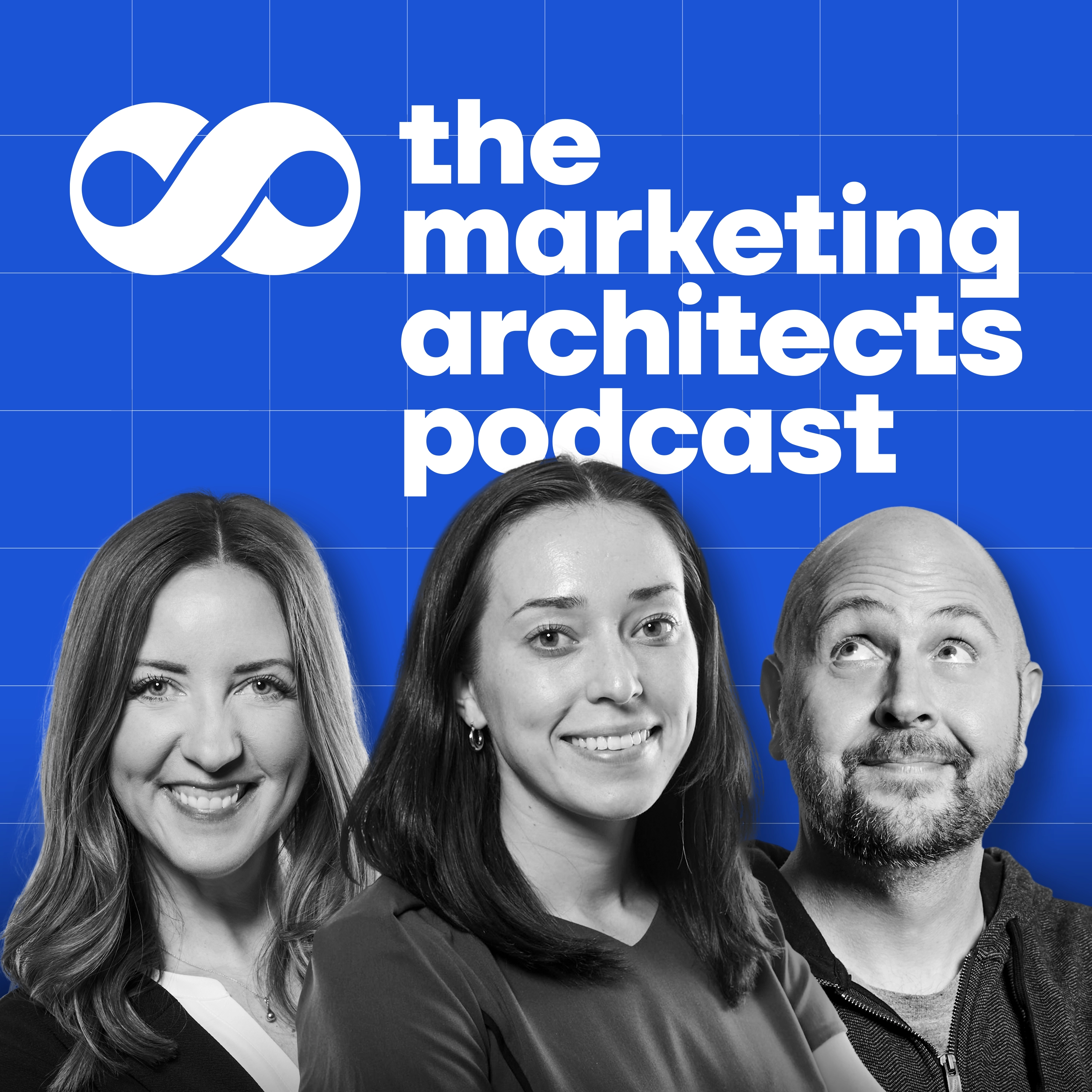
This week, Elena, Angela and Rob unpack why generational targeting feels precise but predicts little. They cover GWI's warning that AI can turn clichés into insights, three ways to pressure-test audience research and the Ehrenberg-Bass study behind the data. Learn why buying situations beat birth years, how media habits should and shouldn't shape channel choices and what brands give up by ignoring older buyers. Plus, guess which generation gets stuck with "rizz" in a stereotype trivia round.
Topics Covered
• [00:00] How old is Gen Z, really?
• [02:00] GWI, AI and generational clichés
• [05:00] "Ageism Kills Brands" study
• [08:00] Category entry points over birth years
• [12:00] Media habits and the Gen Alpha hype
• [15:00] What brands lose by ignoring older buyers
• [17:00] Generational stereotype trivia
Resources:
The Current Article 2026
2022 Ageism Kills Brands Study
Today's Hosts
Elena Jasper
Chief Marketing Officer
Rob DeMars
Chief Misfit
Angela Voss
Chief Executive Officer
Subscribe on



Enjoy this episode? Leave us a review.
Transcript
Elena: I'm Elena Jasper. I'm on the marketing team here at Marketing Architects, and I'm joined by my co-hosts, Angela Voss, the CEO of Marketing Architects, and Rob DeMars, chief misfit at Misfits & Machines.
Angela: Hello.
Rob: Good morning.
Elena: Hello. Today we are talking about generational marketing. It can feel like almost every brand today is saying, "We gotta reach Gen Z," but Gen Alpha is also showing up already in marketers' minds. But do younger buyers actually buy differently from others in a category? We are gonna get into some data and studies today, but before we do that, I wanted to ask you both for a gut check. How old do you think Gen Z people are right now? Like, if you had to guess, without looking it up, if you had to guess an age range?
Angela: Yeah, Ithink my middle one is right on the edge of Gen Alpha. I remember looking that up a while ago. So I would say Gen Z is 15 to 28. 27?
Rob: Yeah. Well, that's pretty good. I confess, I had to start looking this stuff up because there's just, there's so many of them and they're from different decades and whatnot, so I kinda cheated, and I know it's somewhere in that 13 to 28 range, and I have two of them myself.
Elena: Okay, so Rob, you didn't even bother to guess. You just cheated.
Rob: I just cheated. I, had... And the, and the thing I love about this is there's no official source for... 'cause I'm like, well, who determines these things? Like, who actually... And it's, like, a bunch of people in a bar eating chicken wings. you know? There's no, like, official...
Angela: Is this a Rob history lesson? Give us the history of...
Rob: I was curious. So I was curious. It was like, there's no official source. But yes, that's, Ithink that's the agreed-upon range, somewhere in... Correct me if I'm wrong.
Angela: Elena?
Elena: No, you'd be right. according to Beresford Research, Gen Z was born between 1997 and 2012. So the oldest Gen Z-ers are now 29, and I believe the youngest would be 14. So you both were, like, right in the range. however, you know, a lot of these young audience insights, people think of Gen Z as being very young, but a lot of that generation is kind of aging out of that stereotype. We're not talking about just teenagers anymore. Most of Gen Z are in their, in their 20s. But as youmentioned, Ange, just below Gen Z is Gen Alpha, so kind of the new kids on the block, and then older than Gen Z would be millennials, then Gen X, and then baby boomers. And the age math matters because what brands know about different generations is changing, rapidly. Today's episode was inspired by a piece from The Current. They covered a panel at Advertising Week New York, which was moderated by GWI, and they started with, "Why are brands so fixated on Gen Z?" Well, their spending power is projected to reach 12 trillion globally by 2030, and they're seen as the people who sort of set the culture. But the panel's warning was about AI. GWI'data showed that about 80% of respondents say AI helps them understand their audience better than traditional research, almost the same share that they've seen AI answers built on generational clichés . So GWI's Gen Z 2026 report said, "A broad label becomes a confident answer." What this report says is that Gen Z is full of contradictions. US Gen Z people are skeptical of branding, but influenced by creators. They're financially anxious, but willing to spend on experiences. And one panelist argued that putting an age constraint on your targeting means you're missing users beyond it. So today, we're gonna talk about whether generational labels are telling us anything real and useful, or are we just making a messy audience look neatly defined when it can't really be? so Rob, with that topic of AI'doing audience research, and it being able to hand back stereotypes, it's still, like, using AI for research is amazing. It's faster, it's cheaper. You know, it gives people access to research. We use a lot of AI research here, but how could a marketer kind of pressure test things like generational insights in general, whether they're coming from a vendor, a deck, or increasingly from AI or an LLM?
Rob: Yeah. I mean, it, it's fascinating to use AI as a superpower when it comes to research. But like any research, Ithink it doesn't matter if it's AI or a survey panel, whatever it might be, Ithink you can run three basic tests, right? So the one is kind of the say-do test. You know, is the insight based on a survey or what people actually buy? And is there a way you can challenge the data to the true source of ultimately the buying behavior? 'Cause that gap can obviously be huge. you know, the second one is "compared to who?" So, and you can even run this with AI w-as you're getting information from it. Say, "Okay, well, Gen Z loves experiences." Well, compared to who , right? I mean, millennials have the same, of the same age, everybody. You know, usually that difference is actually kind of tiny. So it, it's good to stress-test that. And then also encourage AIto argue with itself. So say, "Hey, well, show me the evidence that proves this is not true." Right? So you can kind of have it steel man its own argument as well. So, Ithink the, you know, the bottom line is, you know, everyone's like, "Oh, AI is, you know, it, it's misleading. It's wrong." Well, it's a thought partner and it has a lot of valuable information. But like even the smartest people on the planet, it's okay to interrogate them. It's okay to steel man their arguments. You know, that's what separates just accepting something versus seeking that true insight.
Elena: Mm-hmm. Well, I know that our strategy team, they've said before that with traditional research as well, it doesn't mean whatever you come up with in research you go do . Like, you also need to stress test that. And like you said, a lot of times what people say they think is not actually what they,
Rob: What they do. More times than not, actually.
Elena: Right. It's a good point too that you wonder about some of these things you hear about Gen Z, and they say things like they care more about certain topics or, yeah, they like more experiences. And it's a good question, if you actually saw the data, how much more is it than... Or is it just a little bit more that we sort of all glommed onto that, where, like, all these people, they're just completely, totally different? so to prep for this, I also looked at a study that was trying to see whether any of this generational bias shows up in what people actually buy, which could help answer this question of, we're seeing, like, all these generations are all different, is that change in their buying behavior? So this study is called "Ageism Kills Brands," so you can kinda guess where this is going. It was published in the Australasian Marketing Journal by researchers at the Ehrenberg-Bass Institute. That would make sense. They looked at 17 years of UK household panel data covering 5,913 sub-brands across 101 categories, and only 18% of sub-brands skewed towards any age group. Growing, stable, and declining sub-brands all appealed equally to all ages. So, Ange, generational targets, they might feel helpful in planning discussions, but this study says that most brands are actually selling to everybody. Why do you think these categories can feel so definitive to marketers, and where do they come from?
Angela: Yeah, Ithink marketers like these generational... Okay, I'm gonna use it. Ithink marketers like these labels because they just make something that could be complicated just feel more simple. And broadly, I'don't ag... I'don't disagree with that. Ithink, actually as marketers, we like to make things more complicated sometimes. So Ithink that's a great place to start from . But Ithink we can put millions of people into a bucket and assign them a few characteristics, and suddenly we feel like we're experts in who they are. So we start saying things like Gen Z loves authenticity and millennials value experiences and boomers are really the only brand loyalists, which Ithink can be harmful. you know, Ithink we have to remember that there's an entire industry built around convincing marketers that every new generation requires a completely different playbook. Otherwise, why do we need them, right? So, but to your point, what I love about this Ehrenberg-Bass research is that it challenges the whole premise. The overwhelming majority of brands don't actually have these distinct age profiles, and Ithink sometimes we confuse our ability to describe an audience with our ability to predict what they're going to do. And so we've gotten, we like to think we're good at describing the generations, but not great yet at predicting maybe why they would buy our product or service.
Elena: So I know as an agency, when we think about targeting with clients, we're not against age targeting when we look at, like, your bullseye target, like, what is, like, the smallest target you wanna reach. But if marketers, if they're not, if we're not gonna target generations, what does feel helpful? Like, how would you recommend they think about audience targeting ranges if we're not gonna classify it by a generation?
Angela: Yeah, Ithink we should spend more time maybe understanding the circumstances that cause someone to enter a category versus trying to define that behavior by their age. Jenny Romaniuk has done great, interesting work around category entry points, which are just essentially those situations that trigger someone to think about a category. So if we think of something like, mattresses, for example, a 25-year-old and a 55-year-old might both be shopping because they're both moving. Their mattress is worn out, or they're not sleeping well, or whatever the situation may be. And so those situations tell us something meaningful about why someone might buy. Their generation doesn't necessarily tell us that. And Ithink because most people aren't in the market for most products most of the time, we need to build these memory structures that make our brand come to mind when those situations arise. So instead of getting overly precise about who we're targeting, just start with the broadest realistic pool of category buyers and then think about the buying situations we want our brand associated with. I'd rather understand what makes someone a buyer than, you know, intimately understand their birth year and what that tells me.
Elena: Yeah, that's a good point. Like, if you're spending a lot of time in planning discussions, you're probably gonna learn more about your audience by talking about the buying situations than trying to focus on, "All right, we think our ideal customer is a 50-year-old woman, and what is she interested in?" That's probably not gonna get you as far. so in this study, the young people, the youths, did show up more heavily around new brand launches. And the authors thought, you know, maybe this is due to younger audiences simply being new entrants to certain categories. most people reach a certain age before they're in the market for something like an espresso machine, a financial planner, or things like anti-aging skincare. So, Rob, if you're launching a brand, and it's new, how do youmake creative that gets noticed by younger buyers without, like, shutting out or maybe even having everyone else not like you? You don't wanna also seem like that brand that's, like, really trying to, like, speak to the, speak to the young people.
Rob: You ju... you just nailed it there. In investing, there's the principle of don't time the market, right? Stick with the fundamentals. And Ithink you don't wanna be Coca-Cola, who's throwing out the term "rizz," 'cause that could go really well for you or that could go really bad. And i... i... instead , how do you focus on the fundamentals, distinctive assets that make you famous, right? We talk about that all the time on this podcast for a reason. You know, the universal stuff, using humor, real-life moments, characters, and sounds. You know, young buyers are new to categories, so they don't have those memory structures yet, and that's the great opportunity, because how do you build those memory structures while you're still talking to your older audiences, as well, who do remember those assets? So it's really a one plus one equals three by just focusing on the fundamentals and just avoiding the temptation to look hip. And I, I'm sorry, that probably sounds old man of me, but you don't wanna be the old white guy doing rap, right? You just don't wanna be that guy. So that would be my, that would be my recommendation.
Angela: How's that going for you, Rob?
Elena: Yeah. As your name is Snoop Rob in this recording, right?
Rob: Gosh. Shots fired.
Angela: That's okay. You can get me back later. I belong... I'don't even belong in this conversation. I'm so uncool.
Rob: Pretty damn good, actually. I'm gonna give you that one. I'm not even gonna try to come back from that.
Elena: All right, so we know that younger people, they spend their media time differently than older audiences. Ange, how do you think this should inform, like, the media channels that marketers are investing in?
Angela: Yeah, I just think we need to think about two separate things: who we're trying to reach and then how we're gonna reach them. You know, different generations do consume media differently. We're not, we're not arguing with that. But Ithink there's a tendency to equate time spent on a platform with maybe how much advertising, investment that platform deserves . And we just need to keep in mind, you know, how effectively can we reach an audience, and how much incremental reach are we getting, and what are we paying for it? So TV's a great example that, of course, we speak to all the time just given where we play. We hear all the time that younger people don't watch TV, but they're absolutely consuming professionally produced content through streaming and through connected TVs. So how should then linear and streaming TV complement each other if we're thinking about category entry points and buying moments versus just generations, just with the goal being buying media that most effectively reaches the people who could buy your product, whatever that situation might be?
Elena: I mentioned earlier, Rob, about Gen Alpha is already becoming a part of conversations. I swear I saw an article the other day about Gen Alpha already, but the oldest people in this generation are actually barely teenagers. So what do you think is the risk of already starting to build out creative and strategy and even all these discussions around a generation of kids that at this point are defined mostly by stereotypes? Like, do you have something you would do instead?
Rob: I'm gonna sound like I'm on repeat here, but Angela mentioned this earlier. I mean, every 15 years, our industry discovers teenagers, you know? And it's like, "What in the world?" This group of people changes their mind, you know, they walk around a corner and they 've changed their mind. I mean, so we're gonna try to target them specifically on one particular aspect of their psychographics? Forget it. I mean, again, going back to the fundamentals: building that mental availability. Sure, they are going to be tomorrow's buyer. Great. We've been saying that every 15 years, so we get that principle. Again, going back to those fundamentals, right? How are you sticking in their brain in a way that they will remember you when they're ready to buy that car? But that's a timeless principle. That's not a trend. That's a new insight. This has been going on since the Donna time
Elena: Yeah. One other thing I struggle with when we get so obsessed with this new generation being totally different from the others: one thing people bring up a lot is that new generations are only gonna be scrolling Reels. Ithink a lot of it depends on the time of your life. Like when you're in college, you're spending a lot of time alone, so you're probably scrolling a lot on your phone. But then you get married, you're in a house, you start watching p rogramming with your spouse, and then you have kids. I'don't know. So sometimes Ithink, too, we say, "Oh, this is gonna change the entire generation," but actually it's more of just a coming-of-age thing where your habits are gonna change anyway.
Rob: When it comes back to timing the market again, Reels didn't even exist, how long ago, right? So, you know, what is gonna be the new Reels coming up? I mean, there's just... But if those Reels are memorable, right? If they're distinctive, if they have. .. Again, it just comes back to the fundamentals.
Angela: Well, and raise your hand if you're not Gen Alpha and you scroll on your phone.
Elena: Oh, right.
Angela: So yeah, for those listening, all three of us are raising our hands.
Elena: Yes. So another part of this conversation that Ithink is a good one to have is that we get so obsessed with these younger generations that Ithink a lot of the advertising industry tends to ignore older adults, who are a huge group. They hold roughly half of US household wealth. They watch a lot of TV, and yet again, we all get sort of obsessed with this youngest buyer. Ange, what do you think a brand gives up when they underinvest in understanding, you know, in targeting and reaching an older audience?
Angela: Yeah. I mean, I'dug into this a little bit because I actually had in my head that it's even more than that. If you go down to 55 years old and older, that group holds like three-quarters of the household wealth. Like, it's insane. It's an enormous amount of economic power. But right, there's this cultural bias in our industry toward youth. You know, we want our brands to feel young or cool and relevant, and we're just thinking about the future. So I just wonder how much of that is driven by what marketers find interesting versus what actually drives business results, you know? Because older consumers are buying homes and they're traveling and they're renovating and they're changing financial services and entering new categories all the time. And Ithink the bigger question is whether marketers are making decisions based on the commercial opportunity that's in front of them or the audience they find most culturally interesting. And I know for myself, I am introducing brands to my children, and right now I am the buyer. So even if it's for them, they need to care about me as the buyer if they wanna get their brand in front of someone and have them grow with them as they age. So yeah, there's a lot to consider there.
Elena: Yeah. Ithink there's also this false belief that older generations are fiercely brand loyal and they're never gonna change what brands they buy, which is also false. So even thinking, "I have to capture people while they're young," that's not necessarily wrong, but that doesn't mean you can't get new buyers in older generations, too. Okay, well, to wrap us up here, I have a short trivia game. I'm going to read a generational stereotype, and I want you to guess which generation is sort of stuck with it. Right?
Rob: Fantastic.
Elena: Okay, so what generation do we say kinda gets a participation trophy for everything, or maybe got one when they were growing up?
Angela: That's gotta be millennials.
Rob: Yeah, I'm going with millennials.
Elena: Yes, you'd be correct. Okay. What generation says "rizz" and "no cap"? Bonus points if you know what either of those mean.
Rob: Well, "rizz" I've heard from my daughter, and it has something to do with a dude being cool, Ithink. That's what... They...
Angela: There's like chemistry, right? There's rizz.
Rob: They got the rizz or whatever. I...
Angela: Ithink. Is that...
Rob: Am I right? Am I right, though? I...
Elena: Ithink so. I'm also not gonna be a good person to answer this, but I believe so.
Rob: So "rizz" is definitely a Gen Z...
Angela: Oh, I'd say Alpha. My kids say "rizz."
Elena: It is Gen Z.
Angela: Is it really?
Elena: Mm-hmm. That surprised me too. But I mean, when you think about it, Gen Z can be as young as, like, 14, 15.
Angela: Okay, got it. All right.
Elena: Do you know what "no cap" means?
Angela: I'don't. I'don't know what that means.
Elena: So luckily for us, our producer is younger than us, and she's telling me in the chat. She said "rizz" means like you've got game, and "no cap" means like no lie. You're not...
Angela: Oh, all right.
Elena: ...capping. Yeah. Thank you, Taylor, for helping us. Okay, which generation was called kind of latchkey kids? They were raised on MTV and mixtapes.
Rob: Yeah!
Angela: That's gotta be X.
Rob: I'm wearing my Stone Temple Pilots shirt just to represent the Gen Xers right now.
Angela: Yeah.
Elena: Yes, you'd be correct. Okay. Who was called the Me Generation?
Angela: I'don't know this one. I'm gonna...
Rob: I know that one.
Angela: I'm guessing millennials. Like, it... no. That's, this is people from the '80s. That was... That is millennials. Oh, you're right, you're right. I am a geriatric millennial.
Rob: It's the whole, you know, "greed is good," Wall Street, Michael Douglas.
Elena: So you're actually both right. Tom Wolfe said it was evident in boomers, and Time called millennials the "me, me, me generation." So you'd both kind of be right. Okay, last question. Which generation still watches TV every week?
Angela: This feels like a trick question to me. Like, all of them do, but like boomers mostly, but like all?
Rob: Well, how do you define TV, Elena?
Elena: On a flat TV screen. Oh, there goes my camera. On a TV.
Rob: Are we talking connected TV?
Elena: Anything on a TV screen, on a wall.
Rob: Then I'm going all of them, all of the above, and I'm serious.
Elena: That was a trick question just for us. It's all generations. Go TV. There you go. Well, you did great.
Rob: I love it. I'did do research. We can cut this out, but I was eating chicken wings with my wife last night, having a conversation about the generations. I'm like, "This is fascinating," because they've taken on this... It's like the weather, you know? Every time there's a storm, like, alphabetically now, we're just going to the next thing, right? So even after Generation Alpha, we're apparently gonna go with Beta, right? So I'm like, "Who determined that?" Because it started with my generation, Generation X, right? So why do we start so late in the alphabet, you know? Because we've clearly taken that on. But do you guys know what we used to call the generation from 1901 to 1927?
[Missing word] generation.
Elena: Oh yeah, I've heard that.
Angela: Yeah.
Rob: Next one, 1928 to 1945, the Silent Generation. So, I've heard of the Greatest Generation before. I'd never heard of the Silent Generation. And then, of course, '46 to '64, the Baby Boomers, and then all the others that we know today.
Angela: Yeah, now that you say them, I'do feel like I've heard those, but...
Rob: I've definitely heard of the Greatest Generation, but I was thinking that was actually later. Ithought it was more like the, you know, the World War II people or whatever. But...
Angela: Where the breaks in years there? 1900 to...
Rob: And this is, again, there's no actual person who's in charge of this, so this is, you know, Google. but the Greatest Generation, is 1901 to 1927.
Angela: Okay, so they're a lot wider than what we use today.
Rob: Yeah. Well, and then, yeah, the Silent Generation, '28 to '45, 'cause they weren't thinking this way, probably, right? and we have to, like you said, as marketers, we have to have a new reason to segment. So, but, Ithought, you know, the millennials are also called what? 'Cause I'don't think we said this here. It's actually the...
Elena: Generation Y.
Rob: Yeah, so you go Gen X to Gen Y, which is the millennials. That's confusing to me 'cause I sort of thought they maybe were different. yeah, and then Gen Z is also known as the iGen, 'cause that was really when, you know, the world as we know it became a reality. Digital natives.
Angela: Gotcha. Yeah.
Elena: You're right, Rob. Why did they start at X?
Rob: I'don't know. Ithink someone was being clever 'cause they thought us weirdos from the '90s were really, hard to understand. So, like, "We're gonna call them Generation X," and then they're like, "Whoa, we got a letter. Well, what's the next letter? O h, it's a Y. Isn't that funny?" Right? 'Cause it's a Y, like, they're all about the Y. "Oh, let's do that." And it's sort of like it's got legs. "Okay, let's stick with this," you know? And now it's Alpha and Beta, and what's after Beta? I'don't even know.
Elena: We're gonna find out.
Angela: We're the researchers.
Rob: I know. I just didn't ask.
Angela: Didn't go that far.