
Episode 189
Long-Form Content and Other Missed Marketing Opportunities with Kirsten Spittel-Sloan
Brands have been doing TV shows? iFIT has. Its reality competition, Trainer Games, is the ultimate long-form bet. And it's one of several the brand is making.
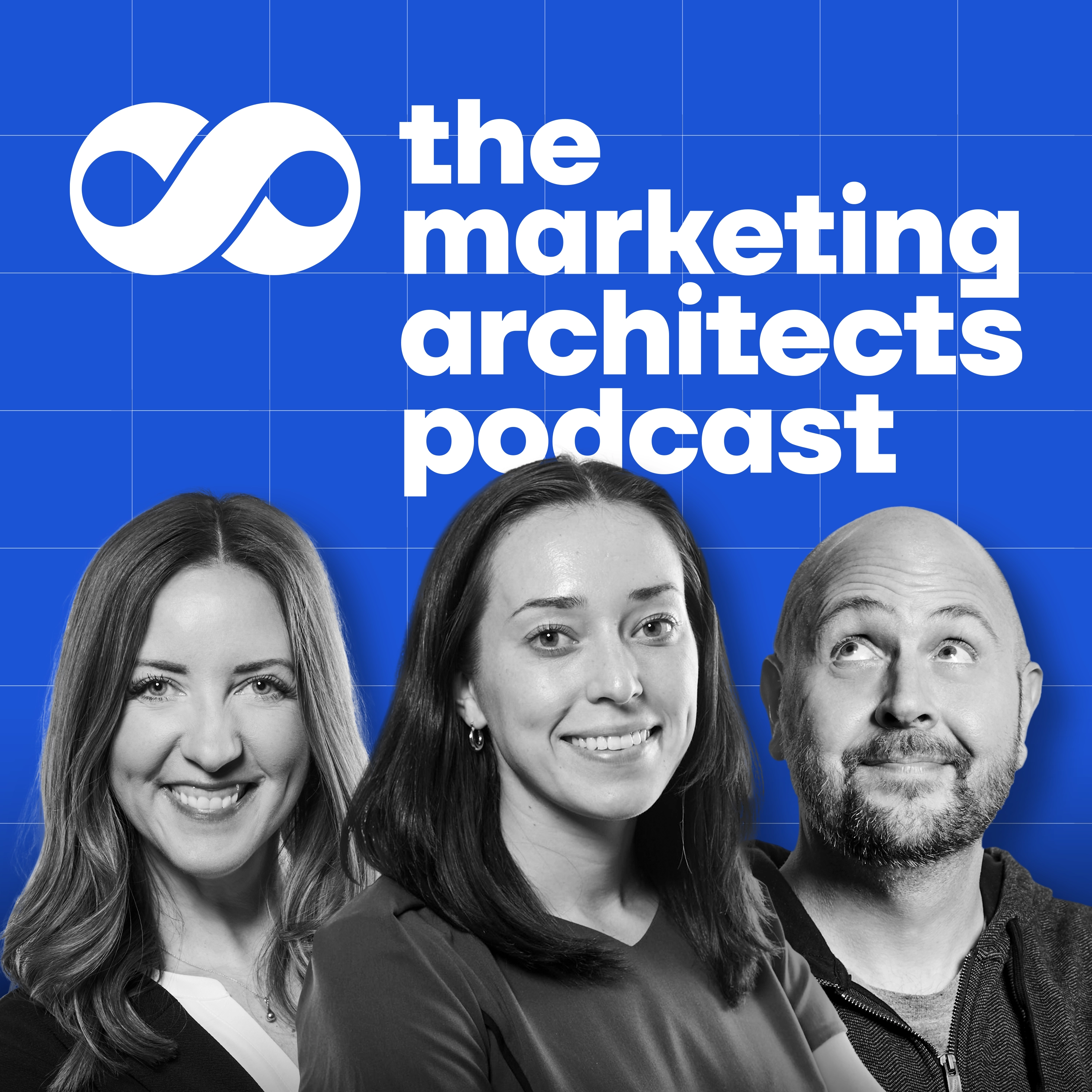
This week, Elena, Angela and Rob are joined by Kirsten Spittel-Sloan, SVP Marketing and Head of International Marketing at iFIT. Kirsten shares why simple messaging wins, how to enter new markets by building trust first and where personalization pays off (and where it jumps from first date to 15th). She also explains how to use media mix models when data is thin and why long-form content works for a brand built on long workouts. Marketers will leave with practical ways to fund the full funnel without chasing every trend. Plus, hear Kirsten's contrarian take on stepping away from measurement and the hosts' picks for the women's athletes they'd sponsor.

Topics Covered
• [01:00] Why the CMO role looks different today
• [03:00] What McKinsey taught Kirsten about simple messaging
• [10:00] How a legacy brand earns credibility in Pilates
• [12:00] Taking a brand global with local partners
• [13:30] Using media mix models without false certainty
• [17:30] Where personalization pays off
• [20:00] Why long-form content works for iFIT
Resources:
Adweek Marketing Vanguard Podcast 2025
Kirsten Spittel-Sloan's LinkedIn
iFIT Website
Today's Hosts

Elena Jasper
Chief Marketing Officer

Rob DeMars
Chief Misfit

Angela Voss
Chief Executive Officer

Kirsten Spittel-Sloan
SVP Marketing at iFIT
Transcript
Elena: I'm Elena Jasper. I run the marketing team here at Marketing Architects, and I'm joined by my co-hosts, Angela Voss, the CEO of Marketing Architects, and Rob DeMars, the chief misfit at Misfits & Machines.
Angela: Hello.
Rob: Hello.
Elena: Hello, and today we have a guest joining us. Kirsten Spittel-Sloan is the senior vice president of marketing and head of international marketing at iFIT , the connected fitness company behind NordicTrack, ProForm, and FreeMotion. And she's led marketing across a variety of environments, from global fitness to Olympic sponsorships to nonprofit advocacy. And before iFIT, Kirsten spent nearly five years at Mc Kinsey advising CMOs and CROs on growth and go-to-market transformations. So, Kirsten, thank you so much for joining the show.
Kirsten: Thanks for having me. Excited to be here.
Rob: Okay, Kirsten, I , I'll confess, I did a little bit of homework. Back in 2018, when you were getting your MBA at INSEAD, they did a student profile, and you were quoted as saying, "I realized I didn't want to pursue the CMO route." Now, you, you fast- forward to 2026, how's that working out for you? And, and I, I love a good plot twist, so what happened?
Kirsten: Yeah. Well, first of all, you went deep into the archives, throwing it back to business school at INSEAD, so well done. at the time, I... So first of all , I've been a marketer for 15-plus years, so, you know, that's been my lifeblood. I think at the time when I was in business school, I was exploring a lot of the parts of business, right? That's what you go there to do, to understand it. and I thin k at the time, too, the CMO role felt very, confined. So, you know, it was very much about go in and do some branding, go tell a story. I think it's evolved so much since 2018. I mean, you have the, the arc of COVID where we all went really digital , right? So now we're adding in a whole new element of e-commerce that the CMO role starts to be much more involved in. And quite frankly, now that we're, like, in this AI era, I think it's the pendulum that's swinging back the other way of you can be more creative. And so there's so much more you cando in marketing leadership now than, I think, 2018 and at least the trajectory I was on within the nonprofit world and the startup world at the time. so I think w-how did we end up here? There's, there's a lot more to do a nd a lot more opportunities to do it. So, here we are.
Rob: Love it.
Elena: I think it's a good sign if you change your mind over the years too, so that's probably, that's probably great. all right. Well, we are back with our thoughts on some recent marketing news, always trying to root our opinions in data, research, and what drives business results. And I'm gonna kick us off, as I always do, with some research, and today it comes from some research I did on our guest. So, Kirsten, you recently joined Adweek's "Marketing Vanguard" podcast in an episode titled "What Keeps iFIT Ahead of the Curve," and you shared that marketers should resist piling resources into whatever channel is trending, and instead fund awareness, consideration, and conversion at the same time. Over-relying on one channel becomes a liability because consumer behavior and platform algorithms change so quickly. you also talked about balancing a ROAS obsession with brand building and why AI-powered personalization is essential for retention. And we are gonna get into a lot of those topics today, so I'm very excited to dive in. But first, I wanted to start with a question on your background because it's a unique one. you spent years at McKinsey advising CMOs before becoming one, so what from your McKinsey days helped you as a marketing leader? And I'm also curious, what did you only figure out about the job once you were on the brand side of things?
Kirsten: Wow, okay, a lot in there. I think, from the, the McKinsey side, what did I learn while I was there? I really learned how to simplify the answer, right? So at, at McKinsey, they drill into you, how do you break down the problem? How do you understand it really well? And I think as a marketing leader, it's so important that you can explain the campaign, the project, whatever it is, in the simplest of terms to your team, because the consumer, especially today, the attention span keeps getting shorter and shorter and shorter. We're inundated by so much media all the time. Simple wins. And so I think that that is something that I, I take from my McKinsey time. I got to see across Fortune 500s, all the different problems that marketers need to solve, whether that is building out new campaigns, going deeper into the e-commerce side, setting up enterprise-grade MarTech stacks, you name it. I got to see it at the biggest of scales, and so now I get to apply that in, in my role at iFIT. now that I'm on the brand side again, I think a lot of what I just said translates, right? So, like, how do you lead teams with very clear direction? How do you make something that can feel complex simple to the consumer? And how do you really think about all the facets of the problems that you solve in an ever- changing world, in clear ways?
Elena: Yeah, that's amazing. I mean, the , that McKinsey experience must have been great. Like you said, just having like a crash course on so many different marketing teams, and not a lot of people, people have that. Well, let's talk about iFIT. everyone listening definitely knows of iFIT, b ut what does marketing do for its growth?
Kirsten: Yeah. So I, I... let me correct you. Not everybody listening knows what iFIT is.
Elena: Everyone should.
Kirsten: They should know. But, what I would say is most people who listen know who NordicTrack is. And so that is a, a big part of our work, is to really bring iFIT into that fold front and center alongside NordicTrack for our customers who are looking for at-home fitness solutions. So what role does marketing play in growth? We're at the forefront of it, right? So whether it's entering into a new category like Pilates, like we did this year, or launching new products digitally on our iFIT subscription, product, we're right there. I think what's cool about iFIT and just the brella of brands that we have is that as a marketer, I get to be both B2B and B2C, throughout and really, like, help tell that narrative wherever you're working out, whether it's in the gym, in your house, on the go, et cetera. I think, you know, there's a lot of learnings as well getting to sit at that intersection of so much. And so it's a little bit of also where do you focus? So back to my point on simple, maybe that's gonna be the theme of this conversation, is simple. But, how do you ensure that wherever we're talking about iFIT, as we're trying to explain this to more and more people, expand to more and more territories, that we keep the messaging really simple?
Elena: Mm-hmm. I guess I'm biased because to be... You're right. I, I know of iFIT mostly because I bought a NordicTrack treadmill, and then I became an iFIT customer through the NordicTrack. So I suppose I am biased. I'm like, "Everyone knows iFIT." But no, I just see it every time I get on my, get on my treadmill. So one thing that I thought was kind of interesting is that you're backed by a private equi ty firm, and I think a lot of marketers, you know, they might be in a situation where they get acquired by a PE firm. How does that, backing, does it shape the way you plan and defend marketing investment? Kind of how does that, impact your, your role there?
Kirsten: I think, look, w-whenever you're in a PE-backed environment, you have to know your numbers. There's really a, a push for efficiency, especially as you think about performance marketing, as well as making the case for investing up in the funnel too. And so just having a really good eye toward the numbers and the P&L is important. I think, that said, the flip side is like you're part of a larger conglomerate typically of other portfolio companies, and so there's a lot of things that Elkatterdon, the... they will share with us as marketers just to like make sure we're up to speed on industry trends or new technologies in the space to really ensure that we have the best of the best to go after and attack the market.
Elena: So speaking of me being a customer of yours, I bought a NordicTrack and I got the iFIT subscription, but I don't have to keep the subscription in order to, you know, have the treadmill. So I'm guessing that you think a lot about, like, new customer acquisition versus loyalty, 'cause you've got... You're selling these products. People could be a one-time customer, but you also have subscriptions. How do you decide how much to put behind kind of retaining your existing members versus bringing in new audiences?
Kirsten: In general, lifecycle marketing is nuanced, right? So what you said, like, "I hope that we retain you as a customer forever," right? And some of the levers that we're going to pull to do that are to show you in a constant drip, usually CRM campaigns, some of the on-screen stuff you see on the treadmill when you log in. We're gonna remind you of all the new content. So we have regular drops of stuff every month , new activities that we're doing to promote the brand, as well as tie into that member experience , and sometimes even IRL events and, and ways that our members can get engaged. I think as a marketer, I think about that experience as not just a retention one. It's something that I should also tell people who should be customers or are about to become c ustomers of ours that they can have access to when they purchase a subscription, right? So it, it actually becomes something from a content lens that's on both sides of the sort of LTV equation, but also, is something that we, just as storytellers, cando so much more with, right? So what's cool about iFIT, if you've never experienced one of our workouts, we film with real trainers around the world. We've done it on every continent. They will talk you through the workout. So it, it is a little bit of, like, fitness entertainment, if you will, but it, it is also grounded in good science of what you should be doing for your workout. So, if you haven't, we -- one of the newest drops we've done is what we call "Ashley's Impossible Year." Ashley Paulson is one of our iFIT trainers. She is on a mission to complete some of the toughest run challenges in the world, and we are alongside her, filming it and showing the behind-the-scenes of her experience doing that. So you can run along with her on our platform and experience some of those the same way, in real, sort of real time, if you will, as she does.
Elena: Yeah, that's really cool. I know we're gonna talk more about, you know, the content you do, and you have all these incredible personalities that you get to, you get to film. And, I'm sure everyone's sick of hearing about my treadmill, but you are known for treadmills. And I always joke that I... People complain about running on a treadmill. I like my treadmill so much, and I'm not just trying to suck up. I prefer running on the treadmill to running outside 'cause it's so nice. It's almost too nice. But you have recently gotten into a new category, Pilates. So how are you thinking about that? How does the legacy brand earn credibility when you're entering a new category like that?
Kirsten: Yeah. And for the record, we have not, you know, made you say any of these things about the treadmill. This is all totally, given up. So...
Rob: She's working on getting another one from you.
Elena: Right. Great.
Kirsten: I think that's what I'm hearing. We'll talk after. So Pilates is a new space for us. We've been doing treadmills for 50 years. We've not been doing Pilates for 50 years, and so there's a lot of learnings that we've had. I think as a, as a heritage brand, though, part of what we've brought to our story with Pilates is really translating our winning elements into that reformer product, right? So for the Pilates reformer, we've extended the Ultra design language that we launched with our Ultra One treadmill back at the end of '24, beginning of '25, into that product as well. And then it's also showcasing all of the great iFIT trainers and workouts that you cando on the reformer. Like, those are some of our, our greatest assets, and so we're extending that into the reformer. I think, you know, we also have the luxury of working alongside incredible people in the space. So Evie Magathen, who's our director of Pilates, she brings such a wealth of knowledge and experience and credibility in the space. And so we haven't shied away from putting her at the forefront of that narrative either. You'll see that in some of the press work that we've done, that features her. And so for us, it's really about being authentic and translating what we know is already part of our, our heritage legacy, as well as bringing in some new voices a-and new takes on the space to really help tell that story.
Angela: So fascinating. Kirsten, you mentioned earlier that the brand is worldwide. Maybe some don't know that, but in your role, I would think that that's a lot to think about. You know, when a brand enters a new country, there might be this tension between staying true to what made it successful and adapting to a completely different market, different culture. So how do you figure out what should travel with the brand and what needs to change? And have you been maybe surprised by something that works in one market but maybe completely flopped in another?
Kirsten: Yeah, for sure. So I think it's always about investing in trust first, Angela. Performance follows that for sure. But in our newer markets, we partner with local partners, whether that's retailers, influencers, creators, you name it, to help tell our story authentically, right? I think our story translates, our, our value prop translates globally. But how you showcase that and how you tell that, to really resonate with the customer in Spain differs from how you do it in the United States. And so that's one place that we've really invested as we grow the brand. I think we've been really intentional about investing in in-person events, not just to garner media attention, but to really get a spot in the local conversation. And we do it, as locally as possible. So we have had, in the last month, I'm thinking of at least four events, and they all have looked a little bit different, but they've all had the same through line: it's a Pilates-focused event. Our Ultra I Reformer is there. The brand is clearly talked about and discussed, but who is in the room and what we're partnering with from another brand perspective varies so much. And so we've allowed that to be a bit more flexible so that we can resonate more.
Angela: So fascinating. I would imagine too at those events, obviously a great opportunity just to build visibility, but probably also, I would think, a great opportunity to get some consumer insights with those folks, like boots on the ground too. So very cool there. Let's talk measurement. Trying to take it back to simple here. You know, marketers love the idea of having a model that tells them what's working, but every model has blind spots, and sometimes we worry we're giving these models maybe more authority than they deserve. And so how do you t hink about keeping something like a Media Mix Model from becoming maybe a false sense of certainty? And when do you trust your instincts maybe over what a model might be telling you?
Kirsten: Yeah. So a model is only as good as the data that you feed it, right? And so I think with MMMs in particular, you have to have a certain threshold of data to be stat sig. In a lot of our newer markets, we're not gonna get that right away. And so first we make assumptions, right? So we make assumptions, but they're grounded in what we've seen work in other markets. So in my opinion, it's better to start from a place you've already tested than from zero. Doesn't mean that that place that you've tested is necessarily going to work, but you've worked out a few of the things that would be unknowns in that assumption. And then second, I think to your point, we listen to the market, we look at the market. The cool thing about NordicTrack is that in many of our, what I call core markets, even though they're still growing or nascent, we've been in retail longer than we've been direct to consumer in many cases. And so we have the ability to look at what's happened in retail for NordicTrack and ProForm and understand that consumer a bit better. And so we apply some of those learnings from the retail side into our dot- com. Doesn't mean it always stands, but again, it's taking something that is true to what's happened in that market. And we look at trends too, right? We see our creator team spends a lot of time looking at who's trending or who's an authentic voice in the space, and hand-selecting creators in each market so that things really do resonate there. We don't have a one-size-fits-all approach by any means.
Angela: Yeah, absolutely. And I think too, we as marketers, we've gotten so accustomed to having mountains of data that sometimes maybe it's prohibiting our ability to make good decisions without it. I don't know. But you've operated in markets with a lot of privacy regulations that have forced you to work with less. And I'm curious, for those of us that have only operated in the US, has that actually made you a better marketer? Do you think that American marketers could potentially learn from what you've experienced?
Kirsten: I do think that the US has a ton more data than the rest of the world, we'll put it that way. So if I go back to what I just said, right, like we're leveraging assumptions. I think we -- what we can see is we can also see like the checkout data or we can see the opt-in data, and we will weight that in a way that we're saying, "Look, it's not gonna be true for everyone, but let's call it at least the norm where we think there's enough data points." Has it made me a better marketer? I think it's made me more comfortable with leveraging assumptions all the time, which I definitely did at McKinsey as well, right? You don't always know the answer. Maybe you can't get the data, so you have to be thoughtful about how you approach it. But it definitely makes you more creative, and I think that's, you know, as I think about AI and what's going on there and how you cando so much from just your keyboard now, I think that's actually a differentiator if you can truly be creative and, and resonate with that, whatever that medium is, right? It doesn't have to just be visual. But I think that's an area that when you don't have as much data, you can go outside the box a bit more.
Angela: Yeah. You know, and we've seen too that in some cases data can be really helpful in a certain channel and, with a certain strategy, you know, something like personalization, for example. Then you talk about television, which is the only place that we play, and we talk about connected television, and I think sometimes marketers even forget, like, we're talking about a screen on the wall. We don't know who's in the room. You know, just sort of these obvious things. So we've been a little skeptical of personalization, particularly when the cost and the complexity end up outweighing the impact that we see, obviously, for our brands. And I think marketers sometimes confuse making something more relevant with maybe making it more effective. And so I'm curious, where have you seen personalization genuinely move the needle for the brand? And where do you think marketers maybe are wasting their money trying to get maybe too personal?
Kirsten: Yeah. So shout out to all of my CRM managers, because that is the place where personalization pays off. I think we have so much data that can tell us that that is holding true, has held true for almost 20 years. If you have somebody who's raised their hand and said , "I will give you my email address," or, "I will give you my phone number. Here's who I am," you can engage with them on such a more personal level because they've said, "Hi, I'm here." We don't always have that, you know, luxury in marketing. But I think for, for CRM as it stands, that's where I always tell people, the, the closer you can get to N-of-one types of comms, do it, because especially as either the customer is closer to that checkout point or has been on their treadmill for years and continues to be an iFIT subscriber, we have so much more information on them, and they know what to expect as well. I think flip that to algorithmic personalization. Sometimes I do think it goes too far as well, right? It's like, you know, there's so many tags that we can put on folks because of their browsing history or their engagement on a social media platform. And I think particularly when you're introducing yourself to a customer, sometimes that's helpful and sometimes it just jumps a couple of steps. It's like dating almost. It's like you go from first date to 15th and it's like, whoa, we're really actually only on the second, so let's still continue to talk at that level. And that's where I -- CTV's an interesting one too, 'cause, right, you don't know who's in the room. And so I think it's when you look at the creative strategy behind that, maintaining a little bit more evergreen for a little longer might be better than jumping right to, like, "Hey, Angela, I know that this is exactly what you've been scrolling Instagram for. Here it is." Sometimes that works too, but I think, you know, for us, we are a higher-consideration product. We know that folks are typically, you know, looking at fitness, bringing fitness products like NordicTrack into their home at a pivotal moment. So whether they're moving, they have a problem that they wanna solve, they've got a goal they wanna accomplish, whatever it is, there's a lot of meaning behind that, and that for them personally, and so we, we are trying to meet them there.
Rob: Kirsten, we are a marketing effectiveness podcast, and we have done a lot of episodes, and yet I don't think we've ever once mentioned long-form. And here you are, a brand that's crushing it in long-form when all these other brands are racing towards shorter ad units. So tell us the secret. What is going on with this long-form business?
Kirsten: Well, we do both, for the record. But I think it goes back to what's the core product, and iFIT is a long-form workout product, right? We're asking folks to sign up to work out with us at least 15 minutes usually, if not up to much longer terms, like 45, 60 minutes. So that's long-form, right? We've been doing that for 10-plus years. But what's cool about that is that we have hundreds, thousands of hours of long-form content and people who have consumed that to learn from. And so we also sort of know what works with folks. So about a year ago, we took a bit, a little bit of a bet, and we did a TV show. So talk about, like, the, the ultimate long-form content. Brands doing TV shows, watch out. It's called "Trainer Games." Season one, you can watch it on Amazon Prime and on YouTube. And we said, "Let's take the iFIT trainer workouts to the big screen, if you will, and let's go find the next iFIT trainer." And as a marketer, I was like, "This is so exciting." Like, there's so much you cando with this storytelling. And to where we started the conversation, we hadn't really said, "Here is iFIT." We had always said, "Here's NordicTrack." And so this was an iFIT-first marketing play, content, storytelling, you name it. And we really doubled down on that. So there's six episodes. It is a reality show. It's a competition. And we got to showcase the grit that it takes to become an iFIT trainer, showcase some of the other components, sort of behind the scenes, if you will, of what we put into our workout content, and give a new point of inspiration into fitness, right? I think a lot of the time you can be like, "Oh, I just need to go work out. Let me go find something quickly on the internet and I'll do the workout plan." You can ask your favorite AI to give you a workout plan. But I think there's something about connecting with the person and really understanding, like, "Okay, they've done it. I cando it too," and seeing yourself in that. And so for us, that's a big part of long-form content. We also just participated with MrBeast. So there's a new MrBeast episode out, that showcases two of our iFIT trainers, John and Bree, helping a couple, lose weight. So I think that launched about a week ago as of today. So check it out. But like these are all different ways that we're telling the iFIT story, and that can translate into our other brands 'cause they all operate on the iFIT platform.
Rob: There's so much entertainment you're bringing to your brand. You mentioned MrBeast, and creators in general. Sounds like that's just a, a growing channel for you guys. What does it take to make that a successful creator partnership?
Kirsten: Yeah. I think, well, first of all, I wanna talk about consistency. So a, a really great brief is, is step one, right? So ensuring... 'Cause I look at this across six markets, so for us it's really about how do we keep that consistency of the brand across those markets. But then it really comes down to an open line of communication. We have a small but mighty team internal that personally talks to all of our creators. And so they work with them, they coach them, they understand, like, what's their hook, what are they excited to talk about. And I think that goes a long way, right? Especially as you think about the creator side of the equation and sort of how they think about their personal business and what brands they wanna sign up to do content with. So it certainly is a discussion more than a, you know, a requisite. We also tried something new, so we did a creator house, last week in Mallorca, so we hadn't done one of those yet. It was a new way for us to spend time with creators in-person too, and really not only hear from them about what their, you know, audiences, engage with, et cetera, but also to really explain our story in detail in a way that we hadn't necessarily done before. So we're incorporating more of our events into that creator channel as a way to engage with folks, not just on a one-off basis.
Rob: You're just trying so many cool things, from creating shows to playing with the long-form to getting MrBeast involved. When you try a lot of things, you have to have some contrarian opinions, right? Just like, "Let's go try this. Let's go challenge that." And you've already listed some great ones. But do you have kind of, like, the biggest contrarian marketing opinion that you sort of carry around with you and love to dust off at dinner parties to get things spicy?
Kirsten: Yeah. Well, you threw it back to 2018. I'll start at 2018. I thought QR codes were gonna die. I thought they were not gonna become a thing, and COVID proved me wrong, so here we are. Yay, QR --
Rob: Proved us all wrong.
Kirsten: But I think, you know, my more recent opinion is we've talked a lot about measurement, performance, like how do we think about that? Marketers need to step away from that on a regular basis and get creative, get out of the digital noise for a minute. That's hard to do. That's why I think it's contrarian. It's really hard to do, especially when your day job is measured so minutely. But I think because there's so much going on, it's better to step away and, hey, be like, "Okay, here's the thing that we're gonna do." And I'll give an example. So one of our creative directors did this recently, and it's now the backbone of a campaign we're running, and it's beautiful, it's emotional, it's something that we as a brand hadn't explored for a while, and it's now our main spot. And so I'm really excited when folks do that, when they take the time, 'cause usually something really cool or weird or that challenges the thinking happens, right? But you need that. You need it to not only stay relevant, I think, but also to really think outside the box and give yourself a new perspective or even a new channel or whatever it is, long- form content, as a, as a new thing to try for your audiences.
Elena: Yeah, that's a great one. Great reminder too today because, we have so much data and there's AI and there's all this stuff going on. It's a nice reminder to take a step back. Well, Kirsten, this has been, this has been wonderful. I love, like Rob said, it has felt very contrarian the whole way through the podcast, which is what we like. So to wrap us up here with something fun, this podcast could have been a women's sports podcast, I think, instead, if we removed Rob. Because fun fact, the... I believe the average height of the women on this show is 6'1", and I am bringing that average down by being only six feet tall, which I don't think I've ever said in my life. And I know we all have an athletic background, again, minus Rob. Rob kind of ruins this, to be honest. But yep. But I wanted to ask you, if you could sponsor any women's sports team or, well, female athlete tomorrow , who would you choose?
Kirsten: Hmm. So I'm gonna go hyper local for a second. Shout out to Salmon Bay FC. They're the local WSL2 team, here in, in Seattle where I live. And in their second season, they're national champions. And if you're a soccer fan, the way that they won the playoffs was all in PKs. And so it is, it was the most nail-biter of a season. So as a marketer, I love that. I'm like, "What grit, what story to tell?" But I think zooming out, like, we're having a really exciting moment and time of growth for women's sports, and I think people are starting to take it seriously. Investors are starting to take it seriously. So I'm so excited, but I would back my local team 'cause what a great season. So fun to watch.
Angela: Wow. Kirsten, how old are you? Or sorry, not how old are you. That's totally personal. How tall are you?
Elena: I took a -- I was like, not, not getting into that one, Angela.
Rob: I'm gonna leave right now.
Elena: Your turn.
Angela: How old are you? I am 6'3". Okay, you got me beat by 6'2" and a half. And for the record,
Elena: Yeah, you gotta round that.
Angela: No, I'm giving you that one. I'm giving you that one. Yeah. That's fair. I shouldn't be asking you how old you are on a podcast.
Elena: Like, "What are you asking her?"
Angela: No, I think the reason I went to age is... So do you guys know who Elsie Hendershot is? Or is anyone a big pickleball fan? Okay, so Elsie is an American professional pickleball player from Mapleton, Utah. She's 13 years old. So first, like, I love the idea of getting behind this emerging sport. It's not even really emerging anymore, but in my world it is, this "retirement reputation" sport. But from a marketing perspective, I think there's something really interesting about getting behind the next generation of talent before the rest of the world catches on. So she's doing big things. She's doing big things.
Kirsten: That's awesome.
Rob: Elena, are you gonna make me answer this?
Elena: Yeah, you have to.
Rob: I'm not a well of sports knowledge. So I'm gonna steal an answer I've used in a previous podcast and go with Raygun, the breakdancing wonder. 'Cause look at it: her brand, she built a brand on not being good at a sport, and it was an international, you know, thing. So I'm going with Raygun, breakdancing, you know. If you're a, you know, a divergent brand who's going out there trying new things... She tried new things. I like that. And, again, the only sports I watch are on Netflix, and they're usually documentaries, and I saw one on her, so I'm going with Raygun.
Kirsten: So Rob, will we see her at LA28?
Rob: I hope so. I mean, I don't think Australia would ever let that happen again after what happened. But it's a great documentary if you haven't seen it. You actually feel good about her after you understand the backstory and the bold moves she was making and the strategy, you know? And at the end of the day, everyone on the planet knows her, so
Elena: Yeah.
Rob: You've gotta respect that.
Elena: Thank goodness you watched that documentary or you wouldn't have known what to say.
Rob: I know. I've had two now where I've needed to.
Elena: Rob doesn't watch any sports, so that's right. All right. So mine, I also went local. So Minnesotans love to complain that all of our sports teams are terrible, but we have one team that's really, really good, and I think it'd be fun if Marketing Architects sponsored them, which is the Minnesota Lynx. You know, they are a really, really good WNBA team and probably do not get as many props in Minnesota as they should, especially considering how bad everybody else is. They have found a way to win, so that's what I would pick. But,
Rob: What about Jack Link's? 'Cause that's based out of Minneapolis too.
Elena: Don't say that. No.
Rob: No? Okay.
Elena: Oh my goodness. All right. Well, Kirsten, thank you so much for joining us. Anything you wanna plug? We'll include your LinkedIn, links to your company, but is there anything else you wanna promote while you're here?
Kirsten: Yeah. I think be sure to check out what iFit's dropping content-wise. We've spent a lot of time talking about long-form content, and I really do believe that our workouts are one of the coolest things that I've seen during my time here. So check 'em out. We're on YouTube, and you can also download the iFit app in the App Store.
Elena: Yes, great products, and I'm excited. I actually was already typing into my browser... I love MrBeast. I watch Beast Games, so I'm excited to watch that episode too. That'll be fun. Great. All right, I think that wraps us up. Thank you so much.
Kirsten: You're very welcome. Thanks for having me.
Angela: Thanks, Kirsten.
Episode 189
Long-Form Content and Other Missed Marketing Opportunities with Kirsten Spittel-Sloan
Brands have been doing TV shows? iFIT has. Its reality competition, Trainer Games, is the ultimate long-form bet. And it's one of several the brand is making.
This week, Elena, Angela and Rob are joined by Kirsten Spittel-Sloan, SVP Marketing and Head of International Marketing at iFIT. Kirsten shares why simple messaging wins, how to enter new markets by building trust first and where personalization pays off (and where it jumps from first date to 15th). She also explains how to use media mix models when data is thin and why long-form content works for a brand built on long workouts. Marketers will leave with practical ways to fund the full funnel without chasing every trend. Plus, hear Kirsten's contrarian take on stepping away from measurement and the hosts' picks for the women's athletes they'd sponsor.
Topics Covered
• [01:00] Why the CMO role looks different today
• [03:00] What McKinsey taught Kirsten about simple messaging
• [10:00] How a legacy brand earns credibility in Pilates
• [12:00] Taking a brand global with local partners
• [13:30] Using media mix models without false certainty
• [17:30] Where personalization pays off
• [20:00] Why long-form content works for iFIT
Resources:
Adweek Marketing Vanguard Podcast 2025
Kirsten Spittel-Sloan's LinkedIn
iFIT Website
Today's Hosts
Elena Jasper
Chief Marketing Officer
Rob DeMars
Chief Misfit
Angela Voss
Chief Executive Officer
Kirsten Spittel-Sloan
SVP Marketing at iFIT
Subscribe on



Enjoy this episode? Leave us a review.
Transcript
Elena: I'm Elena Jasper. I run the marketing team here at Marketing Architects, and I'm joined by my co-hosts, Angela Voss, the CEO of Marketing Architects, and Rob DeMars, the chief misfit at Misfits & Machines.
Angela: Hello.
Rob: Hello.
Elena: Hello, and today we have a guest joining us. Kirsten Spittel-Sloan is the senior vice president of marketing and head of international marketing at iFIT , the connected fitness company behind NordicTrack, ProForm, and FreeMotion. And she's led marketing across a variety of environments, from global fitness to Olympic sponsorships to nonprofit advocacy. And before iFIT, Kirsten spent nearly five years at Mc Kinsey advising CMOs and CROs on growth and go-to-market transformations. So, Kirsten, thank you so much for joining the show.
Kirsten: Thanks for having me. Excited to be here.
Rob: Okay, Kirsten, I , I'll confess, I did a little bit of homework. Back in 2018, when you were getting your MBA at INSEAD, they did a student profile, and you were quoted as saying, "I realized I didn't want to pursue the CMO route." Now, you, you fast- forward to 2026, how's that working out for you? And, and I, I love a good plot twist, so what happened?
Kirsten: Yeah. Well, first of all, you went deep into the archives, throwing it back to business school at INSEAD, so well done. at the time, I... So first of all , I've been a marketer for 15-plus years, so, you know, that's been my lifeblood. I think at the time when I was in business school, I was exploring a lot of the parts of business, right? That's what you go there to do, to understand it. and I thin k at the time, too, the CMO role felt very, confined. So, you know, it was very much about go in and do some branding, go tell a story. I think it's evolved so much since 2018. I mean, you have the, the arc of COVID where we all went really digital , right? So now we're adding in a whole new element of e-commerce that the CMO role starts to be much more involved in. And quite frankly, now that we're, like, in this AI era, I think it's the pendulum that's swinging back the other way of you can be more creative. And so there's so much more you cando in marketing leadership now than, I think, 2018 and at least the trajectory I was on within the nonprofit world and the startup world at the time. so I think w-how did we end up here? There's, there's a lot more to do a nd a lot more opportunities to do it. So, here we are.
Rob: Love it.
Elena: I think it's a good sign if you change your mind over the years too, so that's probably, that's probably great. all right. Well, we are back with our thoughts on some recent marketing news, always trying to root our opinions in data, research, and what drives business results. And I'm gonna kick us off, as I always do, with some research, and today it comes from some research I did on our guest. So, Kirsten, you recently joined Adweek's "Marketing Vanguard" podcast in an episode titled "What Keeps iFIT Ahead of the Curve," and you shared that marketers should resist piling resources into whatever channel is trending, and instead fund awareness, consideration, and conversion at the same time. Over-relying on one channel becomes a liability because consumer behavior and platform algorithms change so quickly. you also talked about balancing a ROAS obsession with brand building and why AI-powered personalization is essential for retention. And we are gonna get into a lot of those topics today, so I'm very excited to dive in. But first, I wanted to start with a question on your background because it's a unique one. you spent years at McKinsey advising CMOs before becoming one, so what from your McKinsey days helped you as a marketing leader? And I'm also curious, what did you only figure out about the job once you were on the brand side of things?
Kirsten: Wow, okay, a lot in there. I think, from the, the McKinsey side, what did I learn while I was there? I really learned how to simplify the answer, right? So at, at McKinsey, they drill into you, how do you break down the problem? How do you understand it really well? And I think as a marketing leader, it's so important that you can explain the campaign, the project, whatever it is, in the simplest of terms to your team, because the consumer, especially today, the attention span keeps getting shorter and shorter and shorter. We're inundated by so much media all the time. Simple wins. And so I think that that is something that I, I take from my McKinsey time. I got to see across Fortune 500s, all the different problems that marketers need to solve, whether that is building out new campaigns, going deeper into the e-commerce side, setting up enterprise-grade MarTech stacks, you name it. I got to see it at the biggest of scales, and so now I get to apply that in, in my role at iFIT. now that I'm on the brand side again, I think a lot of what I just said translates, right? So, like, how do you lead teams with very clear direction? How do you make something that can feel complex simple to the consumer? And how do you really think about all the facets of the problems that you solve in an ever- changing world, in clear ways?
Elena: Yeah, that's amazing. I mean, the , that McKinsey experience must have been great. Like you said, just having like a crash course on so many different marketing teams, and not a lot of people, people have that. Well, let's talk about iFIT. everyone listening definitely knows of iFIT, b ut what does marketing do for its growth?
Kirsten: Yeah. So I, I... let me correct you. Not everybody listening knows what iFIT is.
Elena: Everyone should.
Kirsten: They should know. But, what I would say is most people who listen know who NordicTrack is. And so that is a, a big part of our work, is to really bring iFIT into that fold front and center alongside NordicTrack for our customers who are looking for at-home fitness solutions. So what role does marketing play in growth? We're at the forefront of it, right? So whether it's entering into a new category like Pilates, like we did this year, or launching new products digitally on our iFIT subscription, product, we're right there. I think what's cool about iFIT and just the brella of brands that we have is that as a marketer, I get to be both B2B and B2C, throughout and really, like, help tell that narrative wherever you're working out, whether it's in the gym, in your house, on the go, et cetera. I think, you know, there's a lot of learnings as well getting to sit at that intersection of so much. And so it's a little bit of also where do you focus? So back to my point on simple, maybe that's gonna be the theme of this conversation, is simple. But, how do you ensure that wherever we're talking about iFIT, as we're trying to explain this to more and more people, expand to more and more territories, that we keep the messaging really simple?
Elena: Mm-hmm. I guess I'm biased because to be... You're right. I, I know of iFIT mostly because I bought a NordicTrack treadmill, and then I became an iFIT customer through the NordicTrack. So I suppose I am biased. I'm like, "Everyone knows iFIT." But no, I just see it every time I get on my, get on my treadmill. So one thing that I thought was kind of interesting is that you're backed by a private equi ty firm, and I think a lot of marketers, you know, they might be in a situation where they get acquired by a PE firm. How does that, backing, does it shape the way you plan and defend marketing investment? Kind of how does that, impact your, your role there?
Kirsten: I think, look, w-whenever you're in a PE-backed environment, you have to know your numbers. There's really a, a push for efficiency, especially as you think about performance marketing, as well as making the case for investing up in the funnel too. And so just having a really good eye toward the numbers and the P&L is important. I think, that said, the flip side is like you're part of a larger conglomerate typically of other portfolio companies, and so there's a lot of things that Elkatterdon, the... they will share with us as marketers just to like make sure we're up to speed on industry trends or new technologies in the space to really ensure that we have the best of the best to go after and attack the market.
Elena: So speaking of me being a customer of yours, I bought a NordicTrack and I got the iFIT subscription, but I don't have to keep the subscription in order to, you know, have the treadmill. So I'm guessing that you think a lot about, like, new customer acquisition versus loyalty, 'cause you've got... You're selling these products. People could be a one-time customer, but you also have subscriptions. How do you decide how much to put behind kind of retaining your existing members versus bringing in new audiences?
Kirsten: In general, lifecycle marketing is nuanced, right? So what you said, like, "I hope that we retain you as a customer forever," right? And some of the levers that we're going to pull to do that are to show you in a constant drip, usually CRM campaigns, some of the on-screen stuff you see on the treadmill when you log in. We're gonna remind you of all the new content. So we have regular drops of stuff every month , new activities that we're doing to promote the brand, as well as tie into that member experience , and sometimes even IRL events and, and ways that our members can get engaged. I think as a marketer, I think about that experience as not just a retention one. It's something that I should also tell people who should be customers or are about to become c ustomers of ours that they can have access to when they purchase a subscription, right? So it, it actually becomes something from a content lens that's on both sides of the sort of LTV equation, but also, is something that we, just as storytellers, cando so much more with, right? So what's cool about iFIT, if you've never experienced one of our workouts, we film with real trainers around the world. We've done it on every continent. They will talk you through the workout. So it, it is a little bit of, like, fitness entertainment, if you will, but it, it is also grounded in good science of what you should be doing for your workout. So, if you haven't, we -- one of the newest drops we've done is what we call "Ashley's Impossible Year." Ashley Paulson is one of our iFIT trainers. She is on a mission to complete some of the toughest run challenges in the world, and we are alongside her, filming it and showing the behind-the-scenes of her experience doing that. So you can run along with her on our platform and experience some of those the same way, in real, sort of real time, if you will, as she does.
Elena: Yeah, that's really cool. I know we're gonna talk more about, you know, the content you do, and you have all these incredible personalities that you get to, you get to film. And, I'm sure everyone's sick of hearing about my treadmill, but you are known for treadmills. And I always joke that I... People complain about running on a treadmill. I like my treadmill so much, and I'm not just trying to suck up. I prefer running on the treadmill to running outside 'cause it's so nice. It's almost too nice. But you have recently gotten into a new category, Pilates. So how are you thinking about that? How does the legacy brand earn credibility when you're entering a new category like that?
Kirsten: Yeah. And for the record, we have not, you know, made you say any of these things about the treadmill. This is all totally, given up. So...
Rob: She's working on getting another one from you.
Elena: Right. Great.
Kirsten: I think that's what I'm hearing. We'll talk after. So Pilates is a new space for us. We've been doing treadmills for 50 years. We've not been doing Pilates for 50 years, and so there's a lot of learnings that we've had. I think as a, as a heritage brand, though, part of what we've brought to our story with Pilates is really translating our winning elements into that reformer product, right? So for the Pilates reformer, we've extended the Ultra design language that we launched with our Ultra One treadmill back at the end of '24, beginning of '25, into that product as well. And then it's also showcasing all of the great iFIT trainers and workouts that you cando on the reformer. Like, those are some of our, our greatest assets, and so we're extending that into the reformer. I think, you know, we also have the luxury of working alongside incredible people in the space. So Evie Magathen, who's our director of Pilates, she brings such a wealth of knowledge and experience and credibility in the space. And so we haven't shied away from putting her at the forefront of that narrative either. You'll see that in some of the press work that we've done, that features her. And so for us, it's really about being authentic and translating what we know is already part of our, our heritage legacy, as well as bringing in some new voices a-and new takes on the space to really help tell that story.
Angela: So fascinating. Kirsten, you mentioned earlier that the brand is worldwide. Maybe some don't know that, but in your role, I would think that that's a lot to think about. You know, when a brand enters a new country, there might be this tension between staying true to what made it successful and adapting to a completely different market, different culture. So how do you figure out what should travel with the brand and what needs to change? And have you been maybe surprised by something that works in one market but maybe completely flopped in another?
Kirsten: Yeah, for sure. So I think it's always about investing in trust first, Angela. Performance follows that for sure. But in our newer markets, we partner with local partners, whether that's retailers, influencers, creators, you name it, to help tell our story authentically, right? I think our story translates, our, our value prop translates globally. But how you showcase that and how you tell that, to really resonate with the customer in Spain differs from how you do it in the United States. And so that's one place that we've really invested as we grow the brand. I think we've been really intentional about investing in in-person events, not just to garner media attention, but to really get a spot in the local conversation. And we do it, as locally as possible. So we have had, in the last month, I'm thinking of at least four events, and they all have looked a little bit different, but they've all had the same through line: it's a Pilates-focused event. Our Ultra I Reformer is there. The brand is clearly talked about and discussed, but who is in the room and what we're partnering with from another brand perspective varies so much. And so we've allowed that to be a bit more flexible so that we can resonate more.
Angela: So fascinating. I would imagine too at those events, obviously a great opportunity just to build visibility, but probably also, I would think, a great opportunity to get some consumer insights with those folks, like boots on the ground too. So very cool there. Let's talk measurement. Trying to take it back to simple here. You know, marketers love the idea of having a model that tells them what's working, but every model has blind spots, and sometimes we worry we're giving these models maybe more authority than they deserve. And so how do you t hink about keeping something like a Media Mix Model from becoming maybe a false sense of certainty? And when do you trust your instincts maybe over what a model might be telling you?
Kirsten: Yeah. So a model is only as good as the data that you feed it, right? And so I think with MMMs in particular, you have to have a certain threshold of data to be stat sig. In a lot of our newer markets, we're not gonna get that right away. And so first we make assumptions, right? So we make assumptions, but they're grounded in what we've seen work in other markets. So in my opinion, it's better to start from a place you've already tested than from zero. Doesn't mean that that place that you've tested is necessarily going to work, but you've worked out a few of the things that would be unknowns in that assumption. And then second, I think to your point, we listen to the market, we look at the market. The cool thing about NordicTrack is that in many of our, what I call core markets, even though they're still growing or nascent, we've been in retail longer than we've been direct to consumer in many cases. And so we have the ability to look at what's happened in retail for NordicTrack and ProForm and understand that consumer a bit better. And so we apply some of those learnings from the retail side into our dot- com. Doesn't mean it always stands, but again, it's taking something that is true to what's happened in that market. And we look at trends too, right? We see our creator team spends a lot of time looking at who's trending or who's an authentic voice in the space, and hand-selecting creators in each market so that things really do resonate there. We don't have a one-size-fits-all approach by any means.
Angela: Yeah, absolutely. And I think too, we as marketers, we've gotten so accustomed to having mountains of data that sometimes maybe it's prohibiting our ability to make good decisions without it. I don't know. But you've operated in markets with a lot of privacy regulations that have forced you to work with less. And I'm curious, for those of us that have only operated in the US, has that actually made you a better marketer? Do you think that American marketers could potentially learn from what you've experienced?
Kirsten: I do think that the US has a ton more data than the rest of the world, we'll put it that way. So if I go back to what I just said, right, like we're leveraging assumptions. I think we -- what we can see is we can also see like the checkout data or we can see the opt-in data, and we will weight that in a way that we're saying, "Look, it's not gonna be true for everyone, but let's call it at least the norm where we think there's enough data points." Has it made me a better marketer? I think it's made me more comfortable with leveraging assumptions all the time, which I definitely did at McKinsey as well, right? You don't always know the answer. Maybe you can't get the data, so you have to be thoughtful about how you approach it. But it definitely makes you more creative, and I think that's, you know, as I think about AI and what's going on there and how you cando so much from just your keyboard now, I think that's actually a differentiator if you can truly be creative and, and resonate with that, whatever that medium is, right? It doesn't have to just be visual. But I think that's an area that when you don't have as much data, you can go outside the box a bit more.
Angela: Yeah. You know, and we've seen too that in some cases data can be really helpful in a certain channel and, with a certain strategy, you know, something like personalization, for example. Then you talk about television, which is the only place that we play, and we talk about connected television, and I think sometimes marketers even forget, like, we're talking about a screen on the wall. We don't know who's in the room. You know, just sort of these obvious things. So we've been a little skeptical of personalization, particularly when the cost and the complexity end up outweighing the impact that we see, obviously, for our brands. And I think marketers sometimes confuse making something more relevant with maybe making it more effective. And so I'm curious, where have you seen personalization genuinely move the needle for the brand? And where do you think marketers maybe are wasting their money trying to get maybe too personal?
Kirsten: Yeah. So shout out to all of my CRM managers, because that is the place where personalization pays off. I think we have so much data that can tell us that that is holding true, has held true for almost 20 years. If you have somebody who's raised their hand and said , "I will give you my email address," or, "I will give you my phone number. Here's who I am," you can engage with them on such a more personal level because they've said, "Hi, I'm here." We don't always have that, you know, luxury in marketing. But I think for, for CRM as it stands, that's where I always tell people, the, the closer you can get to N-of-one types of comms, do it, because especially as either the customer is closer to that checkout point or has been on their treadmill for years and continues to be an iFIT subscriber, we have so much more information on them, and they know what to expect as well. I think flip that to algorithmic personalization. Sometimes I do think it goes too far as well, right? It's like, you know, there's so many tags that we can put on folks because of their browsing history or their engagement on a social media platform. And I think particularly when you're introducing yourself to a customer, sometimes that's helpful and sometimes it just jumps a couple of steps. It's like dating almost. It's like you go from first date to 15th and it's like, whoa, we're really actually only on the second, so let's still continue to talk at that level. And that's where I -- CTV's an interesting one too, 'cause, right, you don't know who's in the room. And so I think it's when you look at the creative strategy behind that, maintaining a little bit more evergreen for a little longer might be better than jumping right to, like, "Hey, Angela, I know that this is exactly what you've been scrolling Instagram for. Here it is." Sometimes that works too, but I think, you know, for us, we are a higher-consideration product. We know that folks are typically, you know, looking at fitness, bringing fitness products like NordicTrack into their home at a pivotal moment. So whether they're moving, they have a problem that they wanna solve, they've got a goal they wanna accomplish, whatever it is, there's a lot of meaning behind that, and that for them personally, and so we, we are trying to meet them there.
Rob: Kirsten, we are a marketing effectiveness podcast, and we have done a lot of episodes, and yet I don't think we've ever once mentioned long-form. And here you are, a brand that's crushing it in long-form when all these other brands are racing towards shorter ad units. So tell us the secret. What is going on with this long-form business?
Kirsten: Well, we do both, for the record. But I think it goes back to what's the core product, and iFIT is a long-form workout product, right? We're asking folks to sign up to work out with us at least 15 minutes usually, if not up to much longer terms, like 45, 60 minutes. So that's long-form, right? We've been doing that for 10-plus years. But what's cool about that is that we have hundreds, thousands of hours of long-form content and people who have consumed that to learn from. And so we also sort of know what works with folks. So about a year ago, we took a bit, a little bit of a bet, and we did a TV show. So talk about, like, the, the ultimate long-form content. Brands doing TV shows, watch out. It's called "Trainer Games." Season one, you can watch it on Amazon Prime and on YouTube. And we said, "Let's take the iFIT trainer workouts to the big screen, if you will, and let's go find the next iFIT trainer." And as a marketer, I was like, "This is so exciting." Like, there's so much you cando with this storytelling. And to where we started the conversation, we hadn't really said, "Here is iFIT." We had always said, "Here's NordicTrack." And so this was an iFIT-first marketing play, content, storytelling, you name it. And we really doubled down on that. So there's six episodes. It is a reality show. It's a competition. And we got to showcase the grit that it takes to become an iFIT trainer, showcase some of the other components, sort of behind the scenes, if you will, of what we put into our workout content, and give a new point of inspiration into fitness, right? I think a lot of the time you can be like, "Oh, I just need to go work out. Let me go find something quickly on the internet and I'll do the workout plan." You can ask your favorite AI to give you a workout plan. But I think there's something about connecting with the person and really understanding, like, "Okay, they've done it. I cando it too," and seeing yourself in that. And so for us, that's a big part of long-form content. We also just participated with MrBeast. So there's a new MrBeast episode out, that showcases two of our iFIT trainers, John and Bree, helping a couple, lose weight. So I think that launched about a week ago as of today. So check it out. But like these are all different ways that we're telling the iFIT story, and that can translate into our other brands 'cause they all operate on the iFIT platform.
Rob: There's so much entertainment you're bringing to your brand. You mentioned MrBeast, and creators in general. Sounds like that's just a, a growing channel for you guys. What does it take to make that a successful creator partnership?
Kirsten: Yeah. I think, well, first of all, I wanna talk about consistency. So a, a really great brief is, is step one, right? So ensuring... 'Cause I look at this across six markets, so for us it's really about how do we keep that consistency of the brand across those markets. But then it really comes down to an open line of communication. We have a small but mighty team internal that personally talks to all of our creators. And so they work with them, they coach them, they understand, like, what's their hook, what are they excited to talk about. And I think that goes a long way, right? Especially as you think about the creator side of the equation and sort of how they think about their personal business and what brands they wanna sign up to do content with. So it certainly is a discussion more than a, you know, a requisite. We also tried something new, so we did a creator house, last week in Mallorca, so we hadn't done one of those yet. It was a new way for us to spend time with creators in-person too, and really not only hear from them about what their, you know, audiences, engage with, et cetera, but also to really explain our story in detail in a way that we hadn't necessarily done before. So we're incorporating more of our events into that creator channel as a way to engage with folks, not just on a one-off basis.
Rob: You're just trying so many cool things, from creating shows to playing with the long-form to getting MrBeast involved. When you try a lot of things, you have to have some contrarian opinions, right? Just like, "Let's go try this. Let's go challenge that." And you've already listed some great ones. But do you have kind of, like, the biggest contrarian marketing opinion that you sort of carry around with you and love to dust off at dinner parties to get things spicy?
Kirsten: Yeah. Well, you threw it back to 2018. I'll start at 2018. I thought QR codes were gonna die. I thought they were not gonna become a thing, and COVID proved me wrong, so here we are. Yay, QR --
Rob: Proved us all wrong.
Kirsten: But I think, you know, my more recent opinion is we've talked a lot about measurement, performance, like how do we think about that? Marketers need to step away from that on a regular basis and get creative, get out of the digital noise for a minute. That's hard to do. That's why I think it's contrarian. It's really hard to do, especially when your day job is measured so minutely. But I think because there's so much going on, it's better to step away and, hey, be like, "Okay, here's the thing that we're gonna do." And I'll give an example. So one of our creative directors did this recently, and it's now the backbone of a campaign we're running, and it's beautiful, it's emotional, it's something that we as a brand hadn't explored for a while, and it's now our main spot. And so I'm really excited when folks do that, when they take the time, 'cause usually something really cool or weird or that challenges the thinking happens, right? But you need that. You need it to not only stay relevant, I think, but also to really think outside the box and give yourself a new perspective or even a new channel or whatever it is, long- form content, as a, as a new thing to try for your audiences.
Elena: Yeah, that's a great one. Great reminder too today because, we have so much data and there's AI and there's all this stuff going on. It's a nice reminder to take a step back. Well, Kirsten, this has been, this has been wonderful. I love, like Rob said, it has felt very contrarian the whole way through the podcast, which is what we like. So to wrap us up here with something fun, this podcast could have been a women's sports podcast, I think, instead, if we removed Rob. Because fun fact, the... I believe the average height of the women on this show is 6'1", and I am bringing that average down by being only six feet tall, which I don't think I've ever said in my life. And I know we all have an athletic background, again, minus Rob. Rob kind of ruins this, to be honest. But yep. But I wanted to ask you, if you could sponsor any women's sports team or, well, female athlete tomorrow , who would you choose?
Kirsten: Hmm. So I'm gonna go hyper local for a second. Shout out to Salmon Bay FC. They're the local WSL2 team, here in, in Seattle where I live. And in their second season, they're national champions. And if you're a soccer fan, the way that they won the playoffs was all in PKs. And so it is, it was the most nail-biter of a season. So as a marketer, I love that. I'm like, "What grit, what story to tell?" But I think zooming out, like, we're having a really exciting moment and time of growth for women's sports, and I think people are starting to take it seriously. Investors are starting to take it seriously. So I'm so excited, but I would back my local team 'cause what a great season. So fun to watch.
Angela: Wow. Kirsten, how old are you? Or sorry, not how old are you. That's totally personal. How tall are you?
Elena: I took a -- I was like, not, not getting into that one, Angela.
Rob: I'm gonna leave right now.
Elena: Your turn.
Angela: How old are you? I am 6'3". Okay, you got me beat by 6'2" and a half. And for the record,
Elena: Yeah, you gotta round that.
Angela: No, I'm giving you that one. I'm giving you that one. Yeah. That's fair. I shouldn't be asking you how old you are on a podcast.
Elena: Like, "What are you asking her?"
Angela: No, I think the reason I went to age is... So do you guys know who Elsie Hendershot is? Or is anyone a big pickleball fan? Okay, so Elsie is an American professional pickleball player from Mapleton, Utah. She's 13 years old. So first, like, I love the idea of getting behind this emerging sport. It's not even really emerging anymore, but in my world it is, this "retirement reputation" sport. But from a marketing perspective, I think there's something really interesting about getting behind the next generation of talent before the rest of the world catches on. So she's doing big things. She's doing big things.
Kirsten: That's awesome.
Rob: Elena, are you gonna make me answer this?
Elena: Yeah, you have to.
Rob: I'm not a well of sports knowledge. So I'm gonna steal an answer I've used in a previous podcast and go with Raygun, the breakdancing wonder. 'Cause look at it: her brand, she built a brand on not being good at a sport, and it was an international, you know, thing. So I'm going with Raygun, breakdancing, you know. If you're a, you know, a divergent brand who's going out there trying new things... She tried new things. I like that. And, again, the only sports I watch are on Netflix, and they're usually documentaries, and I saw one on her, so I'm going with Raygun.
Kirsten: So Rob, will we see her at LA28?
Rob: I hope so. I mean, I don't think Australia would ever let that happen again after what happened. But it's a great documentary if you haven't seen it. You actually feel good about her after you understand the backstory and the bold moves she was making and the strategy, you know? And at the end of the day, everyone on the planet knows her, so
Elena: Yeah.
Rob: You've gotta respect that.
Elena: Thank goodness you watched that documentary or you wouldn't have known what to say.
Rob: I know. I've had two now where I've needed to.
Elena: Rob doesn't watch any sports, so that's right. All right. So mine, I also went local. So Minnesotans love to complain that all of our sports teams are terrible, but we have one team that's really, really good, and I think it'd be fun if Marketing Architects sponsored them, which is the Minnesota Lynx. You know, they are a really, really good WNBA team and probably do not get as many props in Minnesota as they should, especially considering how bad everybody else is. They have found a way to win, so that's what I would pick. But,
Rob: What about Jack Link's? 'Cause that's based out of Minneapolis too.
Elena: Don't say that. No.
Rob: No? Okay.
Elena: Oh my goodness. All right. Well, Kirsten, thank you so much for joining us. Anything you wanna plug? We'll include your LinkedIn, links to your company, but is there anything else you wanna promote while you're here?
Kirsten: Yeah. I think be sure to check out what iFit's dropping content-wise. We've spent a lot of time talking about long-form content, and I really do believe that our workouts are one of the coolest things that I've seen during my time here. So check 'em out. We're on YouTube, and you can also download the iFit app in the App Store.
Elena: Yes, great products, and I'm excited. I actually was already typing into my browser... I love MrBeast. I watch Beast Games, so I'm excited to watch that episode too. That'll be fun. Great. All right, I think that wraps us up. Thank you so much.
Kirsten: You're very welcome. Thanks for having me.
Angela: Thanks, Kirsten.