/nav-logo-desktop.webp "Marketing Architects")
Episode 178
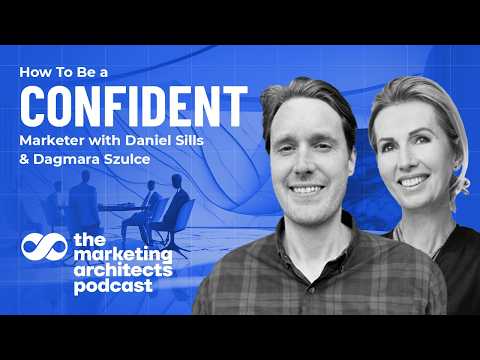
How to be a Confident Marketer with Daniel Sills and Dagmara Szulce
B2B marketer confidence jumped this year. But when researchers asked finance leaders the same questions, only 12% said marketing's financial impact holds up under pressure.
This week, Elena and Rob talk with Daniel Sills of NewtonX and Dagmara Szulce of the ANA about their new Confident B2B Marketer study. They unpack why marketer confidence is rising, and why finance and revenue leaders aren't yet convinced. The group breaks down the vocabulary gap driving that disconnect, and how confident marketers grew brand investment in a year when most companies cut back.
Topics Covered
• [03:00] Key findings from the Confident B2B Marketer study
• [04:00] What's driving marketer confidence up this year
• [09:00] The vocabulary gap between marketing and finance
• [12:00] How confident marketers grew brand budgets under pressure
• [18:00] Marketing to complex buying groups and AI search
• [22:00] Using AI without losing your data foundation
• [26:00] The one move to make before your next budget cycle
Resources:
2025 ANA and NewtonX Confident B2B Marketer Study
Daniel Sills' LinkedIn
Dagmara Szulce's LinkedIn
NewtonX Website
ANA Website
Today's Hosts

Elena Jasper
CMO

Rob DeMars
Chief Misfit

Dagmara Szulce
Group EVP at ANA

Daniel Sills
VP Brand Partnerships at NewtonX
Transcript
Elena: I'm Elena Jasper. I'm on the marketing team here at Marketing Architects, and I'm joined by my co-host, Rob DeMars, the chief product architect at Misfits & Machines.
Rob: Hello.
Elena: Hello, and we have two guests joining us today. First is Daniel Sills, vice president of brand partnerships at NewtonX, a B2B research intelligence platform. Daniel has spent over 15 years in B2B marketing, turning complex research into stories that resonate with senior marketers, including leading the "Outside In" podcast, which he grew to more than 200,000 listeners. We're also joined by Dagmara Szulce, group executive vice president at the Association of National Advertisers, or the ANA, where she leads the brand and B2B practices, among others. And before the ANA, she spent over eight years as global managing director of the International Advertising Association, overseeing operations across 56 countries. Thank you both so much for joining us. We're excited to have you.
Dagmara: Thank you.
Daniel: It's great to be here.
Rob: Hey, Daniel, I'm super curious. I heard that you have an app that can predict the future. Is this correct? It's regarding the NFL. I'm a big sports nut, as —
Elena: Wow, I can't believe you couldn't pronounce the NFL.
Rob: Regarding the NFL and the NBA draft. So is this — you're looking at me funny, so I'm hoping my research is correct.
Elena: It's wrong. So —
Daniel: Right. No, your research is correct, and like any passion you might have had a decade ago, when someone brings it up, you're almost shocked to hear it. But yeah, I —
Rob: Yes. Well, hold on. So talk to us, how does this happen? First of all, how do you invent an app that can predict the future? Can it predict, you know, if I'm ever gonna grow my hair back? And then, yeah, how does a marketing guy end up building a sports draft app?
Daniel: Like anyone with a great research background, I trust that the users will predict the future, and I'll let probability tell me what's the most likely future. But I think what you're referring to is an app I founded back in 2017 with my partner called Mockout, which, if you remember, back in 2017, DraftKings and FanDuel were all the rage at the time.
And we wanted to make a fantasy sports app for the off-season where people predicted the future. And like any great entrepreneur, I learned how difficult it was to be an entrepreneur. And not having a full-time job and a W-2 is a great thing to have in life.
And I am still technically the founder of Mockout, and it's still up and running, and I learned a lot. But I don't know if I personally predicted the future of what that app would be back in the day, but I'm glad my users are still enjoying it.
Rob: I passed it on to one of our heads of analytics who is way into sports. We call him Moneyball, and I'm like, "Here's an app I developed. I think you're gonna love this," so —
Elena: Oh my gosh. I'd love to know if you can predict if the Vikings will ever win a Super Bowl. That would be... maybe that's not what the app does, but if it ever could, that would be good.
Dagmara: I'll have to introduce you to my son as well. He's into sports.
Rob: I think that answer is too easy though, Elena. The answer's no. I don't know if you need an app for that.
Daniel: I think the Knicks taught us this year that literally anything is possible. So you should have hope that anything can change.
Elena: Great. It's a great, great message. All —
Rob: — a Packers fan, Elena doesn't actually care.
Elena: No, I actually don't, but you can't ask about the Packers because we all know they will. Um, okay.
So we're back with our thoughts on some recent marketing news, always trying to root our opinions in data, research, and what drives business results. I'm gonna kick us off super quick with some research, and today it comes from our guests.
They're on here to talk about it. They released the second annual Confident B2B Marketer study from ANA and NewtonX, and this year there was a twist that made it especially interesting. They define a confident marketer as a senior B2B leader who can measure and defend marketing's financial impact. And in 2025, 39% of B2B marketers qualified. This year, that number actually jumped up, which feels like great news, but there's a twist. For the first time, they also surveyed 150 finance and revenue leaders and asked them the same questions. Only 45% of finance leaders believe marketing can reliably measure its financial impact, and just 12% say that measurement holds up under pressure. So marketer confidence is up, but credibility hasn't kept pace, and the report argues that the root cause isn't measurement, it's translation. There's a lot more in it that we're gonna dig into today, so thanks again for joining.
I wanted to start with the headline that marketer confidence jumped up in one year. Could you walk us through what's driving that confidence?
Dagmara: So maybe let me start. You know, I don't think marketers suddenly became more optimistic. They became more disciplined. What's changed is that a growing group of B2B marketing leaders fundamentally changed how they operate. They invested in the foundations that allow them to speak the language of business: clean data, AI-ready infrastructure, strong alignment with sales, better support for buying groups, and clear links between marketing activity and financial outcomes.
Our research identified 12 specific behaviors that distinguish those confident marketers from everybody else. The biggest differences cluster around four capabilities, however. Number one, building AI-ready data foundations. Number two, preparing for increasingly complex buying groups. Connecting marketing directly to business outcomes, and aligning internally around common definitions and measurement. Confidence, it turns out, isn't an attitude, it's the outcome of building a better operating system for marketing.
Daniel: Dagmara, I think, just captured why we saw confidence up. But when you really dug into the data, everything — those behaviors that she referenced: aligning with sales, being a more effective buyer group, being AI ready — we saw an increase in all those behaviors as well.
And so we can see that the B2B CMOs, I think for the last few years, have been the owners of growth, and they know it. And now they've better aligned with the actual sales and growth functions within the company and started to feel like they are proving it, or they're confident they are starting to do that.
Elena: Yeah, so that confidence is wonderful to hear, just marketers getting more attached to growth.
But you did bring in another perspective, which as a marketer I'm like, "Ooh, interesting." You brought in finance leaders for the first time. So why did you add that perspective, and what did you learn from bringing that into the report?
Daniel: This is the second year in a row that NewtonX has partnered with ANA on this research. And last year we actually went into it thinking we were gonna do a state of B2B marketing and find out what B2B marketers dealing with. And what we identified was this one group of marketers, those that said, "I am confident in my ability to prove marketing's financial impact."
When you isolated that group, we found all of these distinct behaviors that they were succeeding in. It basically gave us a portrait of what a successful B2B marketer was. But confidence is self-reported, and I don't know the exact formula, but I think confidence is probably two parts self-belief, one part self-delusion.
In some ways it can help you, it can help define your success, but without external validation you don't have that. And what we wanted to do this year was really understand whether or not the people who are deciding whether to invest in marketing — the financial decision-makers, not just the CFOs, but the chief revenue officers, the people in charge of planning and assessing whether to invest in marketing — had that same perception of marketing, had that basically confidence, and thus the credibility in marketing.
And what we discovered was that the finance and revenue leaders are not as confident in marketing's ability to prove their financial impact. They thought it was somewhat close when you just asked them the same question. But what we found was really interesting is how resilient is your confidence in marketing when put under pressure?
Meaning, when marketing gets scrutinized by a CFO who one day says, "You know what? I'm really gonna dig into the numbers here." Or if you had one or two or three bad quarters in a row, how confident are you that marketing is proving their financial impact? And that metric goes from, I think, forty-seven percent down to, like, eight percent.
There is no confidence in marketing's ability to measure their impact when under pressure. Which kind of makes it feel like marketing's confidence is maybe a little bit more self-delusion than actual belief, or there might be a bigger issue here. And the other really interesting thing we found was that in some of the questions we asked finance and revenue leaders, they had a stronger confidence in marketing than marketers themselves.
Things like whether creativity drives win rates, whether a brand is treated as an enterprise asset — finance and revenue leaders actually were more confident in that than marketers themselves. So it is not an inherent disbelief in marketing. There's an inherent problem happening in the way marketing is defining itself, where its confidence isn't actually translating into credibility.
Dagmara: And another important insight to add here is that finance isn't asking marketing to become accountants. They're asking marketing to provide evidence that's consistent, reputable, and understandable across the business. They are looking to make sure that marketing can consistently prove how brand creates financial value. This is really the key here.
Elena: I guess, not super surprising, the under-pressure insight, but it reminds me of — everyone always talks about, in a downturn, when things are going badly, marketing gets cut first. So that sort of tracks. If the finance leaders immediately — they don't feel like marketing is very confident under pressure, that makes sense why they're gonna look to cut that, and that's definitely an issue.
You mentioned definitions, and the report talks about the vocabulary gap, which I thought was really interesting. Could the two of you walk us through what that vocabulary gap is, and why does it matter so much?
Dagmara: So this may be the single most important finding in the entire report. Most organizations assume they have a measurement problem, but what they actually have is a language problem. Marketing, sales, and finance often use the same words — pipeline, attribution, ROI, qualified opportunity — but define them differently. Once those definitions diverge, everything downstream begins to break. The data becomes inconsistent, AI models produce conflicting answers, dashboards lose credibility, and ultimately brand investment becomes much harder to defend.
Closing what we call the vocabulary gap might be the highest-return initiative any CMO can undertake before the next planning cycle. I think — don't fix trust with a dashboard. You fix trust by agreeing on the meaning of the numbers first, and we believe this is the number one most important priority for any CMO, any marketing leader: to really bridge the gap between that nomenclature.
Daniel: And we saw all of that come through in the actual research itself. We asked the finance and revenue leaders, "What's the number one blocker for trusting marketing?" Number one was shared definitions, above attribution clarity. And then we did a series of interviews with these finance and revenue leaders, and that's when the lack of confidence really emerged in how finance and revenue leaders spoke about how marketers report their impact.
A lot of them said, "All we see is fuzzy metrics. All we're seeing is a lot of theater." And it's not just not landing, it's actually hurting the credibility of the marketing department itself. You're seen as, sort of, again, another cost center. You and sales technically are supposed to be doing the same thing, but they're seen as a revenue generator, and you're seen as a budget line item.
So what we think is closing this gap, creating a shared language, will start allowing marketers to actually tell their story in a way that's true and not another narrative in a planning session that gets ignored.
Elena: Well, I think that's why marketing sometimes gets called the "make it pretty" department. Unfortunately, you don't wanna be put in that box, but I think that, as a marketer, I'm like, well, that's sort of good news, because that's something you could do at least. Any brand could go in and try to address that, which is great. It's something they could actually combat a bit.
So one part of the report that I thought was super interesting, speaking of marketers being scrutinized when they're under pressure — the report found that confident marketers were able to increase brand investment in a year when most companies were cutting.
I think anytime we hear that on this podcast, we're interested. How are they able to do that?
Daniel: Confident marketers in general are considerably more likely to invest in brand. And one of the things they're doing successfully, in terms of speaking the same vocabulary/language as their brand and revenue leaders, is that they're bringing their campaigns and their plans to them during the planning cycle and not after the execution.
They're not adding more metrics. They're not trying to redefine how they see success. They're reframing the metrics that they are already compiling in a way that speaks to a finance and revenue leader. We had a lot of examples of this from the interviews.
We had one CMO from a SaaS company talk about how they were having a tough time proving brand as a long-term investment. And rather than continuously giving all the metrics of awareness and share of voice and the things they found were important, they just stuck to one, which was: when we have branded search terms and someone comes into our website and they already know us, they are much more likely to buy from us.
So they didn't position brand as some big vision for what the company's story is. It is demand efficiency. It is prepaying demand for the long term. And if you don't, you pay a big tax. Every time you just try to do performance marketing without brand, you have to retell your story, build trust, and convince your audience to buy from you.
And we had other CMOs really start changing their language, or reframing what they did, to land not just with their own goals, but with the language that CFOs and the planning and assessment teams were speaking about marketing.
Dagmara: And just to dive deeper into what Dan is talking about, those confident marketers, they stop defending brand emotionally, and they start defending it financially. You can't really win with a CFO with an emotional argument. So the stronger CMOs don't just wait until budget season — to Dan's point — to explain why brand matters, they build the economic case months in advance. They model what happens when brand investment falls: what happens to acquisition costs, conversion rates, pipeline velocity, sales efficiencies, customer lifetime value. When finance can clearly see those relationships, brand stops looking like discretionary spending. It starts looking like an investment that protects future cash flow. That's the fundamental difference — this is a fundamentally different conversation than really being emotional about it. So there are some real clear directions and nomenclature emerging that really start bridging the gap between marketing and finance.
Daniel: And I wanna just add one additional point, and thanks for that, Dagmara — the one thing you should really take out of the research is: finance is not standing in between you and brand investment. What our data shows is that a vast majority, a solid part, of CFOs and finance and revenue leaders do believe in brand.
They see it as an enterprise asset. They are not asking you to be less creative, less bold, or take fewer risks. What they want you to do is translate what you're doing into the economics of growth when it comes to brand.
Rob: Yeah, that is such a shocker. Generally, CFOs — now, I will say, at Marketing Architects, we have one of the hippest CFOs you're ever gonna meet. I mean, Brent Longwald, this guy — he's cool, you know? But that's not generally the label you give CFOs, right? But your work, as you just said, really dispelled the myth that financial leaders are more into giving credit to creative and brand than the marketers themselves.
Why? What in the world? Why do you think that they're underselling their own work so much?
Daniel: The simple answer is that there's a bit of an artist in every marketer. And when it comes to creativity, we know it works, but we also know it's really hard to measure. And because of that, we're less likely to even put measurement against it. We just wanna get it through, and hopefully no one challenges us on it. And what this data was suggesting is, not just creativity, but really all things that ladder up to brand — finance and revenue leaders, and probably even CEOs, know deep in their heart that brand is an enterprise asset and that things like creativity do work.
And I think what marketers need to do is start really tackling this issue of translating our work into financial impact, and then take bolder risks and find a couple of metrics that can really validate and quantify what creativity can do, and then build from there. But I think right now, marketers are just kind of afraid to put creativity in front of the judge.
So they basically just say, "Yeah, it probably doesn't work, but look at my performance marketing. That's the good stuff, and let's just not talk about creativity."
Dagmara: I grew up in the creative industry. I spent the majority of my life working for advertising agencies, and those CFOs — they are some of the most creative CFOs I've met in my life. They do believe in creativity. They do believe in the power of brand. But at the end of the day, everybody wants marketing or brand people to connect the dots, to really connect creativity to commercial outcomes. I mean, this is the key.
Rob: Right. So we all agree the "F" in CFO is "fun," right? Is that what we're taking away from this?
Dagmara: I think we should just showcase more of those CFOs. We have to celebrate the ones who believe in creativity and marketing. I don't think we give them enough credit.
Rob: I think that's awesome. I think that's great. I think there's a lot of people out there who are nodding their heads right now, too.
As it relates to a different marketing problem — it used to be, back in the olden days, you had a target audience, right? You had one audience. Now the buying groups can include six, eight, sometimes 12 people. Should marketers be adapting to deal with that?
Dagmara: Well, the era of persuading a single decision-maker is over. We've known this for a while. Today's buying decisions happen inside organizations, not inside individuals. That means marketing has to help internal champions build consensus. The best marketers, as we found out, are creating content that helps buyers sell internally: comparison frameworks, business cases, implementation guides, ROI tools — not just product brochures, as we've all kind of used in the past.
At the same time, buying behavior itself is changing. Increasingly, research begins with AI. That's why we are seeing confident marketers invest heavily in answer engine optimization and generative engine optimization.
One executive told us the largest investment this year was an AEO tracking platform, because they believe AI assistants are becoming the first touchpoint in enterprise buying. Some are even deliberately ungating high-value content so AI models can discover and reference it. The goal is no longer simply ranking on Google — it's becoming the trusted answer wherever buyers, and increasingly AI agents, look for information.
Daniel: We did additional research with ANA and an agency called Pretzel, which focuses on the buyer group. And one of the things we found in this separate research was that go-to-market professionals believe that sixty percent of buyer research is happening outside of their view, and, as Dagmara was sort of describing, a lot of this is probably AI-based research, but whatever it is, it's out of your control.
When we were at the ANA Masters of B2B Marketing Conference, we did a workshop on this, and you talk to B2B marketers, and a lot of them know that the buyer group is probably the biggest opportunity and challenge of B2B marketing right now. But some of them are just frankly like, "I don't even know how to solve this.
I don't have enough time dealing with my target buyer. I don't know what the CTO wants from me." And I think we saw it in our own research about confident marketers, and what you saw was that the marketers who felt they were the most successful were the ones who felt they were engaging with the buyer group.
They were equipping the buyer group with everything they need. And when we really dug into what were some of the key problems with engaging the buyer group, it was making that business case. It was that someone in that organization was really giving the pitch for why you should be buying this.
And it's not gonna be your actual sales reps or the marketers selling the solution. It's gonna be that one person in the organization who really believes in it, and she or he is trying to convince their organization. And the thing that the research and the interviews we did with the CMOs for this confident marketer study also suggested was that we're going to an area where we've been to demand gen and sales enablement, and now we might need to be champion enablement.
You need to give your champions — the people that you have contact with within an organization — you need to give them the tools to do the selling. So, like what Dagmara was describing, they need ROI calculators. They need a concise thing that they can say to their CFO to justify this spend. They need to know all the data and AI security concerns that their CTO is gonna challenge them on.
Because their champion is now your marketer. So I think that's the first step to solving what is potentially the biggest, most complex problem in B2B marketing, which is also a big opportunity for all the marketers who are able to kind of solve it.
Dagmara: It's a huge opportunity, and this research has already been impacting how we really think about marketing here at ANA internally. This year we've decided to really dive way deeper into the buying groups. At the end, ANA is also a B2B organization, so we really want to understand different personas of the buying group, and understand their needs and the types of content they would need.
So it is really a very deep, sophisticated approach, and it requires you to be relentlessly focused on your member, your consumer. But, as Dan said, it is really a growth opportunity. It's very exciting. With AI, it's way easier to really develop a much more comprehensive picture of your buyer groups.
Rob: You guys have both mentioned AI and mentioned empowering your audiences with tools. In your research, one CFO said AI forecasting tools are so wonky he could give his child a crayon and have them draw a line — obviously AI is very debatable right now. We love it. We use it all the time and are building out major tool sets with it ourselves.
How have you seen marketers successfully use AI in their strategies?
Daniel: We do a lot of research at NewtonX with C-level executives and CEOs, and one of the things we have found consistently over the last few years is that there's an unwavering belief that AI is gonna create ROI. And even if they do not have evidence, that does not matter. The belief is AI is going to create value, and specifically in six months.
Usually, for whatever reason, a CEO believes six months is all you need. And I think every marketer who's listening to this or watching this knows that this year they have been foisted, even if they didn't want to be, into "AI boot camp," and we've all been experimenting. And the changes in behavior from now, from a year ago — I think even personally, we could all just see how much different AI is in the way we work.
It's gaining momentum. But what we found in the data is most marketers are adopting it. The ones that are actually having success — one of the marketers we talked to said, "I stopped trying to build the fastest car. I just focused on paving a good road in the right direction." And what he was referring to was your data infrastructure.
You need to do the hard work of integrating all of your data that you have internally: your CRM, your marketing automation, the spreadsheet that the sales rep has been keeping on their desktop for a year with all the great information. All those data sources need to be integrated. You need to understand how you're even doing your research and how you're inputting new data.
And then, once you have that foundation of who you're talking to, who you're targeting, you start layering the tools on top of that. And one of the striking things we found in the research was, when we asked all these marketers, "What are some of the aspects that you're having success with AI?"
When we asked them about speed of marketing, everybody says, "Oh yeah, we're way faster." Even if you're good at AI, you're like, "We're definitely faster." And if you're going fast with no direction, you're going nowhere. But the confident marketers, they didn't just have speed. They said, "Oh, we are also seeing success when it comes to decision-making, or when it comes to planning our next move."
And they're way more likely to have used AI for a strategic decision and felt confident about that decision. So I guess what we're seeing is we're all using AI, but the confident marketers and successful marketers are the ones doing the hard work of building a data infrastructure — a paved road to get to the right place.
Dagmara: I couldn't agree more. It's very easy to be seduced by AI to drive productivity, effectiveness, creativity, but, as Dan said, AI is only as good as the information underneath it. The leaders are building infrastructure first and then automation second, and it's actually, as we know from members, costly and time-consuming to build that infrastructure, but without this, you can't really become more intelligent about your consumer.
So this is really the key takeaway from this research: spend the time, be intelligent, and really understand the data. It's your single source of truth about your ecosystem, your consumer ecosystem.
Rob: AI is such an amazing tool, but it's a tool, right? And it's in the hands of the user to drive the value. So that's a great reminder.
One of my favorite sayings is, how do you eat an elephant? One bite at a time, right? And as a marketer, there's a lot of things someone can go and fix, right? There's no shortage of the to-do list. But based on your research, if a marketer could only choose one thing — that one big next thing for the next budget cycle — what do you guys think it should be?
Dagmara: Align marketing, sales, and finance around one shared definition of value. Not another dashboard, not another attribution model. One common language. Agree on what pipeline means, agree on what success looks like, and agree on how marketing contributes to financial outcomes. Everything else becomes easier once everyone is speaking the same language. This would be my number one key takeaway. Dan, what do you think?
Daniel: Not to be self-promoting, but I do think you should download this report. And there is one page in the report that calls out twelve differentiators, which we just listed — confident marketers versus non-confident marketers. Where were their biggest gaps in the data? And then we have these twelve differentiators, and a lot of the topics we've spoken about today.
Take a look at that list and then audit your own marketing department and say, "Would I believe these things?" And there are twelve of them. And if you only believe in four or five of them, it's time to reassess. But in terms of really that next step — taking your first bite of the elephant — I would take whatever you're gonna do in 2027, your boldest campaign idea, your brand idea, take it to your CFO, go into planning with the idea before you've executed it, and align with the CFO, with the revenue leaders, on what success would look like.
Co-create the metrics with them on a big, bold idea, and also what failure might look like. And don't be afraid to own failure, because nothing destroys trust more than someone looking to hide from their own failure. Just own it. And then from there, take that one big step, and then learn from it, and then build more of a system and a process for your whole team on everything you do.
But just take one big chance in 2027 by aligning with the CFO before you execute the campaign.
Rob: These are great. So I'm hearing the next big thing — download the report. I think that's the next big thing. I love that. And that report is filled, as you can already tell, with some spicy contrarian viewpoints.
I'd love to hear from each of you: what's one of your most contrarian marketing opinions?
Daniel: I can start with this: we talk about the credibility deficit amongst marketers and executives. What I'm worried about, and what I'm seeing a lot — especially on LinkedIn — is that there are a lot of marketers building a lot of credibility debt with their audience by automating their marketing.
By thinking, "You know what? Let's just throw it through Claude, and we have a LinkedIn post every day. What does it matter if it's generic? We'll just go to the next day." And what I'm seeing, especially with some of these growth-stage startups, is they think we don't actually need marketers.
We're gonna have an agentic marketer of the future. And what I'm seeing is a lot of marketers that are plateauing, and they're actually building a lot of negative perception of their brand that they're about to pay for in the years ahead. They just don't know it yet.
Dagmara: I think I'm very close to what Dan is talking about. I think marketers spend way too much time trying to prove marketing works and not enough time helping the business make better decisions. There is an amazing opportunity to connect marketing to enterprise growth and enterprise value. This is a much higher standard and a much more valuable role for marketing that will ultimately earn more seats at the board table. So let's elevate marketing — let's link it to enterprise growth. I think this is the new destination, and it's a very exciting one.
Elena: I like it. I like conversations like this because I think it's easy, as a marketer, to sometimes lament when people don't understand marketing, but I like that you're both saying, "No, take some action." Like, "Here are things you can do to improve your situation." To wrap us up here with something fun, speaking of confidence: what is something that you are personally overconfident about? Dagmara, maybe we'll have you kick us off here.
Dagmara: You know, that curiosity will always outperform certainty. The marketing landscape is changing faster than ever, with AI, new buying behaviors, and changing expectations from the C-suite. The leaders who will win aren't the ones with all the answers — they are the ones who keep asking better questions. And if there is one thing I've become increasingly confident about, it's that marketing's future isn't about proving its value, it's about shaping business growth. And, as I said before, it's a very exciting time to be in marketing. The creative, curious leaders will continue being in demand, because I think those CFOs and CEOs know that they are the ones who really know how to ultimately grow the business, and, yeah, I'm very excited about where marketing is heading.
Daniel: If I was to think of something I'm personally overconfident about — I know I'm wired in a certain way where every idea I have, I am the biggest believer in it, and I go into these ideas passionate, thinking everyone's gonna love this idea. And I think, as you get older and you go through a lot of your career, you realize a lot of your ideas are bad, and you are the last to know it.
What I have found is that I really enjoy continuing that passion, because that's the engine of how I create ideas, but really embracing the pushback, because I think of that as truth. And I'll say, just personally — Dagmara just joined ANA this year. We started planning this research in January, and she sat in the back and said, "You know, I just wanna listen. I'm just gonna observe." Halfway through, she was telling us about brand as an enterprise asset, here's the biggest vision. And from that point on, she was a main architect of this research. And what I've found — I do a lot of partnerships, so I work with a lot of different people, and I've really enjoyed working with Dagmara because she's really knowledgeable and has great experience, and she pointed out areas where my ideas weren't necessarily bad, but needed to grow.
And I had a great experience working with her and the team this year. Really excited. But I guess I would say I'm always overconfident about my ideas, but I'm a big believer in the pushback on them.
Dagmara: The feeling is mutual, by the way, Dan. It's been an amazing partnership.
Rob: Personally, I'm overconfident in so many things that I'm completely inadequate in. You know, Misfits & Machines is a sister agency of Marketing Architects. It specializes in AI, and we've got an amazing team of AI developers. I'm not one of them, but I have become very overconfident in vibe coding, and I'm driving all the family members in my life, and everybody, completely crazy building apps that really have no value but are really fun to make.
So I think I'm wildly overconfident. And I don't even think I'm vibe coding, 'cause that sounds too important. I think I'm vibe shopping. I'm just basically saying, "I want this," and then Claude's like, "Okay, do you want it in blue or green or — " "Yes."
Elena: No, that is fun. Or, yeah, sometimes Claude's like, "I can't do that," and you're like, "Yes, you can." And then it's like, "Oh, I can." I went maybe too personal here, but I'm very overconfident about, like, that I can do any sport, and this hasn't always been true. As an adult, I'm terrible at pickleball, skiing, but I just have this inner confidence from being an athlete growing up.
I'm just like, "Oh, this will be easy." And, yeah, it hasn't always been true, but I remain confident. Kind of like Daniel's still confident in his ideas — it's just part of me. I'm like, "I should be able to do this. I should be able to master it."
Dagmara: Another one is — I don't know about you guys, but I'm overconfident in my ability to use my intuition to judge ideas. I think intuition is a big one. I just feel it. And very often that feeling comes in, and I just need to listen to it, because I know in most cases it's right.
Rob: Yeah. One of my favorite phrases, that I stole from someone else, but I say it all the time, is, "I'm an expert in my ideas." That's just it — I'm super confident in my idea, but I don't know if it's right.
Daniel: Yeah. And I think that's one of the bad behaviors AI is helping create — it's telling us, "Yeah, your ideas are great, and here's some other reasons." And —
Rob: Oh, wait, that only happens — I thought that happens to you guys too? I thought it was... Just kidding.
Elena: My gosh. Amazing.
This has been so fun. Thank you both for joining us. We're gonna include links to the report, your company pages, your LinkedIns, but is there anything else you'd like to plug before we sign off here?
Daniel: You know, I wanna plug NewtonX. We're a B2B market research firm. We work with ANA, but we also do a lot of thought leadership out there. So if anyone is looking to do some really great data-driven thought leadership, feel free to send me a message on LinkedIn. We are always looking for other great partners.
Dagmara: Well, and obviously the ANA — I want to brag a little bit as well — but, you know, I like to call it the house of the most influential brands in the world. We represent 1,600 companies, including 22,000 brands. So, really, it's an amazing platform for leadership, for connections, for education, and if you guys have not been to some of our events, I would love you to join, because it's a very exciting place to really grow, to steward our industry. And thank you so much for inviting us. It's a privilege to be here with you, and hopefully we'll see you soon at one of the ANA events as well.
Elena: Perfect. And, yeah, NewtonX creates great content, and we are ANA members and have been to their events. So I can vouch for both of the plugs on this episode. So, perfect. All right. Thank you so much.
Daniel: Thank you.
Rob: Thank you guys.
Episode 178
How to be a Confident Marketer with Daniel Sills and Dagmara Szulce
B2B marketer confidence jumped this year. But when researchers asked finance leaders the same questions, only 12% said marketing's financial impact holds up under pressure.

This week, Elena and Rob talk with Daniel Sills of NewtonX and Dagmara Szulce of the ANA about their new Confident B2B Marketer study. They unpack why marketer confidence is rising, and why finance and revenue leaders aren't yet convinced. The group breaks down the vocabulary gap driving that disconnect, and how confident marketers grew brand investment in a year when most companies cut back.
Topics Covered
• [03:00] Key findings from the Confident B2B Marketer study
• [04:00] What's driving marketer confidence up this year
• [09:00] The vocabulary gap between marketing and finance
• [12:00] How confident marketers grew brand budgets under pressure
• [18:00] Marketing to complex buying groups and AI search
• [22:00] Using AI without losing your data foundation
• [26:00] The one move to make before your next budget cycle
Resources:
2025 ANA and NewtonX Confident B2B Marketer Study
Daniel Sills' LinkedIn
Dagmara Szulce's LinkedIn
NewtonX Website
ANA Website
Today's Hosts
Elena Jasper
CMO
Rob DeMars
Chief Misfit
Dagmara Szulce
Group EVP at ANA
Daniel Sills
VP Brand Partnerships at NewtonX
Subscribe on



Enjoy this episode? Leave us a review.
Transcript
Elena: I'm Elena Jasper. I'm on the marketing team here at Marketing Architects, and I'm joined by my co-host, Rob DeMars, the chief product architect at Misfits & Machines.
Rob: Hello.
Elena: Hello, and we have two guests joining us today. First is Daniel Sills, vice president of brand partnerships at NewtonX, a B2B research intelligence platform. Daniel has spent over 15 years in B2B marketing, turning complex research into stories that resonate with senior marketers, including leading the "Outside In" podcast, which he grew to more than 200,000 listeners. We're also joined by Dagmara Szulce, group executive vice president at the Association of National Advertisers, or the ANA, where she leads the brand and B2B practices, among others. And before the ANA, she spent over eight years as global managing director of the International Advertising Association, overseeing operations across 56 countries. Thank you both so much for joining us. We're excited to have you.
Dagmara: Thank you.
Daniel: It's great to be here.
Rob: Hey, Daniel, I'm super curious. I heard that you have an app that can predict the future. Is this correct? It's regarding the NFL. I'm a big sports nut, as —
Elena: Wow, I can't believe you couldn't pronounce the NFL.
Rob: Regarding the NFL and the NBA draft. So is this — you're looking at me funny, so I'm hoping my research is correct.
Elena: It's wrong. So —
Daniel: Right. No, your research is correct, and like any passion you might have had a decade ago, when someone brings it up, you're almost shocked to hear it. But yeah, I —
Rob: Yes. Well, hold on. So talk to us, how does this happen? First of all, how do you invent an app that can predict the future? Can it predict, you know, if I'm ever gonna grow my hair back? And then, yeah, how does a marketing guy end up building a sports draft app?
Daniel: Like anyone with a great research background, I trust that the users will predict the future, and I'll let probability tell me what's the most likely future. But I think what you're referring to is an app I founded back in 2017 with my partner called Mockout, which, if you remember, back in 2017, DraftKings and FanDuel were all the rage at the time.
And we wanted to make a fantasy sports app for the off-season where people predicted the future. And like any great entrepreneur, I learned how difficult it was to be an entrepreneur. And not having a full-time job and a W-2 is a great thing to have in life.
And I am still technically the founder of Mockout, and it's still up and running, and I learned a lot. But I don't know if I personally predicted the future of what that app would be back in the day, but I'm glad my users are still enjoying it.
Rob: I passed it on to one of our heads of analytics who is way into sports. We call him Moneyball, and I'm like, "Here's an app I developed. I think you're gonna love this," so —
Elena: Oh my gosh. I'd love to know if you can predict if the Vikings will ever win a Super Bowl. That would be... maybe that's not what the app does, but if it ever could, that would be good.
Dagmara: I'll have to introduce you to my son as well. He's into sports.
Rob: I think that answer is too easy though, Elena. The answer's no. I don't know if you need an app for that.
Daniel: I think the Knicks taught us this year that literally anything is possible. So you should have hope that anything can change.
Elena: Great. It's a great, great message. All —
Rob: — a Packers fan, Elena doesn't actually care.
Elena: No, I actually don't, but you can't ask about the Packers because we all know they will. Um, okay.
So we're back with our thoughts on some recent marketing news, always trying to root our opinions in data, research, and what drives business results. I'm gonna kick us off super quick with some research, and today it comes from our guests.
They're on here to talk about it. They released the second annual Confident B2B Marketer study from ANA and NewtonX, and this year there was a twist that made it especially interesting. They define a confident marketer as a senior B2B leader who can measure and defend marketing's financial impact. And in 2025, 39% of B2B marketers qualified. This year, that number actually jumped up, which feels like great news, but there's a twist. For the first time, they also surveyed 150 finance and revenue leaders and asked them the same questions. Only 45% of finance leaders believe marketing can reliably measure its financial impact, and just 12% say that measurement holds up under pressure. So marketer confidence is up, but credibility hasn't kept pace, and the report argues that the root cause isn't measurement, it's translation. There's a lot more in it that we're gonna dig into today, so thanks again for joining.
I wanted to start with the headline that marketer confidence jumped up in one year. Could you walk us through what's driving that confidence?
Dagmara: So maybe let me start. You know, I don't think marketers suddenly became more optimistic. They became more disciplined. What's changed is that a growing group of B2B marketing leaders fundamentally changed how they operate. They invested in the foundations that allow them to speak the language of business: clean data, AI-ready infrastructure, strong alignment with sales, better support for buying groups, and clear links between marketing activity and financial outcomes.
Our research identified 12 specific behaviors that distinguish those confident marketers from everybody else. The biggest differences cluster around four capabilities, however. Number one, building AI-ready data foundations. Number two, preparing for increasingly complex buying groups. Connecting marketing directly to business outcomes, and aligning internally around common definitions and measurement. Confidence, it turns out, isn't an attitude, it's the outcome of building a better operating system for marketing.
Daniel: Dagmara, I think, just captured why we saw confidence up. But when you really dug into the data, everything — those behaviors that she referenced: aligning with sales, being a more effective buyer group, being AI ready — we saw an increase in all those behaviors as well.
And so we can see that the B2B CMOs, I think for the last few years, have been the owners of growth, and they know it. And now they've better aligned with the actual sales and growth functions within the company and started to feel like they are proving it, or they're confident they are starting to do that.
Elena: Yeah, so that confidence is wonderful to hear, just marketers getting more attached to growth.
But you did bring in another perspective, which as a marketer I'm like, "Ooh, interesting." You brought in finance leaders for the first time. So why did you add that perspective, and what did you learn from bringing that into the report?
Daniel: This is the second year in a row that NewtonX has partnered with ANA on this research. And last year we actually went into it thinking we were gonna do a state of B2B marketing and find out what B2B marketers dealing with. And what we identified was this one group of marketers, those that said, "I am confident in my ability to prove marketing's financial impact."
When you isolated that group, we found all of these distinct behaviors that they were succeeding in. It basically gave us a portrait of what a successful B2B marketer was. But confidence is self-reported, and I don't know the exact formula, but I think confidence is probably two parts self-belief, one part self-delusion.
In some ways it can help you, it can help define your success, but without external validation you don't have that. And what we wanted to do this year was really understand whether or not the people who are deciding whether to invest in marketing — the financial decision-makers, not just the CFOs, but the chief revenue officers, the people in charge of planning and assessing whether to invest in marketing — had that same perception of marketing, had that basically confidence, and thus the credibility in marketing.
And what we discovered was that the finance and revenue leaders are not as confident in marketing's ability to prove their financial impact. They thought it was somewhat close when you just asked them the same question. But what we found was really interesting is how resilient is your confidence in marketing when put under pressure?
Meaning, when marketing gets scrutinized by a CFO who one day says, "You know what? I'm really gonna dig into the numbers here." Or if you had one or two or three bad quarters in a row, how confident are you that marketing is proving their financial impact? And that metric goes from, I think, forty-seven percent down to, like, eight percent.
There is no confidence in marketing's ability to measure their impact when under pressure. Which kind of makes it feel like marketing's confidence is maybe a little bit more self-delusion than actual belief, or there might be a bigger issue here. And the other really interesting thing we found was that in some of the questions we asked finance and revenue leaders, they had a stronger confidence in marketing than marketers themselves.
Things like whether creativity drives win rates, whether a brand is treated as an enterprise asset — finance and revenue leaders actually were more confident in that than marketers themselves. So it is not an inherent disbelief in marketing. There's an inherent problem happening in the way marketing is defining itself, where its confidence isn't actually translating into credibility.
Dagmara: And another important insight to add here is that finance isn't asking marketing to become accountants. They're asking marketing to provide evidence that's consistent, reputable, and understandable across the business. They are looking to make sure that marketing can consistently prove how brand creates financial value. This is really the key here.
Elena: I guess, not super surprising, the under-pressure insight, but it reminds me of — everyone always talks about, in a downturn, when things are going badly, marketing gets cut first. So that sort of tracks. If the finance leaders immediately — they don't feel like marketing is very confident under pressure, that makes sense why they're gonna look to cut that, and that's definitely an issue.
You mentioned definitions, and the report talks about the vocabulary gap, which I thought was really interesting. Could the two of you walk us through what that vocabulary gap is, and why does it matter so much?
Dagmara: So this may be the single most important finding in the entire report. Most organizations assume they have a measurement problem, but what they actually have is a language problem. Marketing, sales, and finance often use the same words — pipeline, attribution, ROI, qualified opportunity — but define them differently. Once those definitions diverge, everything downstream begins to break. The data becomes inconsistent, AI models produce conflicting answers, dashboards lose credibility, and ultimately brand investment becomes much harder to defend.
Closing what we call the vocabulary gap might be the highest-return initiative any CMO can undertake before the next planning cycle. I think — don't fix trust with a dashboard. You fix trust by agreeing on the meaning of the numbers first, and we believe this is the number one most important priority for any CMO, any marketing leader: to really bridge the gap between that nomenclature.
Daniel: And we saw all of that come through in the actual research itself. We asked the finance and revenue leaders, "What's the number one blocker for trusting marketing?" Number one was shared definitions, above attribution clarity. And then we did a series of interviews with these finance and revenue leaders, and that's when the lack of confidence really emerged in how finance and revenue leaders spoke about how marketers report their impact.
A lot of them said, "All we see is fuzzy metrics. All we're seeing is a lot of theater." And it's not just not landing, it's actually hurting the credibility of the marketing department itself. You're seen as, sort of, again, another cost center. You and sales technically are supposed to be doing the same thing, but they're seen as a revenue generator, and you're seen as a budget line item.
So what we think is closing this gap, creating a shared language, will start allowing marketers to actually tell their story in a way that's true and not another narrative in a planning session that gets ignored.
Elena: Well, I think that's why marketing sometimes gets called the "make it pretty" department. Unfortunately, you don't wanna be put in that box, but I think that, as a marketer, I'm like, well, that's sort of good news, because that's something you could do at least. Any brand could go in and try to address that, which is great. It's something they could actually combat a bit.
So one part of the report that I thought was super interesting, speaking of marketers being scrutinized when they're under pressure — the report found that confident marketers were able to increase brand investment in a year when most companies were cutting.
I think anytime we hear that on this podcast, we're interested. How are they able to do that?
Daniel: Confident marketers in general are considerably more likely to invest in brand. And one of the things they're doing successfully, in terms of speaking the same vocabulary/language as their brand and revenue leaders, is that they're bringing their campaigns and their plans to them during the planning cycle and not after the execution.
They're not adding more metrics. They're not trying to redefine how they see success. They're reframing the metrics that they are already compiling in a way that speaks to a finance and revenue leader. We had a lot of examples of this from the interviews.
We had one CMO from a SaaS company talk about how they were having a tough time proving brand as a long-term investment. And rather than continuously giving all the metrics of awareness and share of voice and the things they found were important, they just stuck to one, which was: when we have branded search terms and someone comes into our website and they already know us, they are much more likely to buy from us.
So they didn't position brand as some big vision for what the company's story is. It is demand efficiency. It is prepaying demand for the long term. And if you don't, you pay a big tax. Every time you just try to do performance marketing without brand, you have to retell your story, build trust, and convince your audience to buy from you.
And we had other CMOs really start changing their language, or reframing what they did, to land not just with their own goals, but with the language that CFOs and the planning and assessment teams were speaking about marketing.
Dagmara: And just to dive deeper into what Dan is talking about, those confident marketers, they stop defending brand emotionally, and they start defending it financially. You can't really win with a CFO with an emotional argument. So the stronger CMOs don't just wait until budget season — to Dan's point — to explain why brand matters, they build the economic case months in advance. They model what happens when brand investment falls: what happens to acquisition costs, conversion rates, pipeline velocity, sales efficiencies, customer lifetime value. When finance can clearly see those relationships, brand stops looking like discretionary spending. It starts looking like an investment that protects future cash flow. That's the fundamental difference — this is a fundamentally different conversation than really being emotional about it. So there are some real clear directions and nomenclature emerging that really start bridging the gap between marketing and finance.
Daniel: And I wanna just add one additional point, and thanks for that, Dagmara — the one thing you should really take out of the research is: finance is not standing in between you and brand investment. What our data shows is that a vast majority, a solid part, of CFOs and finance and revenue leaders do believe in brand.
They see it as an enterprise asset. They are not asking you to be less creative, less bold, or take fewer risks. What they want you to do is translate what you're doing into the economics of growth when it comes to brand.
Rob: Yeah, that is such a shocker. Generally, CFOs — now, I will say, at Marketing Architects, we have one of the hippest CFOs you're ever gonna meet. I mean, Brent Longwald, this guy — he's cool, you know? But that's not generally the label you give CFOs, right? But your work, as you just said, really dispelled the myth that financial leaders are more into giving credit to creative and brand than the marketers themselves.
Why? What in the world? Why do you think that they're underselling their own work so much?
Daniel: The simple answer is that there's a bit of an artist in every marketer. And when it comes to creativity, we know it works, but we also know it's really hard to measure. And because of that, we're less likely to even put measurement against it. We just wanna get it through, and hopefully no one challenges us on it. And what this data was suggesting is, not just creativity, but really all things that ladder up to brand — finance and revenue leaders, and probably even CEOs, know deep in their heart that brand is an enterprise asset and that things like creativity do work.
And I think what marketers need to do is start really tackling this issue of translating our work into financial impact, and then take bolder risks and find a couple of metrics that can really validate and quantify what creativity can do, and then build from there. But I think right now, marketers are just kind of afraid to put creativity in front of the judge.
So they basically just say, "Yeah, it probably doesn't work, but look at my performance marketing. That's the good stuff, and let's just not talk about creativity."
Dagmara: I grew up in the creative industry. I spent the majority of my life working for advertising agencies, and those CFOs — they are some of the most creative CFOs I've met in my life. They do believe in creativity. They do believe in the power of brand. But at the end of the day, everybody wants marketing or brand people to connect the dots, to really connect creativity to commercial outcomes. I mean, this is the key.
Rob: Right. So we all agree the "F" in CFO is "fun," right? Is that what we're taking away from this?
Dagmara: I think we should just showcase more of those CFOs. We have to celebrate the ones who believe in creativity and marketing. I don't think we give them enough credit.
Rob: I think that's awesome. I think that's great. I think there's a lot of people out there who are nodding their heads right now, too.
As it relates to a different marketing problem — it used to be, back in the olden days, you had a target audience, right? You had one audience. Now the buying groups can include six, eight, sometimes 12 people. Should marketers be adapting to deal with that?
Dagmara: Well, the era of persuading a single decision-maker is over. We've known this for a while. Today's buying decisions happen inside organizations, not inside individuals. That means marketing has to help internal champions build consensus. The best marketers, as we found out, are creating content that helps buyers sell internally: comparison frameworks, business cases, implementation guides, ROI tools — not just product brochures, as we've all kind of used in the past.
At the same time, buying behavior itself is changing. Increasingly, research begins with AI. That's why we are seeing confident marketers invest heavily in answer engine optimization and generative engine optimization.
One executive told us the largest investment this year was an AEO tracking platform, because they believe AI assistants are becoming the first touchpoint in enterprise buying. Some are even deliberately ungating high-value content so AI models can discover and reference it. The goal is no longer simply ranking on Google — it's becoming the trusted answer wherever buyers, and increasingly AI agents, look for information.
Daniel: We did additional research with ANA and an agency called Pretzel, which focuses on the buyer group. And one of the things we found in this separate research was that go-to-market professionals believe that sixty percent of buyer research is happening outside of their view, and, as Dagmara was sort of describing, a lot of this is probably AI-based research, but whatever it is, it's out of your control.
When we were at the ANA Masters of B2B Marketing Conference, we did a workshop on this, and you talk to B2B marketers, and a lot of them know that the buyer group is probably the biggest opportunity and challenge of B2B marketing right now. But some of them are just frankly like, "I don't even know how to solve this.
I don't have enough time dealing with my target buyer. I don't know what the CTO wants from me." And I think we saw it in our own research about confident marketers, and what you saw was that the marketers who felt they were the most successful were the ones who felt they were engaging with the buyer group.
They were equipping the buyer group with everything they need. And when we really dug into what were some of the key problems with engaging the buyer group, it was making that business case. It was that someone in that organization was really giving the pitch for why you should be buying this.
And it's not gonna be your actual sales reps or the marketers selling the solution. It's gonna be that one person in the organization who really believes in it, and she or he is trying to convince their organization. And the thing that the research and the interviews we did with the CMOs for this confident marketer study also suggested was that we're going to an area where we've been to demand gen and sales enablement, and now we might need to be champion enablement.
You need to give your champions — the people that you have contact with within an organization — you need to give them the tools to do the selling. So, like what Dagmara was describing, they need ROI calculators. They need a concise thing that they can say to their CFO to justify this spend. They need to know all the data and AI security concerns that their CTO is gonna challenge them on.
Because their champion is now your marketer. So I think that's the first step to solving what is potentially the biggest, most complex problem in B2B marketing, which is also a big opportunity for all the marketers who are able to kind of solve it.
Dagmara: It's a huge opportunity, and this research has already been impacting how we really think about marketing here at ANA internally. This year we've decided to really dive way deeper into the buying groups. At the end, ANA is also a B2B organization, so we really want to understand different personas of the buying group, and understand their needs and the types of content they would need.
So it is really a very deep, sophisticated approach, and it requires you to be relentlessly focused on your member, your consumer. But, as Dan said, it is really a growth opportunity. It's very exciting. With AI, it's way easier to really develop a much more comprehensive picture of your buyer groups.
Rob: You guys have both mentioned AI and mentioned empowering your audiences with tools. In your research, one CFO said AI forecasting tools are so wonky he could give his child a crayon and have them draw a line — obviously AI is very debatable right now. We love it. We use it all the time and are building out major tool sets with it ourselves.
How have you seen marketers successfully use AI in their strategies?
Daniel: We do a lot of research at NewtonX with C-level executives and CEOs, and one of the things we have found consistently over the last few years is that there's an unwavering belief that AI is gonna create ROI. And even if they do not have evidence, that does not matter. The belief is AI is going to create value, and specifically in six months.
Usually, for whatever reason, a CEO believes six months is all you need. And I think every marketer who's listening to this or watching this knows that this year they have been foisted, even if they didn't want to be, into "AI boot camp," and we've all been experimenting. And the changes in behavior from now, from a year ago — I think even personally, we could all just see how much different AI is in the way we work.
It's gaining momentum. But what we found in the data is most marketers are adopting it. The ones that are actually having success — one of the marketers we talked to said, "I stopped trying to build the fastest car. I just focused on paving a good road in the right direction." And what he was referring to was your data infrastructure.
You need to do the hard work of integrating all of your data that you have internally: your CRM, your marketing automation, the spreadsheet that the sales rep has been keeping on their desktop for a year with all the great information. All those data sources need to be integrated. You need to understand how you're even doing your research and how you're inputting new data.
And then, once you have that foundation of who you're talking to, who you're targeting, you start layering the tools on top of that. And one of the striking things we found in the research was, when we asked all these marketers, "What are some of the aspects that you're having success with AI?"
When we asked them about speed of marketing, everybody says, "Oh yeah, we're way faster." Even if you're good at AI, you're like, "We're definitely faster." And if you're going fast with no direction, you're going nowhere. But the confident marketers, they didn't just have speed. They said, "Oh, we are also seeing success when it comes to decision-making, or when it comes to planning our next move."
And they're way more likely to have used AI for a strategic decision and felt confident about that decision. So I guess what we're seeing is we're all using AI, but the confident marketers and successful marketers are the ones doing the hard work of building a data infrastructure — a paved road to get to the right place.
Dagmara: I couldn't agree more. It's very easy to be seduced by AI to drive productivity, effectiveness, creativity, but, as Dan said, AI is only as good as the information underneath it. The leaders are building infrastructure first and then automation second, and it's actually, as we know from members, costly and time-consuming to build that infrastructure, but without this, you can't really become more intelligent about your consumer.
So this is really the key takeaway from this research: spend the time, be intelligent, and really understand the data. It's your single source of truth about your ecosystem, your consumer ecosystem.
Rob: AI is such an amazing tool, but it's a tool, right? And it's in the hands of the user to drive the value. So that's a great reminder.
One of my favorite sayings is, how do you eat an elephant? One bite at a time, right? And as a marketer, there's a lot of things someone can go and fix, right? There's no shortage of the to-do list. But based on your research, if a marketer could only choose one thing — that one big next thing for the next budget cycle — what do you guys think it should be?
Dagmara: Align marketing, sales, and finance around one shared definition of value. Not another dashboard, not another attribution model. One common language. Agree on what pipeline means, agree on what success looks like, and agree on how marketing contributes to financial outcomes. Everything else becomes easier once everyone is speaking the same language. This would be my number one key takeaway. Dan, what do you think?
Daniel: Not to be self-promoting, but I do think you should download this report. And there is one page in the report that calls out twelve differentiators, which we just listed — confident marketers versus non-confident marketers. Where were their biggest gaps in the data? And then we have these twelve differentiators, and a lot of the topics we've spoken about today.
Take a look at that list and then audit your own marketing department and say, "Would I believe these things?" And there are twelve of them. And if you only believe in four or five of them, it's time to reassess. But in terms of really that next step — taking your first bite of the elephant — I would take whatever you're gonna do in 2027, your boldest campaign idea, your brand idea, take it to your CFO, go into planning with the idea before you've executed it, and align with the CFO, with the revenue leaders, on what success would look like.
Co-create the metrics with them on a big, bold idea, and also what failure might look like. And don't be afraid to own failure, because nothing destroys trust more than someone looking to hide from their own failure. Just own it. And then from there, take that one big step, and then learn from it, and then build more of a system and a process for your whole team on everything you do.
But just take one big chance in 2027 by aligning with the CFO before you execute the campaign.
Rob: These are great. So I'm hearing the next big thing — download the report. I think that's the next big thing. I love that. And that report is filled, as you can already tell, with some spicy contrarian viewpoints.
I'd love to hear from each of you: what's one of your most contrarian marketing opinions?
Daniel: I can start with this: we talk about the credibility deficit amongst marketers and executives. What I'm worried about, and what I'm seeing a lot — especially on LinkedIn — is that there are a lot of marketers building a lot of credibility debt with their audience by automating their marketing.
By thinking, "You know what? Let's just throw it through Claude, and we have a LinkedIn post every day. What does it matter if it's generic? We'll just go to the next day." And what I'm seeing, especially with some of these growth-stage startups, is they think we don't actually need marketers.
We're gonna have an agentic marketer of the future. And what I'm seeing is a lot of marketers that are plateauing, and they're actually building a lot of negative perception of their brand that they're about to pay for in the years ahead. They just don't know it yet.
Dagmara: I think I'm very close to what Dan is talking about. I think marketers spend way too much time trying to prove marketing works and not enough time helping the business make better decisions. There is an amazing opportunity to connect marketing to enterprise growth and enterprise value. This is a much higher standard and a much more valuable role for marketing that will ultimately earn more seats at the board table. So let's elevate marketing — let's link it to enterprise growth. I think this is the new destination, and it's a very exciting one.
Elena: I like it. I like conversations like this because I think it's easy, as a marketer, to sometimes lament when people don't understand marketing, but I like that you're both saying, "No, take some action." Like, "Here are things you can do to improve your situation." To wrap us up here with something fun, speaking of confidence: what is something that you are personally overconfident about? Dagmara, maybe we'll have you kick us off here.
Dagmara: You know, that curiosity will always outperform certainty. The marketing landscape is changing faster than ever, with AI, new buying behaviors, and changing expectations from the C-suite. The leaders who will win aren't the ones with all the answers — they are the ones who keep asking better questions. And if there is one thing I've become increasingly confident about, it's that marketing's future isn't about proving its value, it's about shaping business growth. And, as I said before, it's a very exciting time to be in marketing. The creative, curious leaders will continue being in demand, because I think those CFOs and CEOs know that they are the ones who really know how to ultimately grow the business, and, yeah, I'm very excited about where marketing is heading.
Daniel: If I was to think of something I'm personally overconfident about — I know I'm wired in a certain way where every idea I have, I am the biggest believer in it, and I go into these ideas passionate, thinking everyone's gonna love this idea. And I think, as you get older and you go through a lot of your career, you realize a lot of your ideas are bad, and you are the last to know it.
What I have found is that I really enjoy continuing that passion, because that's the engine of how I create ideas, but really embracing the pushback, because I think of that as truth. And I'll say, just personally — Dagmara just joined ANA this year. We started planning this research in January, and she sat in the back and said, "You know, I just wanna listen. I'm just gonna observe." Halfway through, she was telling us about brand as an enterprise asset, here's the biggest vision. And from that point on, she was a main architect of this research. And what I've found — I do a lot of partnerships, so I work with a lot of different people, and I've really enjoyed working with Dagmara because she's really knowledgeable and has great experience, and she pointed out areas where my ideas weren't necessarily bad, but needed to grow.
And I had a great experience working with her and the team this year. Really excited. But I guess I would say I'm always overconfident about my ideas, but I'm a big believer in the pushback on them.
Dagmara: The feeling is mutual, by the way, Dan. It's been an amazing partnership.
Rob: Personally, I'm overconfident in so many things that I'm completely inadequate in. You know, Misfits & Machines is a sister agency of Marketing Architects. It specializes in AI, and we've got an amazing team of AI developers. I'm not one of them, but I have become very overconfident in vibe coding, and I'm driving all the family members in my life, and everybody, completely crazy building apps that really have no value but are really fun to make.
So I think I'm wildly overconfident. And I don't even think I'm vibe coding, 'cause that sounds too important. I think I'm vibe shopping. I'm just basically saying, "I want this," and then Claude's like, "Okay, do you want it in blue or green or — " "Yes."
Elena: No, that is fun. Or, yeah, sometimes Claude's like, "I can't do that," and you're like, "Yes, you can." And then it's like, "Oh, I can." I went maybe too personal here, but I'm very overconfident about, like, that I can do any sport, and this hasn't always been true. As an adult, I'm terrible at pickleball, skiing, but I just have this inner confidence from being an athlete growing up.
I'm just like, "Oh, this will be easy." And, yeah, it hasn't always been true, but I remain confident. Kind of like Daniel's still confident in his ideas — it's just part of me. I'm like, "I should be able to do this. I should be able to master it."
Dagmara: Another one is — I don't know about you guys, but I'm overconfident in my ability to use my intuition to judge ideas. I think intuition is a big one. I just feel it. And very often that feeling comes in, and I just need to listen to it, because I know in most cases it's right.
Rob: Yeah. One of my favorite phrases, that I stole from someone else, but I say it all the time, is, "I'm an expert in my ideas." That's just it — I'm super confident in my idea, but I don't know if it's right.
Daniel: Yeah. And I think that's one of the bad behaviors AI is helping create — it's telling us, "Yeah, your ideas are great, and here's some other reasons." And —
Rob: Oh, wait, that only happens — I thought that happens to you guys too? I thought it was... Just kidding.
Elena: My gosh. Amazing.
This has been so fun. Thank you both for joining us. We're gonna include links to the report, your company pages, your LinkedIns, but is there anything else you'd like to plug before we sign off here?
Daniel: You know, I wanna plug NewtonX. We're a B2B market research firm. We work with ANA, but we also do a lot of thought leadership out there. So if anyone is looking to do some really great data-driven thought leadership, feel free to send me a message on LinkedIn. We are always looking for other great partners.
Dagmara: Well, and obviously the ANA — I want to brag a little bit as well — but, you know, I like to call it the house of the most influential brands in the world. We represent 1,600 companies, including 22,000 brands. So, really, it's an amazing platform for leadership, for connections, for education, and if you guys have not been to some of our events, I would love you to join, because it's a very exciting place to really grow, to steward our industry. And thank you so much for inviting us. It's a privilege to be here with you, and hopefully we'll see you soon at one of the ANA events as well.
Elena: Perfect. And, yeah, NewtonX creates great content, and we are ANA members and have been to their events. So I can vouch for both of the plugs on this episode. So, perfect. All right. Thank you so much.
Daniel: Thank you.
Rob: Thank you guys.