/nav-logo-desktop.webp "Marketing Architects")
Episode 169
The Performance-to-Brand Playbook with Peter Sengenberger
A premium supplement brand saw retail sales jump 40% in six months after one strategic shift: switching from direct response TV to brand advertising. That single result changed 25-year media pro Peter Sengenberger's entire belief system.
In this episode, Elena and Rob are joined by Peter Sengenberger, former demand gen and brand strategy lead at BambooHR. Peter explains why over-reliance on performance channels creates a "doom loop," why brand advertising builds what he calls "prepaid demand," and how his "depth of message" framework ranks media by the quality of impressions they deliver.

Topics Covered
• [00:00] Performance marketing's "doom loop" and the case for brand advertising
• [04:00] Supplement brand case study: 40% retail lift from brand TV
• [09:00] The true cost of over-optimization
• [13:00] Why TV earns the highest trust and completion rates
• [16:00] CTV skepticism: what is overpromised and why
• [18:00] Programmatic media and the algorithmic house advantage
• [20:00] What direct response teaches every marketer
Resources:
Ogilvy on Advertising by David Ogilvy
22 Immutable Laws of Marketing by Al Ries and Jack Trout
Grow with Peter Substack
Today's Hosts

Elena Jasper
CMO

Rob DeMars
Chief Product Architect

Peter Sengenberger
Marketing Consultant
Transcript
Elena: Hello, and welcome to the Marketing Architects, a research-first podcast dedicated to answering your toughest marketing questions. I'm Elena Jasper. I'm on the marketing team here at Marketing Architects, and I'm joined by my co-host, Rob DeMars, the chief product architect at Misfits & Machines.
Rob: Hello, hello, Elena.
Elena: Hello, and today we have a guest, Peter Sengenberger. He is a 25-year media pro, the founder of the Grow with Peter Substack, and someone with one of, I think, the most interesting career arcs in marketing. He's been an agency founder, a consultant, an e-commerce brand owner, and most recently led demand generation and brand strategy at BambooHR, where he brought offline media and brand thinking to a B2B SaaS company for the first time.
He started his career in direct response, spent most of it as a self-described performance-only marketer, and over time became a convert to brand advertising. So Peter, thank you so much for joining us.
Peter: Thanks for having me.
Rob: Wow. I mean, reinvention just seems to be in your DNA, Peter. I mean, just as Elena mentioned, going from direct response TV, transitioning into demand gen, social, and brand, and now you're reinventing yourself again as a skateboarder. Now, tell us more about that. I mean, are we talking, like, half-pipe here? What's going on?
Peter: I don't think you're gonna see me on a skateboard anytime soon. I've got weak ankles. You might find me on a tennis court though. That's kind of more my speed.
Rob: Okay. Was my research wrong? I — that was wrong then. I...
Peter: I do not skate.
Elena: Oh my gosh, Rob.
Rob: Dang it. Usually I am on point pulling out some obscure fact, and this was wrong. Okay. No, I thought skateboard, that sounds cool. I'm like, "I wanna hear about this skateboard. This guy's reinventing himself and he's doing a skateboard."
Peter: No.
Elena: I guess.
Rob: Well, tennis courts, that's not quite as exciting. I'm sorry. But it's good. It's good. It's age-appropriate, so all right.
Elena: All right, Rob, you're gonna have to go yell at your AI after this for setting us up on such a bad note. That's okay, we're gonna recover. Okay. We're back with our thoughts on some recent marketing news. Always trying to root our opinions in data, research, and what drives business results.
And I'm gonna kick us off, as I always do, with some research, and I thought today we'd pull something directly from our guest. So Peter has a great Substack, as I mentioned earlier. He recently published an article titled "Brand is a Leverage Problem, Not a Tactical One," and I wanted to feature it because it captures a story I really can't get enough of that we're gonna talk about today — someone who spent decades in performance marketing, read the effectiveness research, and then changed their marketing belief system a bit.
So Peter writes about what he calls the performance trap, this idea that an entire generation of marketers has been addicted to the dopamine hit of the immediate return. He uses this analogy: performance marketing is like a laser beam. It's bright, targeted, and efficient at hitting one spot, but try lighting an entire ballroom with a laser — it's frankly impossible. But brand advertising, he argues, is like a chandelier. It doesn't offer a direct line of sight to everything, but it warms the entire room so that when someone is ready to purchase, the path is already visible. He calls this brand prepaid demand. You're paying now for a future outcome by reserving mental equity in the minds of buyers who aren't in the market yet.
And the cost of ignoring that is that you end up at the mercy of the algorithm, fighting an increasingly expensive knife fight over the 5% who are ready to buy right now. So Peter, thanks again for joining us. I think it's fair to say you're qualified to talk about this transition to marketing effectiveness belief because you were at one point about as DR as a marketer could come.
And when we talked, you have so many great stories. I wish we could talk through all of them, but one I wanted to start with is you described how you worked with a premium beauty supplement that went gangbusters on TV, then they started sort of optimizing themselves into a corner and had to make changes. Could you please walk us through that story?
Peter: Yeah, for sure. No, I really have come full circle and have been lucky enough to have been in the game long enough to have so many interesting experiences. But yeah, you're right. I was as DR as possible. I was as DR as you could get. I didn't believe that brand advertising worked or could be measured or could do anything appropriate.
I started off in direct response television, where you go from problem-unaware to pulling out your credit card and buying something immediately — you know, like a Beachbody P90X workout. Brand advertising is not that. It is a multi-step, much longer discussion where you have to bring people along — they have to be aware of you, they have to be aware of their problem, they have to be aware of the solution you can offer, and then they can start to consider you. And then the real marketing process can begin to happen.
But performance marketing, as it pertains to digital — you know, I've done a lot of work in e-commerce as well — and a lot of the great marketers I work with, really, it's an amazing generation of marketers that has come up in e-commerce and has been focusing on digital channels and performance. And they've pulled out some amazing brands and, you know, lots of fortunes have been made. But really there's a bit of a squeeze going on. I wrote another Substack about digital — it's an oligopoly. You don't have that many outlets. You don't have as many places that are really gonna generate a performance-based return for you quickly and in a way that you're happy with the measurement on.
So we're seeing Meta's and Google's share of the market continue to increase. There are new entrants — well, new like TikTok, it's not necessarily new — but really it is very much a Google and Meta game, and their margins are increasing. The cost per ad unit is increasing, and that's not slowing down.
But you are seeing a shakeout in D2C, primarily because of over-reliance on performance marketing. And I've heard it so many times and I've been there, but I've come full circle and I've now seen the light in that you really do need to be thinking about the entire funnel and about making sure that people are aware of you and will be considering you in the future. You wanna be remembered.
Elena: Was there a particular moment? I know that you were working with this supplement brand — like, they were doing DRTV. Was that the moment for you, or has this sort of been happening over time? Have you kinda come to these beliefs gradually, or was there a specific instance where you were like, "I need to change some of this"?
Peter: Yeah, it was kind of all paths led me to go straight to brand advertising. Sorry, that's a terrible answer. Let me start over.
Elena: No, it's not.
Peter: Yeah, for sure. Once you've exhausted all options, the only option left has to be the one. So I was consulting — I was doing a lot of e-commerce consulting and doing some media consulting as well, and I was getting called in by a lot of marketers who were just having problems with the doom loop of optimizing themselves into a corner and were not able to get the returns that they wanted anymore.
And it was a very confusing environment for one of my clients who was a really high-end supplement manufacturer. They had built multiple brands on DR. I mean, going back to the print days, they were hot in print, and then they discovered TV, and that was a massive unlock for them. And then they were doing audio, and then Amazon became a big channel for them — still very, very direct. But the TV returns started to diminish over time, and they were unable to spend the amount of money that they wanted to. So we tried everything. Start with the creative, start with the messaging, do the focus groups, figure out — is this a creative issue? Is this a media buying issue? I didn't think it was a media buying issue at all. I thought we were buying quite smartly.
But as I tried to turn the thing around, I noticed one important thing. Their retail doors kept growing. They already had a decent retail footprint, but they unlocked a couple of large national retailers, and that really stifled direct response.
And I came to a point where I said, "I can't spend more than X and get you any kind of return, which is minuscule. However, your retail sell-through is multiples of that number. If we're able to influence that retail sell-through with brand advertising — and instead of getting in front of a small amount of people who are highly likely to convert immediately, we instead talk to our target consumer in a big way on TV, in prime time, where they are. Let's find these very well-heeled customers and make them aware of us in an environment that's conducive to learning about us."
And TV is just the best. It's a lean-back medium. You're not scrolling. The ad before you when you're scrolling on Meta could be for toenail fungus, and the one after could be for a DUI lawyer.
Elena: You have an interesting algorithm, Peter.
Peter: No DUIs here. And no toe fungus either. But yeah, so we were showing up on Anderson Cooper, on Bret Baier, on Fox Business on the weekends, on the Hallmark Channel, and we're appearing right after the Chevy ad for the new Silverado and right before the Stouffer's ad. And just kind of — it was a very DR kind of creative. We split — used mostly 15s and 30s — and kind of let her rip. Did some math on the end, did a lot of consulting and convinced the owners of the company who founded it that brand advertising was gonna take them over the top. And then we held our breath for a while.
We turned it on, had four formats going. Instead of being mostly 120s and 60s, we flipped it completely and went very heavy in 15s and 30s and wanted to stay consistent. So we put it on, decided the amount, decided the media plan, and let her rip, and nothing happened for a while. The DR still performed the way it was, but we were just trying to clock as many impressions as we could, trying to get the reach out there.
You're trying to get reach, reach, reach, reach. And we're seeing these huge primetime airings going out and getting millions of impressions, and we're just kind of like, "Okay, this is adding to the attention," you know? And I had to hold the client's hand and be like, "Look, a third of the market has seen us twice already this month, okay? Next month it's gonna compound, and it's gonna keep compounding. And next time they walk into a retailer, they're gonna see your product and be like, 'I know exactly what that product is. I know its story. I know its brand promise. I'm gonna pick it up.'"
Six weeks later, we started to see a little uptick, and then a bigger uptick. Within — I wanna say six months — I believe it was about a 40% increase in retail sales turns, which paid for the media many times over, and frankly made the direct response part, which had been front and center, almost an afterthought. So I was sold. I was really convinced and thought, "Wow, there's a lot of people in this position."
So that's why it's such a pertinent topic right now, because performance is getting harder, people are getting shaken out, and marketers need new channels. And I hear a lot of people say, "We've tried CTV and it didn't work." Well, okay. But I'm glad you tried it, but we need to really talk about a lot of things. But I think most companies — consumer-oriented companies as well as B2B companies — should definitely have brand and have a really strong answer for brand.
Rob: Did you find — is my mic on?
Elena: Mm?
Peter: Yes.
Rob: Oh, okay. Sorry. Hey, did you find, just curious, with that increase in brand spend, a halo effect that did occur with your direct response?
Peter: You know, the direct response was pretty much unchanged. If people know they can get it — well, one thing we did was we retail-tagged the shorter forms, okay? I never retail-tag a longer-form direct response spot, but for a branded spot, we wanted to retail-tag it. It brings some authenticity, some legitimacy, and then we had some really nice retailers to name. But when we did that, we were kind of going all in on — all right, let's build retail.
Rob: For sure.
Elena: Mm-hmm. Peter, one thing — you've talked about on your blog and you mentioned there's this want to sort of over-optimize, or people get caught in the doom loop, and that's what at first you were trying to do, like, just let's make the DR work better. It has to work better and better. But then you said people get sort of stuck in this cycle, and it's hard to invest in brand. But what do you think is the true cost of over-optimization? Because it feels like that's something that a lot of marketers are stuck in right now.
Peter: Yeah. I mean, it's something I've come across so many times, and it's really a rock-brain kind of thing. It's when discipline — you can be over-disciplined — and it can narrow your thinking and really constrict your approach to solving a problem. Brand isn't intuitive. You have to really have the mindset for it.
And here's the thing: what makes someone an amazing performance marketer does not make them an amazing brand marketer. You have to be able to make the mental shift. You've gotta start reading some of the academic literature on it. You gotta read your Binet and Field, and you gotta look at the Ehrenberg-Bass Institute, and you gotta start to study a lot of this academic work that has been done that keeps showing the same results time and time again — that performance marketing is great where it belongs, but you are shooting laser beams when your goal really might be just to illuminate the room and get a larger result going.
What's interesting too is the downside of over-reliance on performance marketing — you miss a lot of benefits that are much slower to come, but are much bigger. I turned on brand advertising for a B2B client a couple of years ago, and we saw their CAC — their cost per acquisition — across all channels begin to fall. Kind of further to your point, Rob, earlier, is that depending on the environment you're in and the circumstances of the marketer, you can really see your CAC start to fall. You can see your customers start to stay with you longer because they see you in a brand advertising environment, and that reinforces a decision that they've made. They're more loyal, they're less resistant to price changes. And yeah, overall, it really is a memorability game. And you don't wanna overdo it, you don't wanna oversaturate the market, but you have to get up there enough times. You have to get a minimum threshold of impressions at a steady amount of heat and keep it consistent.
Elena: Well, now you've done this at a couple of brands. I feel like it's becoming your specialty. How do we transition brands into things like offline media or moving them out of performance thinking? I know you were brought into BambooHR to do that. What has been your experience working with them, working with other brands in general, when you're brought in and you're trying to move people's mindset? You mentioned education — what else does it require to actually make that shift at a brand?
Peter: Yeah. It's a lot of education and I've gotta be really patient with it. And you've gotta be able to get in the performance marketer's shoes and be able to explain what brand advertising means for them in performance terms as well. I found over and over again, the performance person is often also handed the brand role. That's a dangerous move to make. If you don't have the experience, or you haven't seen it work before, or you're not aware of all the different tools and different media you can use to achieve the goal, you need to be a little bit careful.
Ron Pruitt, a venture capitalist friend of mine in Boston, wrote a really great tweet the other day that said the number one reason he's seeing his D2C investments go to zero — he's got many different investments — but when he sees them go to zero, he says the number one reason is lack of media maturity, lack of an understanding that there's more tools to use than just Meta and Google.
Rob: We are — full disclosure — a TV agency. You know that. And so we are a little bit biased. We're kinda like a barber telling you that you need a haircut when we talk about the value of TV. But from your perspective, as you're coming in and you've definitely played in a lot of the different marketing channels, why does TV matter so much for a brand's credibility and long-term performance? You've already been speaking a little bit to its benefits, but big picture.
Peter: Yeah, no, it's a great question. And yeah, it can sound like we're talking up our own book when we talk TV, but I'm agnostic, right? I go in to solve problems. I've got audio, I've got direct mail, I've got all the digital channels and everything. But there's one thing I've realized in booking media as long as I have — on a performance basis, on a brand basis — in Japan, in the UK, in continental Europe, in the United States and Canada — is that there is a depth-of-message problem that needs to be solved in order to persuade your consumer.
In fact, I'm working on a book right now that'll be out next year called "Depth of Message." And the theory is that not all media is created equal, not all impressions are created equal. Essentially, I'm stripping it down to a one-to-five kind of depth of media effectiveness.
Let's start with number one. Number one is gonna be something like a brand sponsorship message, like your logo on an F1 car or on a golf bag. Super cool — they don't know anything about you. They see you, and you're associated with whatever attributes you want to take away from there, the affinity of being seen in the right place, et cetera. Very expensive. It's a very low depth of message. It's a great impression — there are no bad impressions, but there are more valuable ones.
Number two would be something like a static ad on Instagram. At least you get to see the brand a little bit. There's some copy, there's a little bit of personality, you know a little bit more about the company and probably what they do than you did going in.
And then number three would be that same impression served in video in social media. Now, people on YouTube aren't there to watch ads — they're there to learn something or to have an experience. And same thing with Meta and TikTok — the intention's a little different. LinkedIn is a very different intention as well. But that video is great because now you've got an audio track and you've got motion graphics that interrupt and show — not just tell, but show — which is really important.
A number four level impression would be something like a podcast ad. This is a minute-long host read in your ear by somebody you trust who's endorsing a product or at least implying endorsement on a product or service. And they get plenty of time for the script to breathe and for there to be a deliberate call to action. People walk away from just one audio impression really understanding what you're all about.
But number five is TV. A 30-second TV spot or even a 15-second TV spot — you get all of the above, but you get a bigger association. First of all, it's not skippable. It's on the wall and it's gonna be consumed. If you look at your view-through rates — if you wanna get really nerdy, spend a rainy day taking a look at your view-through rates and see how many people actually do look at you — and then map it out, take a look at TV at 98% completion rate for an ad, and do the math and see what your real CPMs are. It's an eye-opener. TV ads are consumed.
TV also is the last trust medium in the world. Nobody believes anything on digital — for what I mentioned earlier, toenail fungus and DUI lawyers. The internet does not have any legitimacy. It is sort of a cesspool in a lot of different ways depending on what your consumption habits are like. TV, however, still has legitimacy. If you're appearing on TV, you are in a very limited, very exclusive category of advertisers. And that matters to customers. It confers legitimacy.
So TV just works. TV also — the scale of it and your ability to target, your ability to do a lot of stuff in TV — it's a very flexible medium if you know what you're doing. And the endless supply — absolutely oceans of media opportunities out there. I mean, I've been buying TV for, oh, three decades, and I'm still learning stuff.
Rob: But you're not a TV-cures-everything guy, right, Peter? I mean, you've actually been a pretty vocal skeptic on connected TV. What do you feel like is the gap between what CTV promises and what it actually delivers?
Peter: Yeah, for sure. It's a great question. CTV has a huge promise — that it's got the power of TV, but the accountability of digital. It's not 100% true at all. But really, I think CTV started off being very expensive — going back five, ten years, the CPMs were so high that you would have to have a very particular use case to choose CTV over linear.
Well, that's changed. A lot more inventory has come available, and a lot of agencies have popped up selling CTV to just about anybody they can, over-promising on just how measurable it is, how impactful it is, and it's gonna feel just like Meta in 2012. It's just not true.
CPMs are falling, but they're not as low as they can be. There's still rampant fraud out there. There are some studies out there that'll make your toes curl about how many impressions never get served and how little filtering is in place that is keeping the client safe and making sure that their ads are actually shown and that they're shown in their entirety.
It's worth being skeptical about your CTV agency. I've written some pretty pointed Substacks about it, because I've been burned and I've come into situations where the client that has hired me has been getting burned by their CTV agency, and it just makes me really angry that they're being — the advertiser is putting up all the risk, and no one else has a job but for the advertiser, so they need to be respected and treated well. And I think a lot of CTV shops should really clean up their game, but I don't see that happening anytime soon.
Rob: Now, speaking of getting burned, let's double down on that and talk about programmatic media, 'cause you've mentioned in the past that it's like you're playing against the house and you're playing against the algorithm, and that most marketers don't know it any other way because they started in digital. So what does that concentration of power mean for advertisers, and what are they not seeing?
Peter: You're playing against the house when you're working with an algorithm. And you're right — most marketers don't even know that they are, because they haven't transacted media any other way. The first media I bought was via the telephone. And for about a decade it was a phone and a cup of coffee and a notepad, and you could make media decisions all day long. And it was effective and trustworthy — maybe not the most efficient method around.
But when you're dealing with programmatic buying — almost anything you're buying digitally is gonna be algorithm-based. They have built the algorithm for one reason only, and that is to sell as much of their inventory for as much as possible.
And we're seeing a shift into things like Performance Max. We're seeing Meta bringing a lot of AI into their campaign managers and trying to black-box everything for us and make it hard for us to see what we're really buying. It's kind of alarming when you run a Performance Max campaign sometimes to see where your ads actually show up, because they're not places you would necessarily want them to show up. But the whole reason that they build these is to sell as much of their inventory for as high a price as possible. So they get everybody around and they say, "How much are you gonna pay? How much are you gonna pay?" And the algorithms do a really good job of maximizing shareholder value, but they really are a strain on advertisers.
One of my favorite quotes in history — and I repeat it all the time — is "Price is what you pay, value is what you get." That's Warren Buffett. And he's exactly right that price is decoupled from value in a lot of ways. And when you're buying on an open market where you can negotiate, where you can add a little creativity to the buy and aren't just buying against a computer, you can get more quality media, extra media, discounts for continuing the relationship longer. There are a lot of different parameters that you can work with when you're doing things like audio and TV and out-of-home or print buying that you simply will never be able to get in the algorithmic world.
Rob: You have such a depth to your answers, so I want to ask you a question. When I was in high school, someone gave me the book "Ogilvy on Advertising" — the book of David. Obviously a lot of wisdom in there, and one of the key principles that he said in that book was that if you want to work in advertising, you should start in direct response. Do you agree with that? And do you feel like you've benefited because you did make that pivot from direct response, and are able to use what you learned in those years cutting your teeth in ways that are now serving you in other forms of marketing?
Peter: Yeah. That's a very interesting insight. And I remember reading that too — that Ogilvy wrote that — and thinking, "Wow, that's really interesting," because direct response was nothing back when he was in the game.
But yeah, direct response for me — it's been very interesting. In my latest work in B2B, the B2B guys are jealous of the B2C people. They're jealous of people in direct response because their decision window is so much shorter, and they have become masters of getting immediate conversions. They also don't have a lot of wiggle room. When you're playing in a strictly direct response environment, in an early stage of a company, and you're trying to maximize your ROAS, you have to get very creative and it creates some amazing innovations and breakthroughs that make direct response sharper and indeed allow it to continue.
But in the B2B world, things are so much slower and so much more methodical, and there's a much larger message that has to be conveyed. It's also not a personal purchase. Buying something for yourself — that's one thing. If you're buying a pill that's gonna make you look great in a swimsuit, that's one thing. But if you're buying a SaaS software that you need to propose to your boss, with the CTO involved and the CFO involved, that's gonna take a little bit longer to get that message across and to prove your value.
So I think what direct response has taught me is something I've said to so many marketers: "You've got to tell people what's in it for them." And so many marketers don't get it. They don't get it. What's in it for me? I've sold so much infomercial product over the years, sold so much on QVC, done so many copy tests and split tests and all these other things, and it always comes back to what's in it for me. You've got to be thinking about that, and so many marketers forget that.
Rob: What is it — everyone's favorite radio station? WIIFM. Thank you.
Elena: Oh my goodness, Rob.
Rob: All right. We'll ignore that one. But okay, so let's keep talking about books here. So you've been doing this for 25 years. We've got a lot of self-learners out there that are listening. What resources, books, frameworks do you think people should be checking out that have really impacted you?
Peter: Yeah, for sure. I think your nod to Ogilvy is a great one. I would definitely start with some Ogilvy materials — "Ogilvy on Advertising" is great. He had a couple of subsequent ones that were also very good. I would also look at copywriting. There's a gentleman named Joe Sugarman who's one of the all-time greatest marketers probably ever. I ran into him once at QVC in London, and I couldn't believe I was in the same room with Joe Sugarman — he started so many products and did it in print in the '70s. His copywriting take is really good. He's got a couple of books about copywriting that really teach you how to be a marketer, how to tell people what's in it for them, how to frame things. There are so many different laws out there.
Another book — "The 22 Immutable Laws of Marketing" and "The 22 Immutable Laws of Branding." Both of those are indispensable. I reread them about once a year.
And there are tons of great resources out there. There are a lot of amazing podcasts out there — you just gotta find who you like. But I would probably start more on the direct side. Talk to people who have to move product right now and how they do it. Some of the D2C pods are really a wealth of information.
And yeah, most of us are self-learners in marketing. And I'm sure you've seen too, a lot of ink has been spilled lately about the lack of sophistication in many marketers' stacks because they're self-taught and they don't necessarily see their blind spots.
So yeah, approach it with an open mind and endless curiosity. For me, marketing has been — everything I've done, I've loved more than the last thing I did. So I loved direct response. I was crazy about it and thought there would be nothing else. Then I moved over to e-commerce and said, "Okay, wow — getting off the TV and doing just digital buys and paid social and everywhere else is really a thrill." And you've got all these tools that I could only dream of back in the day.
And then with brand advertising, that's been another eye-opener that can be really fascinating from a strategy point of view — to try to accomplish this big unlock and then see it happen a couple of times and be like, "Wow, this TV" — or whatever medium we're talking about — "can really be effective if it's employed right."
And in B2B marketing too, I think B2B is fascinating. My media plans are 12 channels deep. TV is one of those. There are 11 other channels, and there's a lot of digital in there, and there's audio, and there's out-of-home, and there's sponsorships. Those are really fun to put together.
So yeah, keep learning. Never stop learning, that's for sure. And it's fine to have a point of view, but don't be too rigid, because you never know. If my career's taught me anything, it's that there's always something new around the corner.
Elena: Mm-hmm. Well, that's a perfect transition into my wrap-up here for you, Peter. You are a great example of someone — I know I've said this — but someone who was able to keep learning and changing their mind in marketing. When's the last time you changed your mind on something, just in general?
Peter: Hmm. Oh, that's a good one. You put this out for me to look at and I looked at it and was like, "That's a really hard question to answer." And I thought about it. Something I've changed my mind on is that a truly nosebleed-high CPM isn't necessarily a signal not to buy. In fact, for a client, one of my biggest returns on ad spend is on an unbelievably expensive CPM. The CPM's over four digits. It's enormous, but the way that pool of audience has been selected and conditioned, I'll pay it every day. In fact, I'm trying desperately to get more. So yeah, usually a rule of thumb is keep your CPMs reasonable, keep them low, keep a close eye on them. But in this case, you gotta throw caution to the wind and say, "Okay, I'm just gonna keep carrying on here because it's working."
Elena: What about you, Rob? Did you have something?
Rob: Yeah. For me, obviously I'm fixated much of my time on AI, and this one happened to me recently where I tend to be brand loyal. When OpenAI and ChatGPT first came out, I'm like, "Okay, these guys are the leaders," and I was just so into everything that they were offering. And I switched to Gemini because I appreciated their integration more and they were starting to move. So I'm like, "Okay, I guess I'm switching." And then I switched again — now I'm on Claude, now I'm a Claude guy. So that's an area where, in AI in general, you are constantly reevaluating and pivoting and looking at new tool sets. And the idea of being loyal to any of them is pretty difficult because you just have FOMO.
Peter: I've had the same path. I was Gemini, and then I was Perplexity, and now I'm all in on Claude. Claude's blown me away, and I just can't stop working with it.
Elena: It seems like that's where a lot of people are going — is Claude.
Peter: Yeah, I know. I mean, for now, right? I mean, I don't think we've seen the last coda in this. And they're saying — you hear all kinds of rumors and there's a lot of talk about what's around the corner and what's coming up next. And people say that a lot of stuff that's coming up next is truly frightening —
Elena: Yeah.
Peter: — in a good way.
Elena: Well, mine is — I'm a B2B marketer, and we didn't really go to events for a long time, and recently the last few years we've been going again, going in person and seeing a return on that. So I think there's something about the remote environment and people longing for that in-person connection — and just a different way to get in front of people. So that's one that came to mind.
The other one was more personal, which is I never wanted to watch Breaking Bad, and I finally got convinced by my husband to watch it, and it was amazing, and I'm so glad I changed my mind and watched that show. So if anyone's thinking about watching Breaking Bad, you should watch it.
Rob: Followed up with Better Call Saul.
Elena: Yes, I did that too.
Peter: Which is even better. But I'll tell you, another thing that changed my mind — actually, one of my clients started using an MMM, and it started to show us things we'd never looked at before. And one thing it showed was that webinars have a major influence on people's propensity to purchase. I thought webinars were dead. No one wants to go to a webinar, forget it. That was just my own impression, but the MMM proved that to be completely wrong.
Elena: Wow. That shows how much — even as such an experienced marketer, sometimes our own biases get in the way. 'Cause I kinda think the same thing about webinars, so that's good to know that you found that. Amazing, Peter. It's been so fun talking to you. I know we've loved working with you too, just as an agency, and you're so full of wisdom and stories. I just love it. Anything you wanna plug? I know you've got your book coming out next year, your Substack, anything you wanna point people to?
Peter: Nope, that's it. You can just find me on LinkedIn as well. I'm not really active in other social channels yet, but we'll get there pretty soon. But yeah, my book should be out late next year. It will be called "Depth of Message." And I'm working on the byline, so we'll see.
Elena: Exciting. Big project.
Rob: Fantastic.
Elena: Great. Okay. Thanks so much for joining us.
Peter: Thanks for having me.
Episode 169
The Performance-to-Brand Playbook with Peter Sengenberger
A premium supplement brand saw retail sales jump 40% in six months after one strategic shift: switching from direct response TV to brand advertising. That single result changed 25-year media pro Peter Sengenberger's entire belief system.
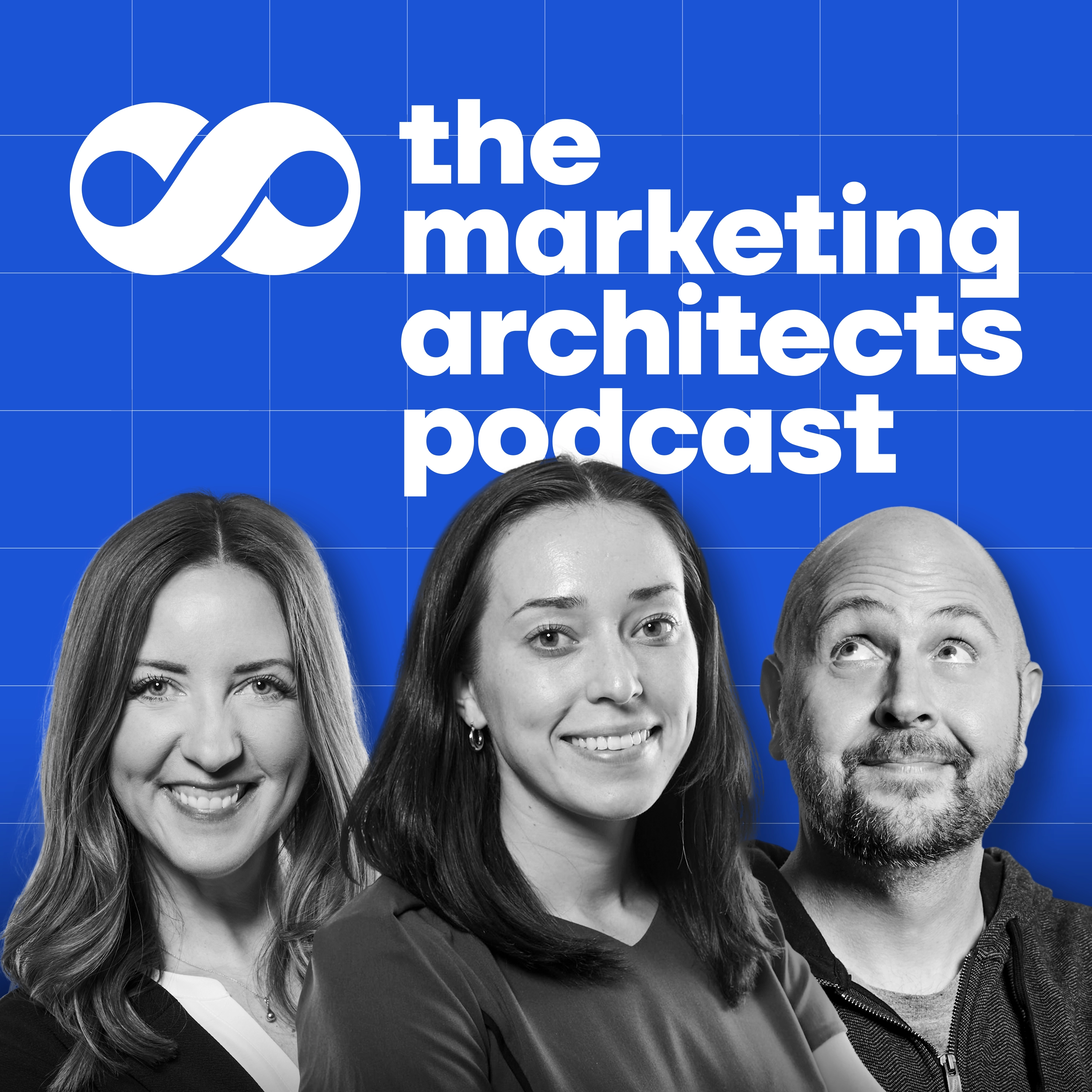
In this episode, Elena and Rob are joined by Peter Sengenberger, former demand gen and brand strategy lead at BambooHR. Peter explains why over-reliance on performance channels creates a "doom loop," why brand advertising builds what he calls "prepaid demand," and how his "depth of message" framework ranks media by the quality of impressions they deliver.
Topics Covered
• [00:00] Performance marketing's "doom loop" and the case for brand advertising
• [04:00] Supplement brand case study: 40% retail lift from brand TV
• [09:00] The true cost of over-optimization
• [13:00] Why TV earns the highest trust and completion rates
• [16:00] CTV skepticism: what is overpromised and why
• [18:00] Programmatic media and the algorithmic house advantage
• [20:00] What direct response teaches every marketer
Resources:
Ogilvy on Advertising by David Ogilvy
22 Immutable Laws of Marketing by Al Ries and Jack Trout
Grow with Peter Substack
Today's Hosts
Elena Jasper
CMO
Rob DeMars
Chief Product Architect
Peter Sengenberger
Marketing Consultant
Subscribe on



Enjoy this episode? Leave us a review.
Transcript
Elena: Hello, and welcome to the Marketing Architects, a research-first podcast dedicated to answering your toughest marketing questions. I'm Elena Jasper. I'm on the marketing team here at Marketing Architects, and I'm joined by my co-host, Rob DeMars, the chief product architect at Misfits & Machines.
Rob: Hello, hello, Elena.
Elena: Hello, and today we have a guest, Peter Sengenberger. He is a 25-year media pro, the founder of the Grow with Peter Substack, and someone with one of, I think, the most interesting career arcs in marketing. He's been an agency founder, a consultant, an e-commerce brand owner, and most recently led demand generation and brand strategy at BambooHR, where he brought offline media and brand thinking to a B2B SaaS company for the first time.
He started his career in direct response, spent most of it as a self-described performance-only marketer, and over time became a convert to brand advertising. So Peter, thank you so much for joining us.
Peter: Thanks for having me.
Rob: Wow. I mean, reinvention just seems to be in your DNA, Peter. I mean, just as Elena mentioned, going from direct response TV, transitioning into demand gen, social, and brand, and now you're reinventing yourself again as a skateboarder. Now, tell us more about that. I mean, are we talking, like, half-pipe here? What's going on?
Peter: I don't think you're gonna see me on a skateboard anytime soon. I've got weak ankles. You might find me on a tennis court though. That's kind of more my speed.
Rob: Okay. Was my research wrong? I — that was wrong then. I...
Peter: I do not skate.
Elena: Oh my gosh, Rob.
Rob: Dang it. Usually I am on point pulling out some obscure fact, and this was wrong. Okay. No, I thought skateboard, that sounds cool. I'm like, "I wanna hear about this skateboard. This guy's reinventing himself and he's doing a skateboard."
Peter: No.
Elena: I guess.
Rob: Well, tennis courts, that's not quite as exciting. I'm sorry. But it's good. It's good. It's age-appropriate, so all right.
Elena: All right, Rob, you're gonna have to go yell at your AI after this for setting us up on such a bad note. That's okay, we're gonna recover. Okay. We're back with our thoughts on some recent marketing news. Always trying to root our opinions in data, research, and what drives business results.
And I'm gonna kick us off, as I always do, with some research, and I thought today we'd pull something directly from our guest. So Peter has a great Substack, as I mentioned earlier. He recently published an article titled "Brand is a Leverage Problem, Not a Tactical One," and I wanted to feature it because it captures a story I really can't get enough of that we're gonna talk about today — someone who spent decades in performance marketing, read the effectiveness research, and then changed their marketing belief system a bit.
So Peter writes about what he calls the performance trap, this idea that an entire generation of marketers has been addicted to the dopamine hit of the immediate return. He uses this analogy: performance marketing is like a laser beam. It's bright, targeted, and efficient at hitting one spot, but try lighting an entire ballroom with a laser — it's frankly impossible. But brand advertising, he argues, is like a chandelier. It doesn't offer a direct line of sight to everything, but it warms the entire room so that when someone is ready to purchase, the path is already visible. He calls this brand prepaid demand. You're paying now for a future outcome by reserving mental equity in the minds of buyers who aren't in the market yet.
And the cost of ignoring that is that you end up at the mercy of the algorithm, fighting an increasingly expensive knife fight over the 5% who are ready to buy right now. So Peter, thanks again for joining us. I think it's fair to say you're qualified to talk about this transition to marketing effectiveness belief because you were at one point about as DR as a marketer could come.
And when we talked, you have so many great stories. I wish we could talk through all of them, but one I wanted to start with is you described how you worked with a premium beauty supplement that went gangbusters on TV, then they started sort of optimizing themselves into a corner and had to make changes. Could you please walk us through that story?
Peter: Yeah, for sure. No, I really have come full circle and have been lucky enough to have been in the game long enough to have so many interesting experiences. But yeah, you're right. I was as DR as possible. I was as DR as you could get. I didn't believe that brand advertising worked or could be measured or could do anything appropriate.
I started off in direct response television, where you go from problem-unaware to pulling out your credit card and buying something immediately — you know, like a Beachbody P90X workout. Brand advertising is not that. It is a multi-step, much longer discussion where you have to bring people along — they have to be aware of you, they have to be aware of their problem, they have to be aware of the solution you can offer, and then they can start to consider you. And then the real marketing process can begin to happen.
But performance marketing, as it pertains to digital — you know, I've done a lot of work in e-commerce as well — and a lot of the great marketers I work with, really, it's an amazing generation of marketers that has come up in e-commerce and has been focusing on digital channels and performance. And they've pulled out some amazing brands and, you know, lots of fortunes have been made. But really there's a bit of a squeeze going on. I wrote another Substack about digital — it's an oligopoly. You don't have that many outlets. You don't have as many places that are really gonna generate a performance-based return for you quickly and in a way that you're happy with the measurement on.
So we're seeing Meta's and Google's share of the market continue to increase. There are new entrants — well, new like TikTok, it's not necessarily new — but really it is very much a Google and Meta game, and their margins are increasing. The cost per ad unit is increasing, and that's not slowing down.
But you are seeing a shakeout in D2C, primarily because of over-reliance on performance marketing. And I've heard it so many times and I've been there, but I've come full circle and I've now seen the light in that you really do need to be thinking about the entire funnel and about making sure that people are aware of you and will be considering you in the future. You wanna be remembered.
Elena: Was there a particular moment? I know that you were working with this supplement brand — like, they were doing DRTV. Was that the moment for you, or has this sort of been happening over time? Have you kinda come to these beliefs gradually, or was there a specific instance where you were like, "I need to change some of this"?
Peter: Yeah, it was kind of all paths led me to go straight to brand advertising. Sorry, that's a terrible answer. Let me start over.
Elena: No, it's not.
Peter: Yeah, for sure. Once you've exhausted all options, the only option left has to be the one. So I was consulting — I was doing a lot of e-commerce consulting and doing some media consulting as well, and I was getting called in by a lot of marketers who were just having problems with the doom loop of optimizing themselves into a corner and were not able to get the returns that they wanted anymore.
And it was a very confusing environment for one of my clients who was a really high-end supplement manufacturer. They had built multiple brands on DR. I mean, going back to the print days, they were hot in print, and then they discovered TV, and that was a massive unlock for them. And then they were doing audio, and then Amazon became a big channel for them — still very, very direct. But the TV returns started to diminish over time, and they were unable to spend the amount of money that they wanted to. So we tried everything. Start with the creative, start with the messaging, do the focus groups, figure out — is this a creative issue? Is this a media buying issue? I didn't think it was a media buying issue at all. I thought we were buying quite smartly.
But as I tried to turn the thing around, I noticed one important thing. Their retail doors kept growing. They already had a decent retail footprint, but they unlocked a couple of large national retailers, and that really stifled direct response.
And I came to a point where I said, "I can't spend more than X and get you any kind of return, which is minuscule. However, your retail sell-through is multiples of that number. If we're able to influence that retail sell-through with brand advertising — and instead of getting in front of a small amount of people who are highly likely to convert immediately, we instead talk to our target consumer in a big way on TV, in prime time, where they are. Let's find these very well-heeled customers and make them aware of us in an environment that's conducive to learning about us."
And TV is just the best. It's a lean-back medium. You're not scrolling. The ad before you when you're scrolling on Meta could be for toenail fungus, and the one after could be for a DUI lawyer.
Elena: You have an interesting algorithm, Peter.
Peter: No DUIs here. And no toe fungus either. But yeah, so we were showing up on Anderson Cooper, on Bret Baier, on Fox Business on the weekends, on the Hallmark Channel, and we're appearing right after the Chevy ad for the new Silverado and right before the Stouffer's ad. And just kind of — it was a very DR kind of creative. We split — used mostly 15s and 30s — and kind of let her rip. Did some math on the end, did a lot of consulting and convinced the owners of the company who founded it that brand advertising was gonna take them over the top. And then we held our breath for a while.
We turned it on, had four formats going. Instead of being mostly 120s and 60s, we flipped it completely and went very heavy in 15s and 30s and wanted to stay consistent. So we put it on, decided the amount, decided the media plan, and let her rip, and nothing happened for a while. The DR still performed the way it was, but we were just trying to clock as many impressions as we could, trying to get the reach out there.
You're trying to get reach, reach, reach, reach. And we're seeing these huge primetime airings going out and getting millions of impressions, and we're just kind of like, "Okay, this is adding to the attention," you know? And I had to hold the client's hand and be like, "Look, a third of the market has seen us twice already this month, okay? Next month it's gonna compound, and it's gonna keep compounding. And next time they walk into a retailer, they're gonna see your product and be like, 'I know exactly what that product is. I know its story. I know its brand promise. I'm gonna pick it up.'"
Six weeks later, we started to see a little uptick, and then a bigger uptick. Within — I wanna say six months — I believe it was about a 40% increase in retail sales turns, which paid for the media many times over, and frankly made the direct response part, which had been front and center, almost an afterthought. So I was sold. I was really convinced and thought, "Wow, there's a lot of people in this position."
So that's why it's such a pertinent topic right now, because performance is getting harder, people are getting shaken out, and marketers need new channels. And I hear a lot of people say, "We've tried CTV and it didn't work." Well, okay. But I'm glad you tried it, but we need to really talk about a lot of things. But I think most companies — consumer-oriented companies as well as B2B companies — should definitely have brand and have a really strong answer for brand.
Rob: Did you find — is my mic on?
Elena: Mm?
Peter: Yes.
Rob: Oh, okay. Sorry. Hey, did you find, just curious, with that increase in brand spend, a halo effect that did occur with your direct response?
Peter: You know, the direct response was pretty much unchanged. If people know they can get it — well, one thing we did was we retail-tagged the shorter forms, okay? I never retail-tag a longer-form direct response spot, but for a branded spot, we wanted to retail-tag it. It brings some authenticity, some legitimacy, and then we had some really nice retailers to name. But when we did that, we were kind of going all in on — all right, let's build retail.
Rob: For sure.
Elena: Mm-hmm. Peter, one thing — you've talked about on your blog and you mentioned there's this want to sort of over-optimize, or people get caught in the doom loop, and that's what at first you were trying to do, like, just let's make the DR work better. It has to work better and better. But then you said people get sort of stuck in this cycle, and it's hard to invest in brand. But what do you think is the true cost of over-optimization? Because it feels like that's something that a lot of marketers are stuck in right now.
Peter: Yeah. I mean, it's something I've come across so many times, and it's really a rock-brain kind of thing. It's when discipline — you can be over-disciplined — and it can narrow your thinking and really constrict your approach to solving a problem. Brand isn't intuitive. You have to really have the mindset for it.
And here's the thing: what makes someone an amazing performance marketer does not make them an amazing brand marketer. You have to be able to make the mental shift. You've gotta start reading some of the academic literature on it. You gotta read your Binet and Field, and you gotta look at the Ehrenberg-Bass Institute, and you gotta start to study a lot of this academic work that has been done that keeps showing the same results time and time again — that performance marketing is great where it belongs, but you are shooting laser beams when your goal really might be just to illuminate the room and get a larger result going.
What's interesting too is the downside of over-reliance on performance marketing — you miss a lot of benefits that are much slower to come, but are much bigger. I turned on brand advertising for a B2B client a couple of years ago, and we saw their CAC — their cost per acquisition — across all channels begin to fall. Kind of further to your point, Rob, earlier, is that depending on the environment you're in and the circumstances of the marketer, you can really see your CAC start to fall. You can see your customers start to stay with you longer because they see you in a brand advertising environment, and that reinforces a decision that they've made. They're more loyal, they're less resistant to price changes. And yeah, overall, it really is a memorability game. And you don't wanna overdo it, you don't wanna oversaturate the market, but you have to get up there enough times. You have to get a minimum threshold of impressions at a steady amount of heat and keep it consistent.
Elena: Well, now you've done this at a couple of brands. I feel like it's becoming your specialty. How do we transition brands into things like offline media or moving them out of performance thinking? I know you were brought into BambooHR to do that. What has been your experience working with them, working with other brands in general, when you're brought in and you're trying to move people's mindset? You mentioned education — what else does it require to actually make that shift at a brand?
Peter: Yeah. It's a lot of education and I've gotta be really patient with it. And you've gotta be able to get in the performance marketer's shoes and be able to explain what brand advertising means for them in performance terms as well. I found over and over again, the performance person is often also handed the brand role. That's a dangerous move to make. If you don't have the experience, or you haven't seen it work before, or you're not aware of all the different tools and different media you can use to achieve the goal, you need to be a little bit careful.
Ron Pruitt, a venture capitalist friend of mine in Boston, wrote a really great tweet the other day that said the number one reason he's seeing his D2C investments go to zero — he's got many different investments — but when he sees them go to zero, he says the number one reason is lack of media maturity, lack of an understanding that there's more tools to use than just Meta and Google.
Rob: We are — full disclosure — a TV agency. You know that. And so we are a little bit biased. We're kinda like a barber telling you that you need a haircut when we talk about the value of TV. But from your perspective, as you're coming in and you've definitely played in a lot of the different marketing channels, why does TV matter so much for a brand's credibility and long-term performance? You've already been speaking a little bit to its benefits, but big picture.
Peter: Yeah, no, it's a great question. And yeah, it can sound like we're talking up our own book when we talk TV, but I'm agnostic, right? I go in to solve problems. I've got audio, I've got direct mail, I've got all the digital channels and everything. But there's one thing I've realized in booking media as long as I have — on a performance basis, on a brand basis — in Japan, in the UK, in continental Europe, in the United States and Canada — is that there is a depth-of-message problem that needs to be solved in order to persuade your consumer.
In fact, I'm working on a book right now that'll be out next year called "Depth of Message." And the theory is that not all media is created equal, not all impressions are created equal. Essentially, I'm stripping it down to a one-to-five kind of depth of media effectiveness.
Let's start with number one. Number one is gonna be something like a brand sponsorship message, like your logo on an F1 car or on a golf bag. Super cool — they don't know anything about you. They see you, and you're associated with whatever attributes you want to take away from there, the affinity of being seen in the right place, et cetera. Very expensive. It's a very low depth of message. It's a great impression — there are no bad impressions, but there are more valuable ones.
Number two would be something like a static ad on Instagram. At least you get to see the brand a little bit. There's some copy, there's a little bit of personality, you know a little bit more about the company and probably what they do than you did going in.
And then number three would be that same impression served in video in social media. Now, people on YouTube aren't there to watch ads — they're there to learn something or to have an experience. And same thing with Meta and TikTok — the intention's a little different. LinkedIn is a very different intention as well. But that video is great because now you've got an audio track and you've got motion graphics that interrupt and show — not just tell, but show — which is really important.
A number four level impression would be something like a podcast ad. This is a minute-long host read in your ear by somebody you trust who's endorsing a product or at least implying endorsement on a product or service. And they get plenty of time for the script to breathe and for there to be a deliberate call to action. People walk away from just one audio impression really understanding what you're all about.
But number five is TV. A 30-second TV spot or even a 15-second TV spot — you get all of the above, but you get a bigger association. First of all, it's not skippable. It's on the wall and it's gonna be consumed. If you look at your view-through rates — if you wanna get really nerdy, spend a rainy day taking a look at your view-through rates and see how many people actually do look at you — and then map it out, take a look at TV at 98% completion rate for an ad, and do the math and see what your real CPMs are. It's an eye-opener. TV ads are consumed.
TV also is the last trust medium in the world. Nobody believes anything on digital — for what I mentioned earlier, toenail fungus and DUI lawyers. The internet does not have any legitimacy. It is sort of a cesspool in a lot of different ways depending on what your consumption habits are like. TV, however, still has legitimacy. If you're appearing on TV, you are in a very limited, very exclusive category of advertisers. And that matters to customers. It confers legitimacy.
So TV just works. TV also — the scale of it and your ability to target, your ability to do a lot of stuff in TV — it's a very flexible medium if you know what you're doing. And the endless supply — absolutely oceans of media opportunities out there. I mean, I've been buying TV for, oh, three decades, and I'm still learning stuff.
Rob: But you're not a TV-cures-everything guy, right, Peter? I mean, you've actually been a pretty vocal skeptic on connected TV. What do you feel like is the gap between what CTV promises and what it actually delivers?
Peter: Yeah, for sure. It's a great question. CTV has a huge promise — that it's got the power of TV, but the accountability of digital. It's not 100% true at all. But really, I think CTV started off being very expensive — going back five, ten years, the CPMs were so high that you would have to have a very particular use case to choose CTV over linear.
Well, that's changed. A lot more inventory has come available, and a lot of agencies have popped up selling CTV to just about anybody they can, over-promising on just how measurable it is, how impactful it is, and it's gonna feel just like Meta in 2012. It's just not true.
CPMs are falling, but they're not as low as they can be. There's still rampant fraud out there. There are some studies out there that'll make your toes curl about how many impressions never get served and how little filtering is in place that is keeping the client safe and making sure that their ads are actually shown and that they're shown in their entirety.
It's worth being skeptical about your CTV agency. I've written some pretty pointed Substacks about it, because I've been burned and I've come into situations where the client that has hired me has been getting burned by their CTV agency, and it just makes me really angry that they're being — the advertiser is putting up all the risk, and no one else has a job but for the advertiser, so they need to be respected and treated well. And I think a lot of CTV shops should really clean up their game, but I don't see that happening anytime soon.
Rob: Now, speaking of getting burned, let's double down on that and talk about programmatic media, 'cause you've mentioned in the past that it's like you're playing against the house and you're playing against the algorithm, and that most marketers don't know it any other way because they started in digital. So what does that concentration of power mean for advertisers, and what are they not seeing?
Peter: You're playing against the house when you're working with an algorithm. And you're right — most marketers don't even know that they are, because they haven't transacted media any other way. The first media I bought was via the telephone. And for about a decade it was a phone and a cup of coffee and a notepad, and you could make media decisions all day long. And it was effective and trustworthy — maybe not the most efficient method around.
But when you're dealing with programmatic buying — almost anything you're buying digitally is gonna be algorithm-based. They have built the algorithm for one reason only, and that is to sell as much of their inventory for as much as possible.
And we're seeing a shift into things like Performance Max. We're seeing Meta bringing a lot of AI into their campaign managers and trying to black-box everything for us and make it hard for us to see what we're really buying. It's kind of alarming when you run a Performance Max campaign sometimes to see where your ads actually show up, because they're not places you would necessarily want them to show up. But the whole reason that they build these is to sell as much of their inventory for as high a price as possible. So they get everybody around and they say, "How much are you gonna pay? How much are you gonna pay?" And the algorithms do a really good job of maximizing shareholder value, but they really are a strain on advertisers.
One of my favorite quotes in history — and I repeat it all the time — is "Price is what you pay, value is what you get." That's Warren Buffett. And he's exactly right that price is decoupled from value in a lot of ways. And when you're buying on an open market where you can negotiate, where you can add a little creativity to the buy and aren't just buying against a computer, you can get more quality media, extra media, discounts for continuing the relationship longer. There are a lot of different parameters that you can work with when you're doing things like audio and TV and out-of-home or print buying that you simply will never be able to get in the algorithmic world.
Rob: You have such a depth to your answers, so I want to ask you a question. When I was in high school, someone gave me the book "Ogilvy on Advertising" — the book of David. Obviously a lot of wisdom in there, and one of the key principles that he said in that book was that if you want to work in advertising, you should start in direct response. Do you agree with that? And do you feel like you've benefited because you did make that pivot from direct response, and are able to use what you learned in those years cutting your teeth in ways that are now serving you in other forms of marketing?
Peter: Yeah. That's a very interesting insight. And I remember reading that too — that Ogilvy wrote that — and thinking, "Wow, that's really interesting," because direct response was nothing back when he was in the game.
But yeah, direct response for me — it's been very interesting. In my latest work in B2B, the B2B guys are jealous of the B2C people. They're jealous of people in direct response because their decision window is so much shorter, and they have become masters of getting immediate conversions. They also don't have a lot of wiggle room. When you're playing in a strictly direct response environment, in an early stage of a company, and you're trying to maximize your ROAS, you have to get very creative and it creates some amazing innovations and breakthroughs that make direct response sharper and indeed allow it to continue.
But in the B2B world, things are so much slower and so much more methodical, and there's a much larger message that has to be conveyed. It's also not a personal purchase. Buying something for yourself — that's one thing. If you're buying a pill that's gonna make you look great in a swimsuit, that's one thing. But if you're buying a SaaS software that you need to propose to your boss, with the CTO involved and the CFO involved, that's gonna take a little bit longer to get that message across and to prove your value.
So I think what direct response has taught me is something I've said to so many marketers: "You've got to tell people what's in it for them." And so many marketers don't get it. They don't get it. What's in it for me? I've sold so much infomercial product over the years, sold so much on QVC, done so many copy tests and split tests and all these other things, and it always comes back to what's in it for me. You've got to be thinking about that, and so many marketers forget that.
Rob: What is it — everyone's favorite radio station? WIIFM. Thank you.
Elena: Oh my goodness, Rob.
Rob: All right. We'll ignore that one. But okay, so let's keep talking about books here. So you've been doing this for 25 years. We've got a lot of self-learners out there that are listening. What resources, books, frameworks do you think people should be checking out that have really impacted you?
Peter: Yeah, for sure. I think your nod to Ogilvy is a great one. I would definitely start with some Ogilvy materials — "Ogilvy on Advertising" is great. He had a couple of subsequent ones that were also very good. I would also look at copywriting. There's a gentleman named Joe Sugarman who's one of the all-time greatest marketers probably ever. I ran into him once at QVC in London, and I couldn't believe I was in the same room with Joe Sugarman — he started so many products and did it in print in the '70s. His copywriting take is really good. He's got a couple of books about copywriting that really teach you how to be a marketer, how to tell people what's in it for them, how to frame things. There are so many different laws out there.
Another book — "The 22 Immutable Laws of Marketing" and "The 22 Immutable Laws of Branding." Both of those are indispensable. I reread them about once a year.
And there are tons of great resources out there. There are a lot of amazing podcasts out there — you just gotta find who you like. But I would probably start more on the direct side. Talk to people who have to move product right now and how they do it. Some of the D2C pods are really a wealth of information.
And yeah, most of us are self-learners in marketing. And I'm sure you've seen too, a lot of ink has been spilled lately about the lack of sophistication in many marketers' stacks because they're self-taught and they don't necessarily see their blind spots.
So yeah, approach it with an open mind and endless curiosity. For me, marketing has been — everything I've done, I've loved more than the last thing I did. So I loved direct response. I was crazy about it and thought there would be nothing else. Then I moved over to e-commerce and said, "Okay, wow — getting off the TV and doing just digital buys and paid social and everywhere else is really a thrill." And you've got all these tools that I could only dream of back in the day.
And then with brand advertising, that's been another eye-opener that can be really fascinating from a strategy point of view — to try to accomplish this big unlock and then see it happen a couple of times and be like, "Wow, this TV" — or whatever medium we're talking about — "can really be effective if it's employed right."
And in B2B marketing too, I think B2B is fascinating. My media plans are 12 channels deep. TV is one of those. There are 11 other channels, and there's a lot of digital in there, and there's audio, and there's out-of-home, and there's sponsorships. Those are really fun to put together.
So yeah, keep learning. Never stop learning, that's for sure. And it's fine to have a point of view, but don't be too rigid, because you never know. If my career's taught me anything, it's that there's always something new around the corner.
Elena: Mm-hmm. Well, that's a perfect transition into my wrap-up here for you, Peter. You are a great example of someone — I know I've said this — but someone who was able to keep learning and changing their mind in marketing. When's the last time you changed your mind on something, just in general?
Peter: Hmm. Oh, that's a good one. You put this out for me to look at and I looked at it and was like, "That's a really hard question to answer." And I thought about it. Something I've changed my mind on is that a truly nosebleed-high CPM isn't necessarily a signal not to buy. In fact, for a client, one of my biggest returns on ad spend is on an unbelievably expensive CPM. The CPM's over four digits. It's enormous, but the way that pool of audience has been selected and conditioned, I'll pay it every day. In fact, I'm trying desperately to get more. So yeah, usually a rule of thumb is keep your CPMs reasonable, keep them low, keep a close eye on them. But in this case, you gotta throw caution to the wind and say, "Okay, I'm just gonna keep carrying on here because it's working."
Elena: What about you, Rob? Did you have something?
Rob: Yeah. For me, obviously I'm fixated much of my time on AI, and this one happened to me recently where I tend to be brand loyal. When OpenAI and ChatGPT first came out, I'm like, "Okay, these guys are the leaders," and I was just so into everything that they were offering. And I switched to Gemini because I appreciated their integration more and they were starting to move. So I'm like, "Okay, I guess I'm switching." And then I switched again — now I'm on Claude, now I'm a Claude guy. So that's an area where, in AI in general, you are constantly reevaluating and pivoting and looking at new tool sets. And the idea of being loyal to any of them is pretty difficult because you just have FOMO.
Peter: I've had the same path. I was Gemini, and then I was Perplexity, and now I'm all in on Claude. Claude's blown me away, and I just can't stop working with it.
Elena: It seems like that's where a lot of people are going — is Claude.
Peter: Yeah, I know. I mean, for now, right? I mean, I don't think we've seen the last coda in this. And they're saying — you hear all kinds of rumors and there's a lot of talk about what's around the corner and what's coming up next. And people say that a lot of stuff that's coming up next is truly frightening —
Elena: Yeah.
Peter: — in a good way.
Elena: Well, mine is — I'm a B2B marketer, and we didn't really go to events for a long time, and recently the last few years we've been going again, going in person and seeing a return on that. So I think there's something about the remote environment and people longing for that in-person connection — and just a different way to get in front of people. So that's one that came to mind.
The other one was more personal, which is I never wanted to watch Breaking Bad, and I finally got convinced by my husband to watch it, and it was amazing, and I'm so glad I changed my mind and watched that show. So if anyone's thinking about watching Breaking Bad, you should watch it.
Rob: Followed up with Better Call Saul.
Elena: Yes, I did that too.
Peter: Which is even better. But I'll tell you, another thing that changed my mind — actually, one of my clients started using an MMM, and it started to show us things we'd never looked at before. And one thing it showed was that webinars have a major influence on people's propensity to purchase. I thought webinars were dead. No one wants to go to a webinar, forget it. That was just my own impression, but the MMM proved that to be completely wrong.
Elena: Wow. That shows how much — even as such an experienced marketer, sometimes our own biases get in the way. 'Cause I kinda think the same thing about webinars, so that's good to know that you found that. Amazing, Peter. It's been so fun talking to you. I know we've loved working with you too, just as an agency, and you're so full of wisdom and stories. I just love it. Anything you wanna plug? I know you've got your book coming out next year, your Substack, anything you wanna point people to?
Peter: Nope, that's it. You can just find me on LinkedIn as well. I'm not really active in other social channels yet, but we'll get there pretty soon. But yeah, my book should be out late next year. It will be called "Depth of Message." And I'm working on the byline, so we'll see.
Elena: Exciting. Big project.
Rob: Fantastic.
Elena: Great. Okay. Thanks so much for joining us.
Peter: Thanks for having me.